Pyrgulopsis lasseni
Willow Creek Pyrg
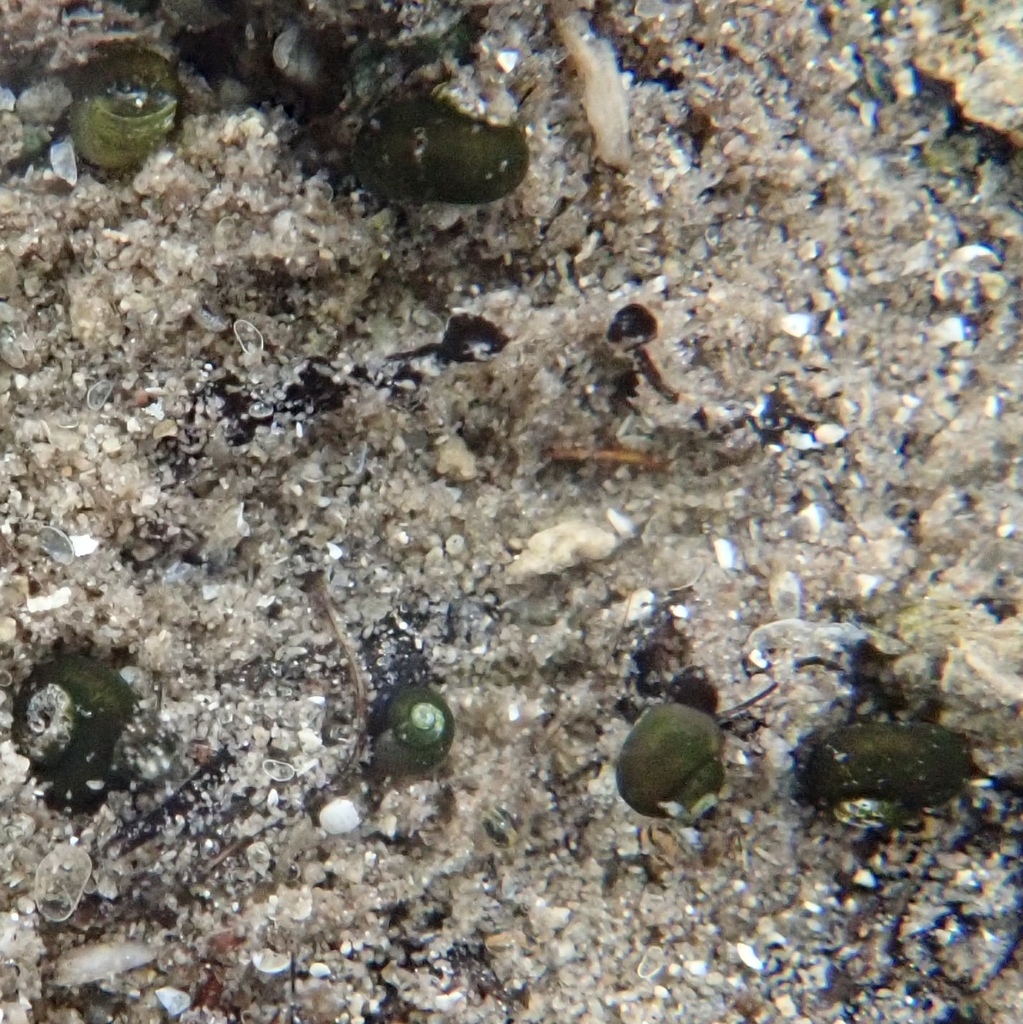
(c) Clifton Ladd, C.W.B., some rights reserved (CC BY) · licence
Family: Hydrobiidae · Class: Gastropoda · Order: Littorinimorpha
Conservation status: G1G2 S1S2
Pyrgulopsis lasseni (Willow Creek Pyrg) is a California animal in the Hydrobiidae family.
The Willow Creek pyrg (Pyrgulopsis lasseni) is a small freshwater gastropod in the family Hydrobiidae, described by Hershler, Frest, Liu, and Johannes in 2003. This springsnail species represents one of many endemic Pyrgulopsis taxa found in isolated aquatic habitats throughout the western United States. The species exhibits the typical morphological characteristics of the genus Pyrgulopsis, with a small, elongated shell adapted to flowing water environments. Like other members of this genus, the Willow Creek pyrg likely measures only a few millimeters in length, though specific morphometric data for this species has not been extensively documented in the scientific literature. Pyrgulopsis lasseni is endemic to the upper reach of Willow Creek in Lassen County, California, within the Modoc National Forest. The type locality is specifically located at Willow Creek on both sides of a wooden foot bridge at a picnic area just downstream of Willow Creek Campground, north of California Highway 139, approximately 0.16 road kilometers west of the Hayden Hill Cutoff Road junction. This highly restricted distribution makes the species particularly vulnerable to local environmental changes. The species inhabits flowing freshwater creek habitat, consistent with the ecological preferences of other Pyrgulopsis springsnails. These gastropods typically require specific water chemistry conditions, including adequate dissolved calcium content and appropriate temperature ranges. Pyrgulopsis species generally occur in springs, seeps, and small creeks where water temperatures and chemical composition remain relatively stable throughout the year. The substrate likely consists of rocky or gravelly areas where the snails can find suitable attachment sites and feeding opportunities. Like other members of the genus, the Willow Creek pyrg is presumably a grazer, feeding on periphyton, algae, and organic detritus found on submerged surfaces. Reproduction likely follows the typical gastropod pattern of laying eggs on hard substrates, though specific breeding behavior and timing for this species have not been documented. The species' life cycle and population dynamics remain largely unstudied. The Willow Creek pyrg has a global conservation rank of G1G2 (critically imperiled to imperiled globally) and a state rank of S1S2 (critically imperiled to imperiled in California), reflecting its extremely limited distribution and small population size. The species is listed as sensitive by the U.S. Forest Service and receives special consideration from the California Department of Fish and Wildlife. Primary threats to Pyrgulopsis species typically include habitat modification, water diversions, cattle grazing impacts, recreational activities, and groundwater withdrawal. Climate change may pose additional risks through altered precipitation patterns and increased temperatures that could affect the delicate spring and creek ecosystems upon which these endemic gastropods depend. The species' survival depends on maintaining the integrity of its limited aquatic habitat in the Modoc National Forest.
Classification
Class: Gastropoda · Order: Littorinimorpha · Family: Hydrobiidae
Conservation status
G1G2 S1S2
Frequently asked questions
How is Pyrgulopsis lasseni classified?
Pyrgulopsis lasseni belongs to class Gastropoda, order Littorinimorpha, family Hydrobiidae.
What family does Pyrgulopsis lasseni belong to?
Pyrgulopsis lasseni is in the Hydrobiidae family.
Is Pyrgulopsis lasseni protected or of conservation concern?
Pyrgulopsis lasseni carries the following status: G1G2 S1S2.
What is Pyrgulopsis lasseni?
The Willow Creek pyrg (Pyrgulopsis lasseni) is a small freshwater gastropod in the family Hydrobiidae, described by Hershler, Frest, Liu, and Johannes in 2003.
Is Pyrgulopsis lasseni found in California?
Yes. Pyrgulopsis lasseni is recorded in California in The California Species Project's catalogue.
Related species
Other California species in the same genus, family, or bioregion.
Data from The California Species Project — 14,000+ California species with verified data from CNPS, CDFW, USFWS, and more.