Pyrgulopsis perturbata
Fish Slough Springsnail
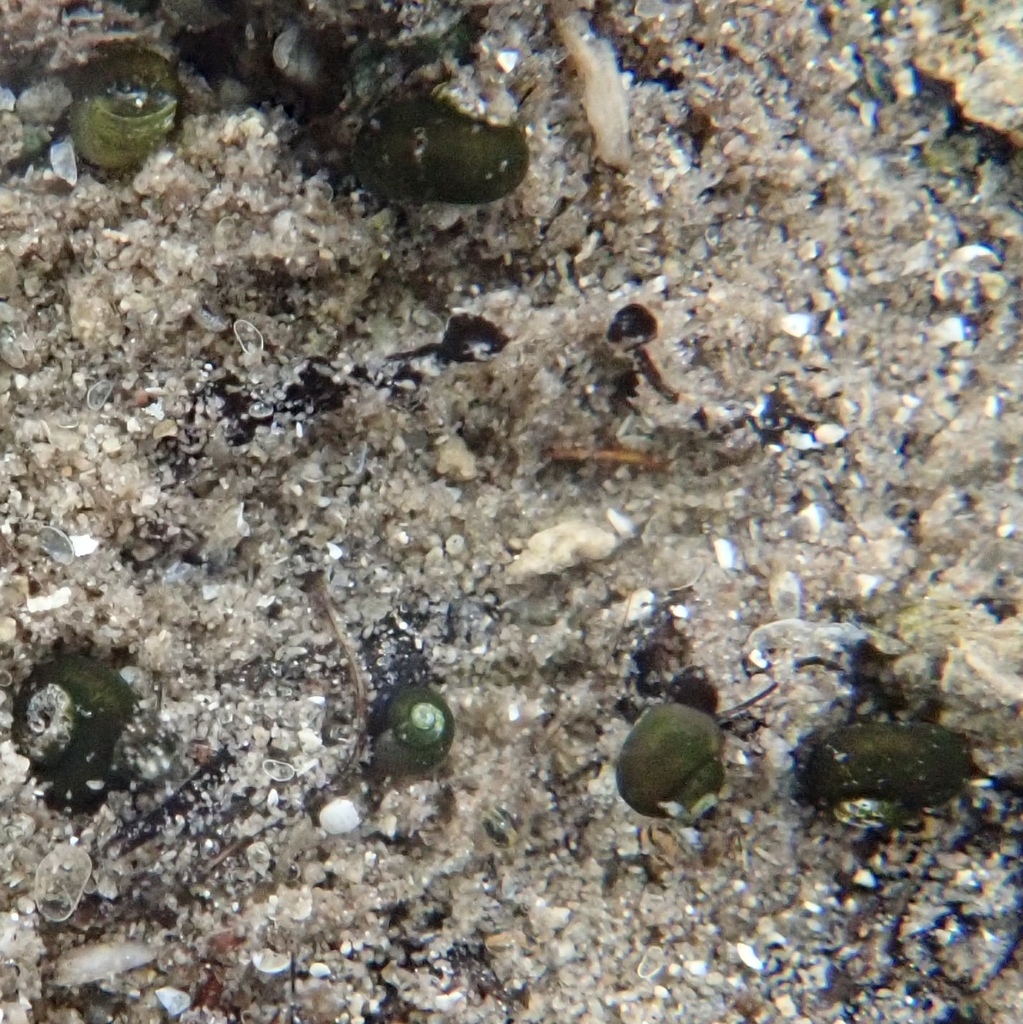
(c) Clifton Ladd, C.W.B., some rights reserved (CC BY) · licence
Family: Hydrobiidae · Class: Gastropoda · Order: Littorinimorpha
Conservation status: G1 S1
Pyrgulopsis perturbata (Fish Slough Springsnail) is a California animal in the Hydrobiidae family.
The Fish Slough springsnail is a small aquatic gastropod endemic to the Owens Valley region of eastern California. Like other members of the genus Pyrgulopsis, this species is a tiny mollusk adapted to spring environments, with a conical shell typical of freshwater springsnails. Adult shells measure approximately 2-4 millimeters in length, displaying the characteristic coiled structure of hydrobiid snails. This species has an extremely limited distribution, occurring only in Fish Slough and associated spring systems in the northern Owens Valley, Mono County, California. The species is restricted to elevations below 2,286 meters (7,500 feet) within this specific drainage system. Fish Slough is located northeast of Bishop, California, and represents one of the few remaining intact spring-fed wetland systems in the Owens Valley. Fish Slough springsnails inhabit springs and short sections of spring brooks with consistently good water quality. The species requires stable aquatic conditions, including specific water chemistry parameters such as dissolved oxygen levels, temperature, and conductivity that are characteristic of natural spring environments. Water temperatures in occupied springbrook areas range from 15 to 25 degrees Celsius (59 to 77 degrees Fahrenheit) throughout all seasons, with water velocities ranging from 0.01 to 0.19 meters per second (0.03 to 0.6 feet per second). The springsnails typically occur on various substrate types within the spring system, including areas with aquatic vegetation. Like other Pyrgulopsis species, Fish Slough springsnails are believed to feed on periphyton, diatoms, and organic detritus found on submerged surfaces. The species exhibits decreased abundance farther from spring vents, presumably due to their dependence on stable water chemistry conditions. Springsnail dispersal is primarily limited to aquatic habitat connections, making natural recolonization of disturbed areas extremely difficult once local populations are extirpated. The Fish Slough springsnail holds a conservation status of G1 S1, indicating it is critically imperiled both globally and within California. According to the U.S. Fish and Wildlife Service Owens Basin Wetland and Aquatic Species Recovery Plan, this species is considered a species of concern with high urgency for status surveys (USFWS 1998). While most populations are believed stable, the species faces significant threats from its limited distribution, groundwater pumping, and habitat modification for water diversion. Cattle trampling has been documented to reduce springbrook banks to mud and sparse grass, directly limiting springsnail occurrence through habitat degradation, contamination from livestock waste, and physical crushing of individuals (Bruce and White 1998). The species' extremely restricted range makes it particularly vulnerable to any disturbance within its habitat. Conservation efforts focus on protecting spring water sources and managing livestock access to prevent further habitat degradation in this critical Owens Valley ecosystem.
Classification
Class: Gastropoda · Order: Littorinimorpha · Family: Hydrobiidae
Conservation status
G1 S1
Frequently asked questions
How is Pyrgulopsis perturbata classified?
Pyrgulopsis perturbata belongs to class Gastropoda, order Littorinimorpha, family Hydrobiidae.
What family does Pyrgulopsis perturbata belong to?
Pyrgulopsis perturbata is in the Hydrobiidae family.
Is Pyrgulopsis perturbata protected or of conservation concern?
Pyrgulopsis perturbata carries the following status: G1 S1.
What is Pyrgulopsis perturbata?
The Fish Slough springsnail is a small aquatic gastropod endemic to the Owens Valley region of eastern California.
Is Pyrgulopsis perturbata found in California?
Yes. Pyrgulopsis perturbata is recorded in California in The California Species Project's catalogue.
Related species
Other California species in the same genus, family, or bioregion.
Data from The California Species Project — 14,000+ California species with verified data from CNPS, CDFW, USFWS, and more.