Pyrgulopsis taylori
San Luis Obispo Pyrg
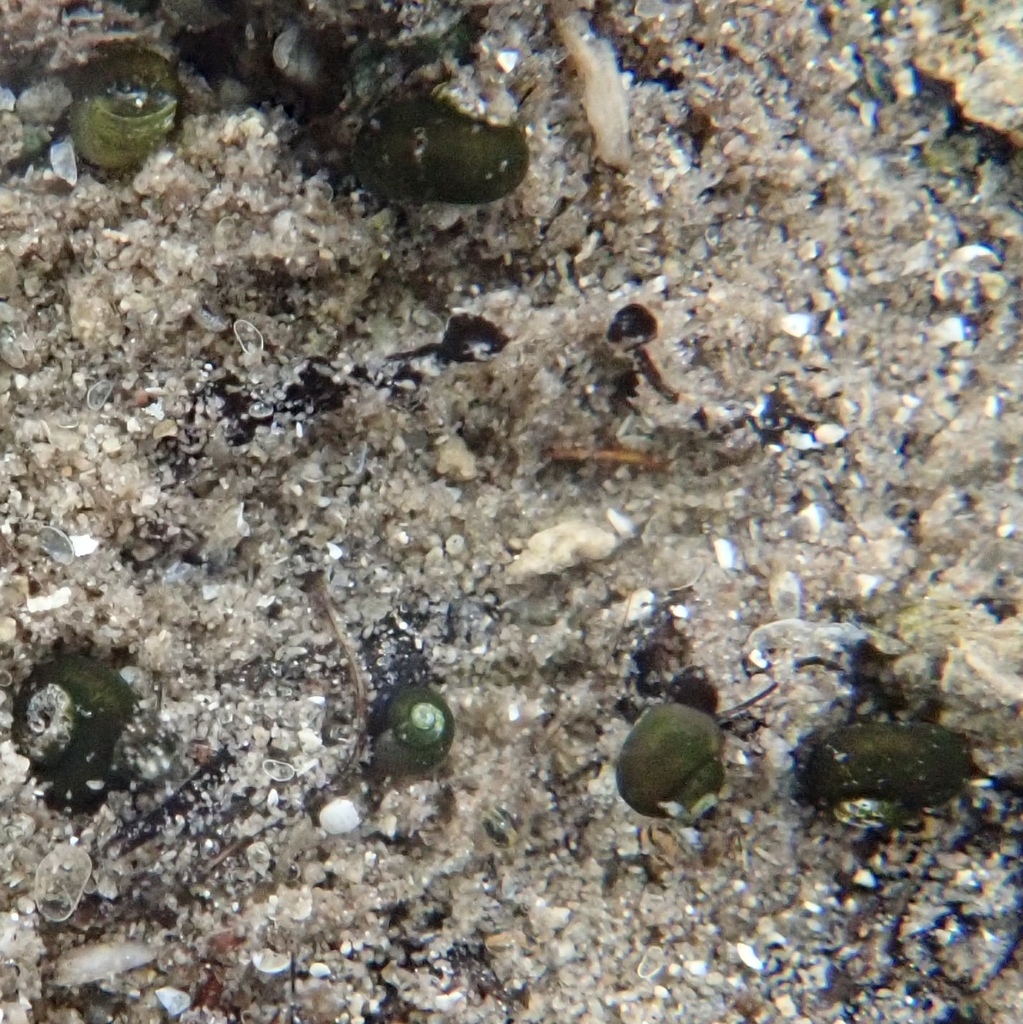
(c) Clifton Ladd, C.W.B., some rights reserved (CC BY) · licence
Family: Hydrobiidae · Class: Gastropoda · Order: Littorinimorpha
Conservation status: G1 S1
Pyrgulopsis taylori (San Luis Obispo Pyrg) is a California animal in the Hydrobiidae family.
Pyrgulopsis taylori, commonly known as the San Luis Obispo Pyrg, is a freshwater gastropod mollusk endemic to California. This species belongs to the family Hydrobiidae, a group of small aquatic snails that inhabit springs and spring-fed streams throughout western North America. Like other members of the genus Pyrgulopsis, this species likely measures 2-4 millimeters in shell length, with a conical to elongate shell typical of spring snails. The San Luis Obispo Pyrg is endemic to San Luis Obispo County, California, representing one of several regional endemic Pyrgulopsis species found throughout the western United States. The species' range appears to be highly restricted, as indicated by its Global and State conservation ranks of G1 S1, meaning it is critically imperiled both globally and within California. This ranking suggests the species occurs in fewer than five locations or has very few remaining individuals. Like other Pyrgulopsis species, P. taylori likely inhabits freshwater spring systems and associated outflows. Based on the ecology of related species in the genus, this pyrg probably requires constant water temperatures, clean gravel or rocky substrates, and flowing water conditions. Springs in California's coastal ranges often maintain relatively stable temperatures year-round, providing the specialized conditions required by endemic spring snails. The species likely occurs in shallow areas with moderate flow velocities, as deeper or stagnant waters typically lack sufficient oxygen and appropriate substrate conditions for Pyrgulopsis species. The behavioral ecology of P. taylori has not been well documented, but can be inferred from closely related species. Spring snails typically graze on periphyton, diatoms, and organic detritus found on rock and substrate surfaces. Reproduction likely involves direct development without a free-swimming larval stage, with juveniles emerging as miniature versions of adults. This reproductive strategy, while eliminating dependence on specific water conditions for larval development, also limits dispersal capabilities and contributes to the highly endemic nature of spring snail populations. The conservation status of Pyrgulopsis taylori reflects the extreme vulnerability of California's spring-dependent fauna. Spring systems face numerous anthropogenic threats including groundwater extraction, surface water diversions, recreational disturbance, and habitat modification. Climate change poses additional risks through altered precipitation patterns and increased temperatures that could affect spring flow regimes. The species' G1 S1 ranking indicates it faces a high risk of extinction, though specific population estimates and trend data are not currently available. Conservation efforts for spring snails typically focus on protecting entire spring ecosystems, including upstream watersheds that maintain groundwater recharge, and controlling human activities that could degrade water quality or flow patterns. Detailed ecological studies of this species remain limited. Scientific documentation for this species requires enhancement through targeted field surveys and taxonomic verification to better understand its distribution, habitat requirements, and population status within San Luis Obispo County.
Classification
Class: Gastropoda · Order: Littorinimorpha · Family: Hydrobiidae
Conservation status
G1 S1
Frequently asked questions
How is Pyrgulopsis taylori classified?
Pyrgulopsis taylori belongs to class Gastropoda, order Littorinimorpha, family Hydrobiidae.
What family does Pyrgulopsis taylori belong to?
Pyrgulopsis taylori is in the Hydrobiidae family.
Is Pyrgulopsis taylori protected or of conservation concern?
Pyrgulopsis taylori carries the following status: G1 S1.
What is Pyrgulopsis taylori?
Pyrgulopsis taylori, commonly known as the San Luis Obispo Pyrg, is a freshwater gastropod mollusk endemic to California.
Is Pyrgulopsis taylori found in California?
Yes. Pyrgulopsis taylori is recorded in California in The California Species Project's catalogue.
Related species
Other California species in the same genus, family, or bioregion.
Data from The California Species Project — 14,000+ California species with verified data from CNPS, CDFW, USFWS, and more.