Pyrgulopsis trivialis
Three Forks Springsnail
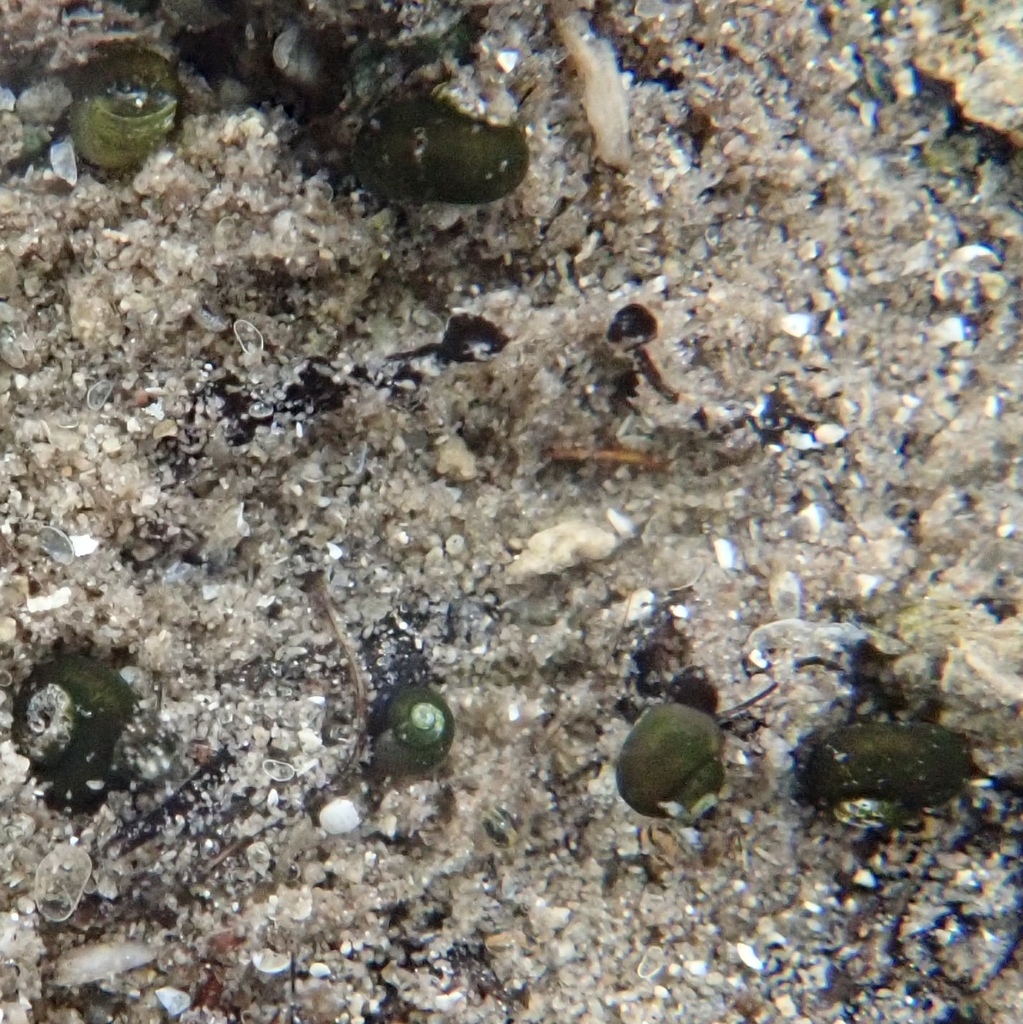
(c) Clifton Ladd, C.W.B., some rights reserved (CC BY) · licence
Family: Hydrobiidae · Class: Gastropoda · Order: Littorinimorpha
Conservation status: Endangered
Pyrgulopsis trivialis (Three Forks Springsnail) is a California animal in the Hydrobiidae family.
The Three Forks springsnail (Pyrgulopsis trivialis) is a small freshwater gastropod endemic to the White Mountains of eastern Arizona. Adults typically measure less than 5 millimeters (0.2 inches) in shell length, making it one of the smallest hydrobiid snails in North America. The species exhibits a conical shell with several whorls and displays the characteristic operculum that can seal the shell opening. As a member of the family Hydrobiidae, it possesses gill structures adapted for aquatic respiration and feeds using a radula to scrape algae and organic matter. The species has an extremely restricted range, occurring only within the Apache-Sitgreaves National Forests in Apache County, eastern Arizona. The entire known distribution spans less than 5.95 kilometers (3.7 miles) and is confined to three spring complexes: Three Forks Springs, Boneyard Bog Springs, and Boneyard Creek Springs. This represents one of the most limited ranges of any North American freshwater mollusk. Three Forks springsnails inhabit spring-fed aquatic environments characterized by consistent water flow, stable temperatures, and high water quality. The species completes all life stages within 10 feet (3 meters) of springheads, primarily occupying bog-like habitats with flowing water over gravel substrates. These spring systems maintain relatively constant temperatures year-round and support aquatic vegetation that provides both food sources and microhabitat structure. The snails require shallow, well-oxygenated water with minimal sedimentation. The species exhibits typical hydrobiid ecology, feeding primarily on periphyton, algae, and organic detritus scraped from substrate surfaces using its radula. Three Forks springsnails are likely oviparous, with reproduction occurring during spring months, though specific breeding behaviors remain poorly documented due to the species' small size and limited accessibility. Population densities vary considerably among occupied sites, with individuals typically found on aquatic vegetation and gravel substrates in areas of moderate water flow. The species' annual life cycle appears similar to related Pyrgulopsis species, with most individuals living less than one year. The U.S. Fish and Wildlife Service listed the Three Forks springsnail as endangered under the Endangered Species Act in 2012, recognizing the extreme vulnerability associated with its limited range and specialized habitat requirements. Originally described as Fontelicella trivialis by Taylor in 1987, the species was later reclassified as Pyrgulopsis confluentis before receiving its current taxonomic designation as Pyrgulopsis trivialis. Primary threats include habitat degradation from recreational activities, water diversions, and potential impacts from climate change that could alter spring flow patterns. The species is one of 13 described Pyrgulopsis species occurring in Arizona and represents a relict population from historical periods when spring systems were more widespread throughout the region. Current conservation efforts focus on habitat protection and monitoring of the three known spring complexes to ensure population stability.
Classification
Class: Gastropoda · Order: Littorinimorpha · Family: Hydrobiidae
Conservation status
Endangered
Frequently asked questions
How is Pyrgulopsis trivialis classified?
Pyrgulopsis trivialis belongs to class Gastropoda, order Littorinimorpha, family Hydrobiidae.
What family does Pyrgulopsis trivialis belong to?
Pyrgulopsis trivialis is in the Hydrobiidae family.
Is Pyrgulopsis trivialis protected or of conservation concern?
Pyrgulopsis trivialis carries the following status: Endangered.
What is Pyrgulopsis trivialis?
The Three Forks springsnail (Pyrgulopsis trivialis) is a small freshwater gastropod endemic to the White Mountains of eastern Arizona.
Is Pyrgulopsis trivialis found in California?
Yes. Pyrgulopsis trivialis is recorded in California in The California Species Project's catalogue.
Related species
Other California species in the same genus, family, or bioregion.
Data from The California Species Project — 14,000+ California species with verified data from CNPS, CDFW, USFWS, and more.