Pyrgulopsis wongi
Wong's Springsnail
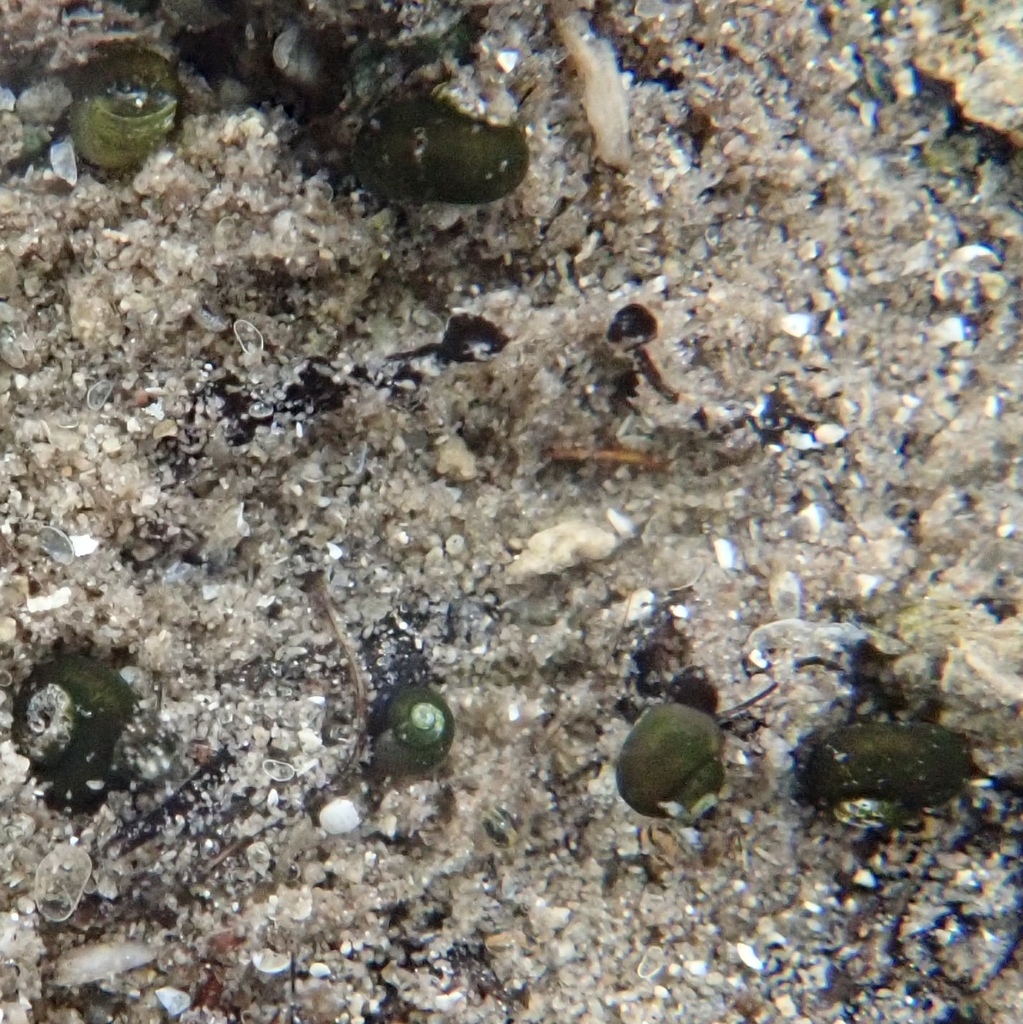
(c) Clifton Ladd, C.W.B., some rights reserved (CC BY) · licence
Family: Hydrobiidae · Class: Gastropoda · Order: Littorinimorpha
Conservation status: G3 S2
Pyrgulopsis wongi (Wong's Springsnail) is a California animal in the Hydrobiidae family.
Wong's springsnail is a small freshwater gastropod mollusk endemic to the Owens Valley region of California and adjacent basins east of the Sierra Nevada. This diminutive aquatic snail belongs to the family Hydrobiidae and represents one of several endemic springsnail species found in the isolated spring systems of this desert region. The species exhibits the typical conical shell morphology characteristic of the genus Pyrgulopsis, though specific morphometric data for this species have not been extensively documented in the scientific literature. Wong's springsnail occurs in the Owens Valley and basins east of the Sierra Nevada in California and Nevada (Hershler 1998; Hershler & Liu 2007). This distribution places the species within the Great Basin biogeographic region, where it occupies isolated aquatic habitats that have remained relatively stable since the Pleistocene. The species' range appears to be highly restricted to specific spring systems, reflecting the fragmented nature of suitable aquatic habitat in this arid landscape. The species inhabits freshwater spring systems and associated outflows in desert environments. These spring-fed habitats typically maintain relatively constant temperatures and water chemistry year-round, providing the stable conditions required by endemic springsnails. The springs where Wong's springsnail occurs are generally characterized by carbonate-rich waters emerging from underground aquifers, creating small oases of aquatic habitat within the surrounding desert ecosystem. Water temperatures in these systems typically remain cool and stable compared to surface waters in the region. Like other springsnails, Wong's springsnail likely feeds on periphyton, detritus, and microscopic organic matter found on submerged substrates. The species probably exhibits continuous reproduction throughout the year, taking advantage of the stable environmental conditions provided by spring habitats. Springsnails are generally slow-growing and long-lived compared to many other gastropods, with individuals potentially living several years. The species likely plays an important role in spring ecosystem food webs, serving as prey for various invertebrate predators and potentially fish species where present. Wong's springsnail is assigned a global conservation rank of G3 (vulnerable) and a state rank of S2 (imperiled) in California, indicating significant conservation concern. The species does not currently possess federal or state listing status under endangered species legislation. However, its restricted range and dependence on fragile spring ecosystems make it vulnerable to various anthropogenic threats. Groundwater pumping, habitat modification, and introduction of non-native species pose primary risks to springsnail populations throughout the region. Climate change may exacerbate these threats by altering regional hydrology and potentially reducing spring flows. The Owens Valley has experienced extensive water diversions historically, which have affected many aquatic ecosystems in the region. Conservation of Wong's springsnail requires protection of spring source areas and maintenance of natural hydrological processes that sustain these unique desert aquatic habitats.
Classification
Class: Gastropoda · Order: Littorinimorpha · Family: Hydrobiidae
Conservation status
G3 S2
Frequently asked questions
How is Pyrgulopsis wongi classified?
Pyrgulopsis wongi belongs to class Gastropoda, order Littorinimorpha, family Hydrobiidae.
What family does Pyrgulopsis wongi belong to?
Pyrgulopsis wongi is in the Hydrobiidae family.
Is Pyrgulopsis wongi protected or of conservation concern?
Pyrgulopsis wongi carries the following status: G3 S2.
What is Pyrgulopsis wongi?
Wong's springsnail is a small freshwater gastropod mollusk endemic to the Owens Valley region of California and adjacent basins east of the Sierra Nevada.
Is Pyrgulopsis wongi found in California?
Yes. Pyrgulopsis wongi is recorded in California in The California Species Project's catalogue.
Related species
Other California species in the same genus, family, or bioregion.
Data from The California Species Project — 14,000+ California species with verified data from CNPS, CDFW, USFWS, and more.