Pyrgus ruralis lagunae
Laguna Mountains skipper
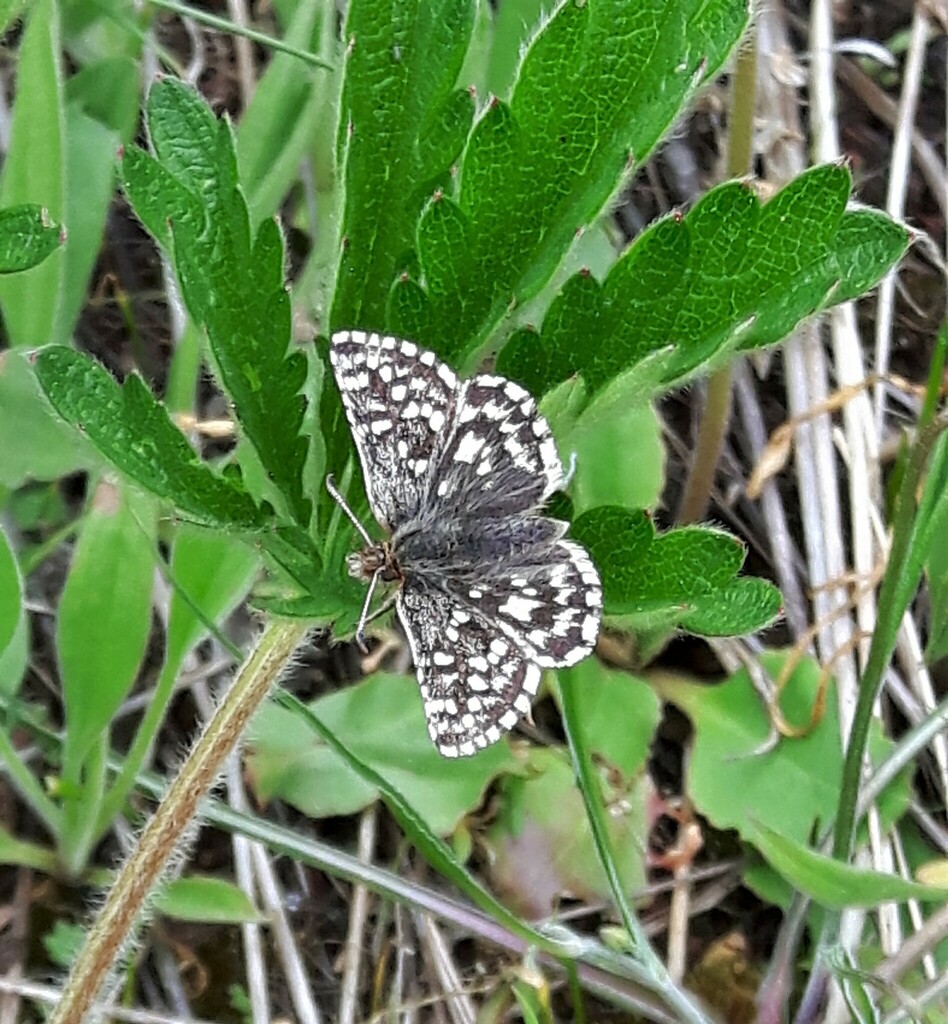
(c) Peter L Achuff, some rights reserved (CC BY) · licence
Family: Hesperiidae · Class: Insecta · Order: Lepidoptera
Conservation status: Endangered · G4G5T1 S1
Pyrgus ruralis lagunae (Laguna Mountains skipper) is a California animal in the Hesperiidae family.
The Laguna Mountains skipper (Pyrgus ruralis lagunae) is a small butterfly subspecies endemic to the Laguna Mountains of San Diego County, California. Adults have a wingspan of approximately 25 to 30 mm (1.0 to 1.2 inches). The dorsal wing surfaces are dark brown to black with distinctive white spots arranged in checkered patterns typical of Pyrgus skippers. Males possess a prominent black stigma on the forewings. The ventral hindwings display a mottled pattern of gray, white, and brown scales that provides effective camouflage when at rest on rocky surfaces. This subspecies is restricted to high-elevation areas of the Laguna Mountains in eastern San Diego County, occurring at elevations between 1,220 and 1,980 meters (4,000 to 6,500 feet). The historical range appears to have been similarly limited to this mountain range, though the current distribution represents a significant reduction from past occurrence areas. The subspecies occupies montane meadows, forest clearings, and openings within mixed coniferous forest. Laguna Mountains skippers inhabit mountain meadows and open areas within Transition and Canadian life zones. The habitat consists of native grasslands interspersed with shrubs and bordered by coniferous forest dominated by Coulter pine, Jeffrey pine, incense cedar, and white fir. Adults are typically found in areas with abundant wildflowers that serve as nectar sources, including various composites and other flowering plants that bloom during the flight season. Adults are active from mid-May through August, with peak activity occurring in June and July. Males establish territories on hilltops and ridges where they perch on rocks, logs, or bare ground to await females. Flight behavior is rapid and erratic, characteristic of skipper butterflies. Adults feed on nectar from various wildflowers. The larval host plants are unknown, but related subspecies of Pyrgus ruralis utilize various plants in the rose family (Rosaceae), particularly Horkelia species. Females likely deposit eggs singly on or near host plants, and larvae probably overwinter in early instars. The U.S. Fish and Wildlife Service listed the Laguna Mountains skipper as endangered in 1997. Population estimates indicate fewer than 2,000 individuals remain, distributed across approximately 10 to 15 small, isolated populations. The subspecies faces multiple threats including habitat degradation from recreational activities, non-native plant invasion, altered fire regimes, and climate change effects. Urban development and increased human recreation in the Laguna Mountains have fragmented remaining habitat patches. Extended drought periods and shifting precipitation patterns associated with climate change pose additional risks to both adult nectar sources and potential larval host plants. Conservation efforts focus on habitat protection, restoration of degraded areas, and management of recreational impacts within the Laguna Mountain Recreation Area and surrounding lands.
Classification
Class: Insecta · Order: Lepidoptera · Family: Hesperiidae
Conservation status
Endangered · G4G5T1 S1
Frequently asked questions
How is Pyrgus ruralis lagunae classified?
Pyrgus ruralis lagunae belongs to class Insecta, order Lepidoptera, family Hesperiidae.
What family does Pyrgus ruralis lagunae belong to?
Pyrgus ruralis lagunae is in the Hesperiidae family.
Is Pyrgus ruralis lagunae protected or of conservation concern?
Pyrgus ruralis lagunae carries the following status: Endangered · G4G5T1 S1.
What is Pyrgus ruralis lagunae?
The Laguna Mountains skipper (Pyrgus ruralis lagunae) is a small butterfly subspecies endemic to the Laguna Mountains of San Diego County, California.
Is Pyrgus ruralis lagunae found in California?
Yes. Pyrgus ruralis lagunae is recorded in California in The California Species Project's catalogue.
Related species
Other California species in the same genus, family, or bioregion.
Data from The California Species Project — 14,000+ California species with verified data from CNPS, CDFW, USFWS, and more.