Pyrisitia lisa
Little Yellow
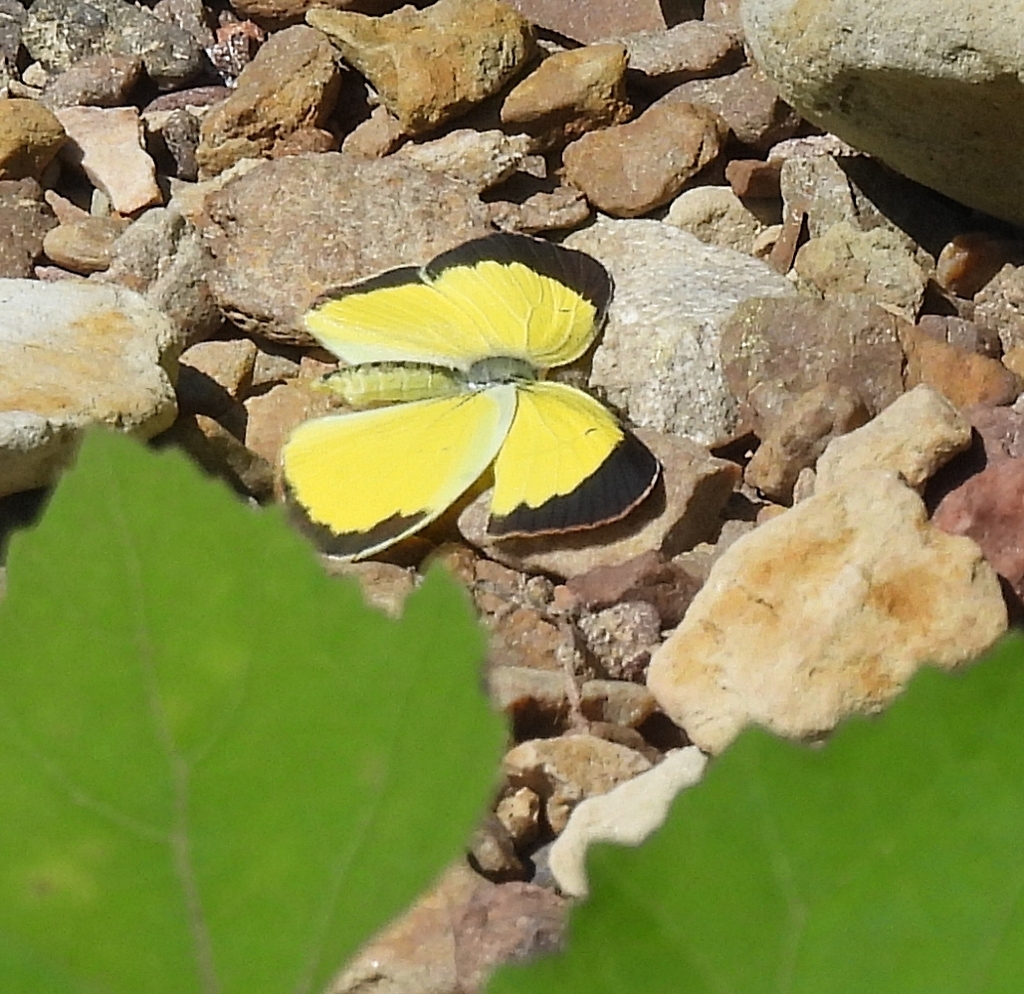
no rights reserved · CC0
Family: Pieridae · Class: Insecta · Order: Lepidoptera
Pyrisitia lisa (Little Yellow) is a California animal in the Pieridae family.
The Little Yellow (Pyrisitia lisa) is a small butterfly in the family Pieridae, commonly known as the white and sulfur butterfly family. Adults have a wingspan of 25 to 32 mm (1.0 to 1.3 inches), making it one of the smaller North American sulfur butterflies. Males display bright yellow upperside wing surfaces with narrow black borders along the wing margins. Females are typically paler yellow or white with more extensive black markings and may show orange patches near the wing tips. The underside of both sexes is pale yellow with small dark spots, and the hindwings often show a distinctive pink or orange flush. The Little Yellow maintains a permanent resident population from Costa Rica north through Mexico to South Texas and the Deep South of the United States. During favorable conditions, the species seasonally colonizes much of the eastern United States, extending its range west to eastern South Dakota, central Nebraska, and eastern New Mexico. In California, the Little Yellow is considered a rare vagrant, with occasional sightings reported in the southeastern desert regions, particularly Imperial and Riverside counties. The species cannot survive freezing temperatures and recolonizes northern areas annually through successive generations moving northward. This butterfly inhabits open, sunny areas including old fields, roadsides, desert washes, disturbed ground, and agricultural edges where its host plants occur. The species shows a preference for areas with sandy or disturbed soils that support leguminous plants. In its permanent range, Little Yellows can be found from sea level to approximately 1,500 meters (4,900 feet) elevation. Little Yellow caterpillars feed exclusively on plants in the pea family (Fabaceae), with partridge pea (Cassia fasciculata) and wild sensitive plant (Cassia nictitans) serving as the primary host plants. Females lay single pale yellow eggs on flower buds, young leaves, or seed pods of host plants. The larval stage lasts approximately three to four weeks, with caterpillars growing to 20 mm in length. Mature larvae are green with pale lateral stripes and fine hairs. Adults are active year-round in southern regions, producing multiple overlapping generations. In areas of seasonal colonization, the species typically completes two to three generations before cold weather eliminates local populations. Males exhibit territorial behavior, perching on low vegetation or bare ground near host plants and pursuing passing females or rival males. Adults nectar on a variety of flowers including asters, goldenrods, and other composites, as well as species in the pea and mint families. Flight is typically low and rapid with frequent directional changes. The Little Yellow has no special conservation status and is considered secure throughout most of its permanent range. Populations benefit from agricultural practices that maintain weedy field margins and from minimal use of herbicides in areas supporting host plants. Climate change may be facilitating range expansion northward, with some northern populations persisting longer into autumn than historically documented.
Classification
Class: Insecta · Order: Lepidoptera · Family: Pieridae
Frequently asked questions
How is Pyrisitia lisa classified?
Pyrisitia lisa belongs to class Insecta, order Lepidoptera, family Pieridae.
What family does Pyrisitia lisa belong to?
Pyrisitia lisa is in the Pieridae family.
What is Pyrisitia lisa?
The Little Yellow (Pyrisitia lisa) is a small butterfly in the family Pieridae, commonly known as the white and sulfur butterfly family.
Is Pyrisitia lisa found in California?
Yes. Pyrisitia lisa is recorded in California in The California Species Project's catalogue.
Related species
Other California species in the same genus, family, or bioregion.
Data from The California Species Project — 14,000+ California species with verified data from CNPS, CDFW, USFWS, and more.