Pyrosoma atlanticum
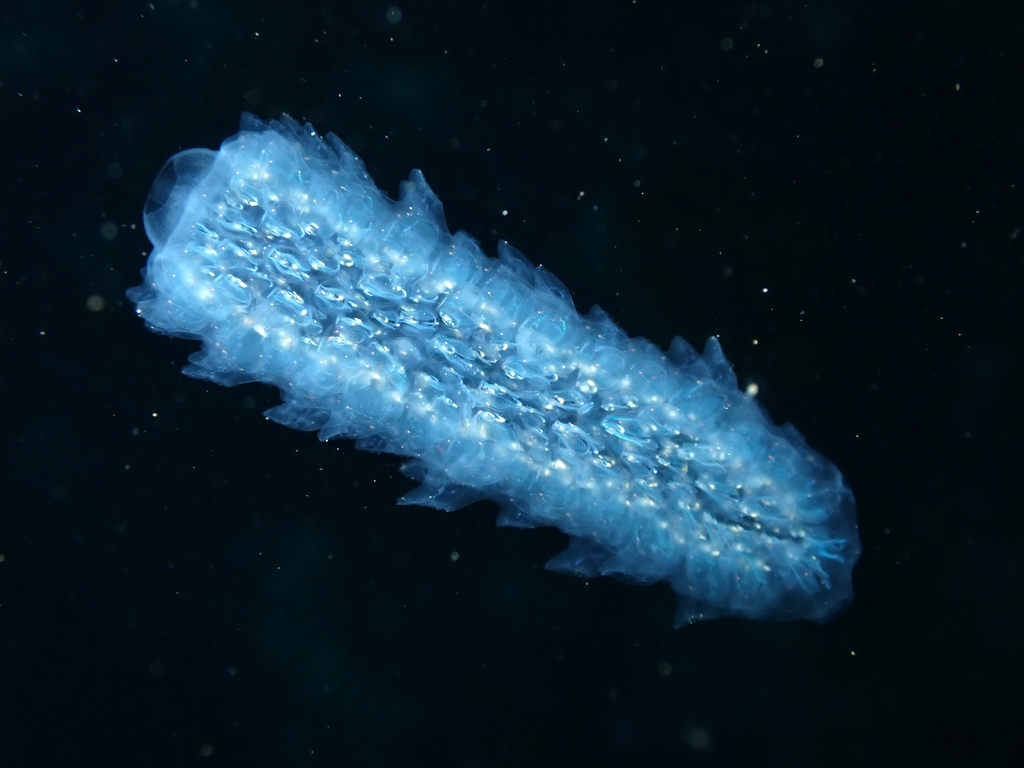
(c) Luca Davenport-Thomas, some rights reserved (CC BY) · licence
Family: Pyrosomatidae · Class: Thaliacea · Order: Pyrosomida
Pyrosoma atlanticum is a California animal in the Pyrosomatidae family.
Pyrosoma atlanticum is a colonial tunicate belonging to the subphylum Urochordata, class Thaliacea. This marine organism forms cylindrical, tube-like colonies that can reach several meters in length, composed of hundreds to thousands of individual zooids called pyrosomids. The colony appears translucent to pale pink or orange, often described as resembling a giant pickle or tube sock floating in the water column. Each individual zooid measures approximately 2-8 mm in length and contributes to the colony's coordinated movement and feeding through synchronized jet propulsion. Pyrosoma atlanticum occurs in temperate and subtropical waters of the Atlantic, Pacific, and Indian Oceans. Along the California coast, this species has been documented in offshore waters and occasionally washes ashore at marine protected areas including Double Cone Rock State Marine Conservation Area and Samoa State Marine Conservation Area (California Department of Fish and Wildlife). The species typically inhabits epipelagic to mesopelagic zones, generally found from surface waters to depths of approximately 200 meters, though some records extend deeper. This pelagic species inhabits open ocean environments, preferring areas with adequate plankton density to support filter feeding. Pyrosoma atlanticum thrives in nutrient-rich upwelling zones where phytoplankton and small zooplankton are abundant. The colonies are commonly found in areas where ocean currents concentrate plankton, making them particularly visible during upwelling events along the California coast. Water temperature appears to influence distribution, with colonies more frequently observed during warmer ocean conditions. Pyrosoma atlanticum colonies are filter feeders, with individual zooids capturing phytoplankton, bacteria, and small organic particles from the water column using ciliated feeding structures called pharyngeal baskets. The colony moves through coordinated jet propulsion, with zooids contracting simultaneously to expel water and propel the entire structure. Reproduction occurs through both asexual budding, which increases colony size, and sexual reproduction producing larvae that develop into new colonies. The species exhibits diel vertical migration patterns, moving toward surface waters at night to feed and descending during daylight hours. Pyrosoma atlanticum is not currently listed under federal or state endangered species legislation. However, like many marine planktonic organisms, populations may be affected by climate change, ocean acidification, and changes in oceanographic conditions that influence prey availability. Warming ocean temperatures associated with climate change may expand the species' range northward along the California coast. The species serves as an important component of marine food webs, providing prey for various fish species, seabirds, and marine mammals. Stranded colonies occasionally wash ashore during storms or unusual oceanographic events, providing opportunities for scientific observation and public education about marine biodiversity.
Classification
Class: Thaliacea · Order: Pyrosomida · Family: Pyrosomatidae
Frequently asked questions
How is Pyrosoma atlanticum classified?
Pyrosoma atlanticum belongs to class Thaliacea, order Pyrosomida, family Pyrosomatidae.
What family does Pyrosoma atlanticum belong to?
Pyrosoma atlanticum is in the Pyrosomatidae family.
What is Pyrosoma atlanticum?
Pyrosoma atlanticum is a colonial tunicate belonging to the subphylum Urochordata, class Thaliacea.
Is Pyrosoma atlanticum found in California?
Yes. Pyrosoma atlanticum is recorded in California in The California Species Project's catalogue.
More California species
This species has no close relatives in our California data — here are other species to explore.
Data from The California Species Project — 14,000+ California species with verified data from CNPS, CDFW, USFWS, and more.