Pyrrharctia isabella
Isabella Tiger Moth
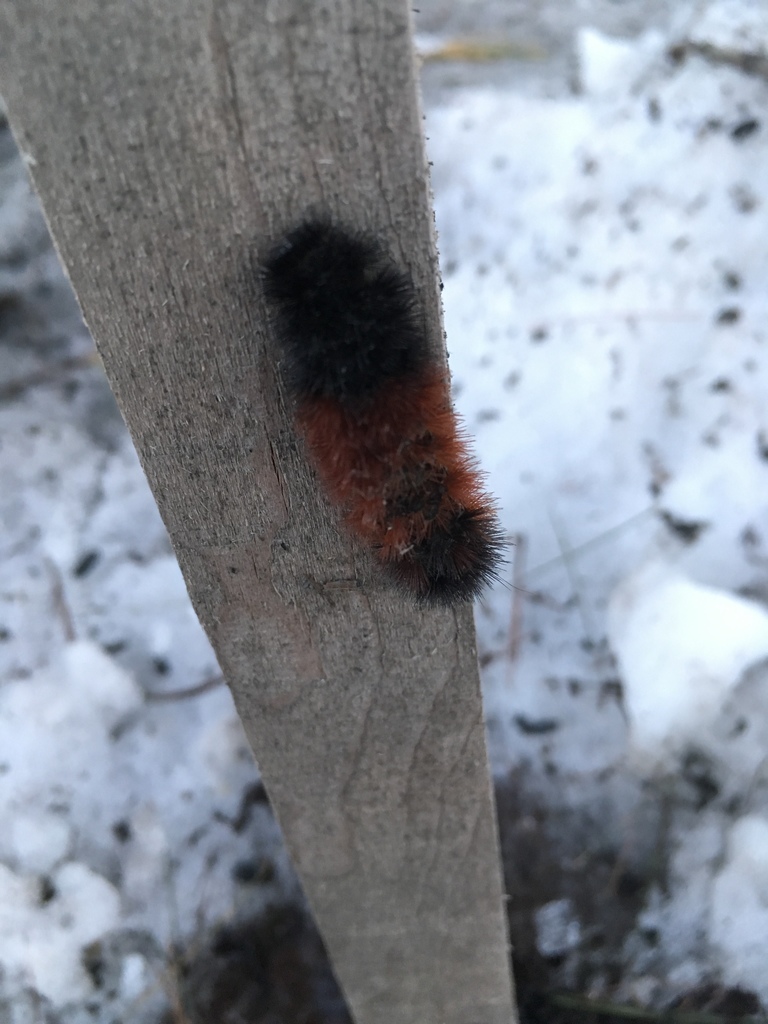
(c) naturalist charlie, some rights reserved (CC BY) · licence
Family: Erebidae · Class: Insecta · Order: Lepidoptera
Pyrrharctia isabella (Isabella Tiger Moth) is a California animal in the Erebidae family.
The Isabella tiger moth (Pyrrharctia isabella) is a medium-sized moth in the family Erebidae, widely recognized for its distinctive larval stage known as the woolly bear caterpillar or banded woolybear. Adults have a wingspan of 37 to 50 mm (1.5 to 2.0 inches) and display cream to pale yellow forewings with sparse black spots. The hindwings are pale orange to yellow with black marginal spots. The thorax and abdomen are yellow-orange with black spots, and the legs are black with orange segments. The species occurs throughout North America, ranging from southern Canada to northern Mexico. In California, Isabella tiger moths are found across multiple regions, from coastal areas to montane environments. The species demonstrates considerable adaptability to elevation, occurring from sea level to approximately 2,400 meters (8,000 feet). Populations are present in both northern and southern California counties, including the Sierra Nevada, Cascade Range, and coastal mountain ranges. Isabella tiger moths inhabit diverse environments including gardens, fields, parks, forest edges, and disturbed areas. The species thrives in both natural and modified landscapes, adapting readily to urban and suburban environments. Adults are attracted to artificial lights during their nocturnal activity periods. The larvae utilize an exceptionally broad range of host plants, feeding on asters, birches, clover, corn, elms, maples, and sunflowers, among numerous other herbaceous and woody species. This polyphagous feeding strategy contributes to the species' widespread distribution and ecological success. The species exhibits a univoltine life cycle in most regions, producing one generation per year. Adults emerge from late spring through early fall, with peak activity occurring during summer months. Mating occurs shortly after emergence, and females deposit clusters of eggs on host plant foliage. The woolly bear caterpillars are distinctive, measuring up to 65 mm (2.5 inches) when mature, with dense bands of black and reddish-brown bristles. Contrary to folklore, bristle coloration does not predict winter severity but varies with genetic factors, age, and environmental conditions. Larvae overwinter as caterpillars, seeking shelter under logs, rocks, or leaf litter, where they can survive temperatures below freezing through production of cryoprotectant compounds. Pupation occurs in spring within loosely constructed cocoons incorporating larval bristles. The Isabella tiger moth is not federally or state-listed and appears secure throughout its range. The species benefits from its broad host plant associations and tolerance of habitat modification. Populations may actually increase in some agricultural and suburban areas due to the abundance of suitable host plants. Climate change may affect seasonal timing and geographic distribution, but the species' ecological flexibility suggests resilience to environmental changes. No specific conservation measures are currently needed, and the species serves important ecological functions as both herbivore and prey for various predators including birds, spiders, and other insects.
Classification
Class: Insecta · Order: Lepidoptera · Family: Erebidae
Frequently asked questions
How is Pyrrharctia isabella classified?
Pyrrharctia isabella belongs to class Insecta, order Lepidoptera, family Erebidae.
What family does Pyrrharctia isabella belong to?
Pyrrharctia isabella is in the Erebidae family.
What is Pyrrharctia isabella?
The Isabella tiger moth (Pyrrharctia isabella) is a medium-sized moth in the family Erebidae, widely recognized for its distinctive larval stage known as the woolly bear caterpillar or banded woolybear.
Is Pyrrharctia isabella found in California?
Yes. Pyrrharctia isabella is recorded in California in The California Species Project's catalogue.
Related species
Other California species in the same genus, family, or bioregion.
Data from The California Species Project — 14,000+ California species with verified data from CNPS, CDFW, USFWS, and more.