Rabdophaga salicisbatatus
Potato Gall Midge
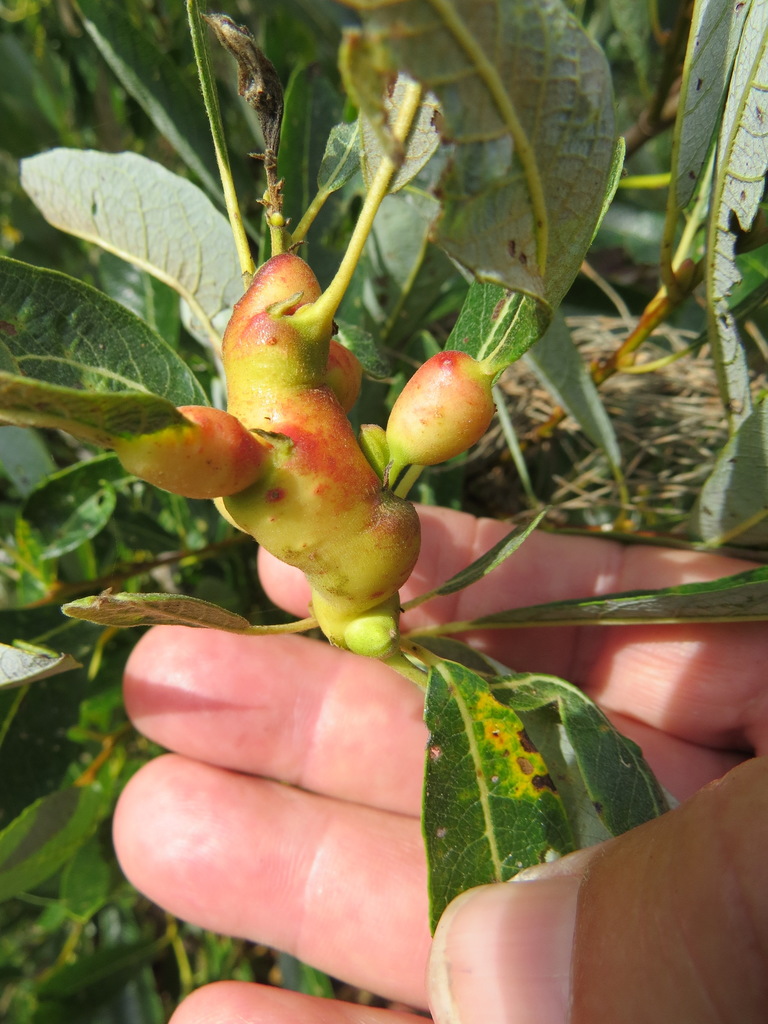
(c) Garth Harwood, some rights reserved (CC BY) · licence
Family: Cecidomyiidae · Class: Insecta · Order: Diptera
Rabdophaga salicisbatatus (Potato Gall Midge) is a California animal in the Cecidomyiidae family.
The Potato Gall Midge (Rabdophaga salicisbatatus) is a small dipteran insect in the family Cecidomyiidae, commonly known as gall midges. Adult midges are typically 2-4 mm in length with delicate, elongated bodies characteristic of the family. The species exhibits the standard cecidomyiid morphology with long, thread-like antennae, reduced wing venation, and fragile legs adapted for their specialized lifecycle. The distribution and range of Rabdophaga salicisbatatus in California have not been comprehensively documented in available scientific literature. As a member of the diverse Cecidomyiidae family, this species likely follows the typical gall midge pattern of localized populations associated with specific host plants. The genus Rabdophaga contains numerous species that form galls on various willow species (Salix spp.), suggesting this species may have similar host associations. Habitat requirements for this gall midge appear to be closely tied to the presence of suitable host plants, though specific ecological preferences have not been well documented. Most Rabdophaga species inhabit riparian zones, wetland margins, and other areas where their willow hosts naturally occur. These environments typically provide the moisture levels necessary for successful gall development and adult emergence. The behavior and ecology of R. salicisbatatus follow the typical cecidomyiid lifecycle pattern of complete metamorphosis. Adult females deposit eggs in or on host plant tissues, triggering the formation of characteristic galls through plant growth responses. Larvae develop within these protective galls, feeding on plant tissues and secretions. The gall-forming behavior provides both nutrition and protection from predators and environmental stresses. Development time varies with temperature and seasonal conditions, with some species producing multiple generations per year while others are univoltine. Like many gall midges, this species likely plays important ecological roles as both herbivore and prey species. The galls themselves can provide microhabitats for other insects, while adult midges serve as food sources for various predators including spiders, other insects, and small vertebrates. The specialized relationship between gall midges and their host plants represents a co-evolutionary adaptation that can influence plant community structure in subtle ways. The conservation status of Rabdophaga salicisbatatus has not been formally assessed by state or federal agencies. This species lacks federal or state listing status, and its global conservation rank remains undesignated. The limited scientific documentation reflects the broader challenge of assessing conservation needs for the thousands of small, specialized insects that comprise much of California's arthropod diversity. Many cecidomyiid species remain poorly studied despite their potential ecological importance. Scientific documentation for this species remains limited. The information presented here synthesizes available taxonomic and ecological knowledge about the genus Rabdophaga and family Cecidomyiidae. Detailed studies of this species' biology, host plant relationships, distribution, and ecological role in California ecosystems would contribute significantly to our understanding of the state's invertebrate fauna.
Classification
Class: Insecta · Order: Diptera · Family: Cecidomyiidae
Frequently asked questions
How is Rabdophaga salicisbatatus classified?
Rabdophaga salicisbatatus belongs to class Insecta, order Diptera, family Cecidomyiidae.
What family does Rabdophaga salicisbatatus belong to?
Rabdophaga salicisbatatus is in the Cecidomyiidae family.
What is Rabdophaga salicisbatatus?
The Potato Gall Midge (Rabdophaga salicisbatatus) is a small dipteran insect in the family Cecidomyiidae, commonly known as gall midges.
Is Rabdophaga salicisbatatus found in California?
Yes. Rabdophaga salicisbatatus is recorded in California in The California Species Project's catalogue.
Related species
Other California species in the same genus, family, or bioregion.
Data from The California Species Project — 14,000+ California species with verified data from CNPS, CDFW, USFWS, and more.