Rachiplusia ou
Gray Looper Moth
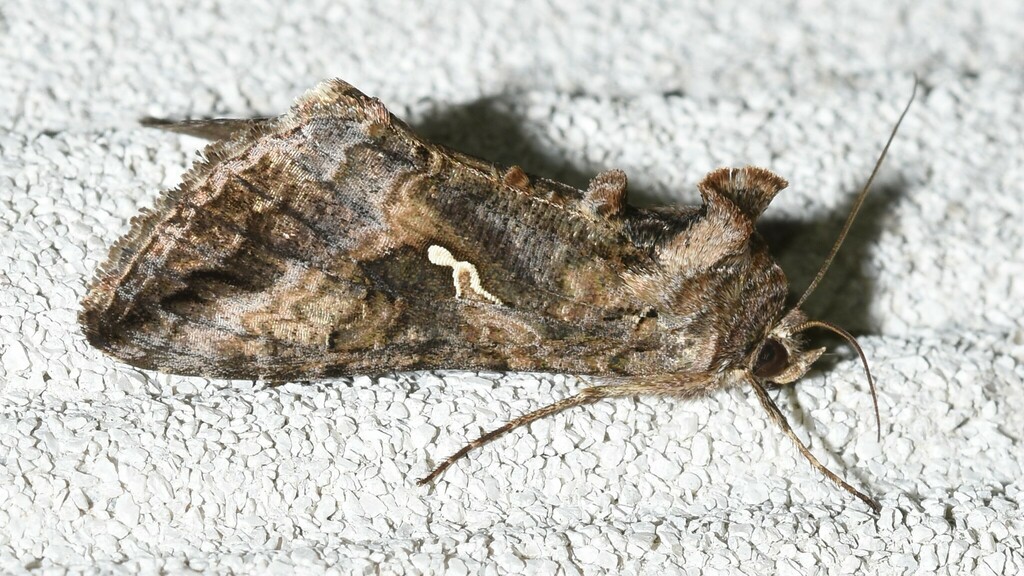
no rights reserved · CC0
Family: Noctuidae · Class: Insecta · Order: Lepidoptera
Rachiplusia ou (Gray Looper Moth) is a California animal in the Noctuidae family.
The Gray Looper Moth (Rachiplusia ou) is a medium-sized nocturnal moth in the family Noctuidae, subfamily Plusiinae. Adults have a wingspan of approximately 32-38 mm (1.3-1.5 inches). The forewings are grayish-brown with distinctive silver or pale metallic markings, including a characteristic comma-shaped stigma and reniform spot that help distinguish this species from related loopers. The hindwings are pale grayish-white with darker veining. Males can be distinguished from females by their more feathered antennae and slightly smaller size. Rachiplusia ou occurs across much of North America, ranging from southern Canada through the United States to northern Mexico. In California, the species is found throughout most regions, from coastal areas to inland valleys and foothills. The moth has been documented from sea level to elevations of approximately 1,500 meters (4,900 feet), though it is most common in agricultural areas and disturbed habitats below 1,000 meters. This species inhabits a wide variety of open habitats including agricultural fields, gardens, weedy lots, and disturbed areas. Gray Looper Moths are particularly associated with areas containing their larval host plants, which include numerous crops and weeds in the families Brassicaceae, Fabaceae, and Solanaceae. Common host plants include cabbage, lettuce, tomatoes, beans, alfalfa, and various wild mustards and clovers. The species shows strong preference for areas with abundant nectar sources for adults. Adult Gray Looper Moths are active from dusk through early morning hours and are strongly attracted to artificial lights. Males locate females through pheromone detection, often flying considerable distances to mating sites. Females lay eggs singly on host plant leaves, typically on the undersides. The pale green larvae, known as loopers due to their characteristic arching locomotion, feed on foliage and can complete development in 3-4 weeks under favorable conditions. The species is multivoltine, producing 3-4 generations per year in California's mild climate, with continuous breeding possible in frost-free areas. Larvae pupate in loose cocoons spun among plant debris or in soil. Overwintering typically occurs in the pupal stage, though some adult activity may continue during mild winter periods in coastal and southern California regions. Peak adult flight periods occur in late spring and early fall. The Gray Looper Moth is not considered threatened and maintains stable populations throughout its range. As an agricultural pest, larvae occasionally cause economic damage to crops, particularly in vegetable production systems. However, the species also serves ecological functions as a pollinator of night-blooming plants and as prey for bats, spiders, and other nocturnal predators. Population levels can fluctuate significantly based on weather patterns, host plant availability, and natural enemy abundance. Climate change may potentially expand the species' range northward and increase generation numbers in some regions.
Classification
Class: Insecta · Order: Lepidoptera · Family: Noctuidae
Frequently asked questions
How is Rachiplusia ou classified?
Rachiplusia ou belongs to class Insecta, order Lepidoptera, family Noctuidae.
What family does Rachiplusia ou belong to?
Rachiplusia ou is in the Noctuidae family.
What is Rachiplusia ou?
The Gray Looper Moth (Rachiplusia ou) is a medium-sized nocturnal moth in the family Noctuidae, subfamily Plusiinae.
Is Rachiplusia ou found in California?
Yes. Rachiplusia ou is recorded in California in The California Species Project's catalogue.
Related species
Other California species in the same genus, family, or bioregion.
Data from The California Species Project — 14,000+ California species with verified data from CNPS, CDFW, USFWS, and more.