Rallus limicola
Virginia Rail
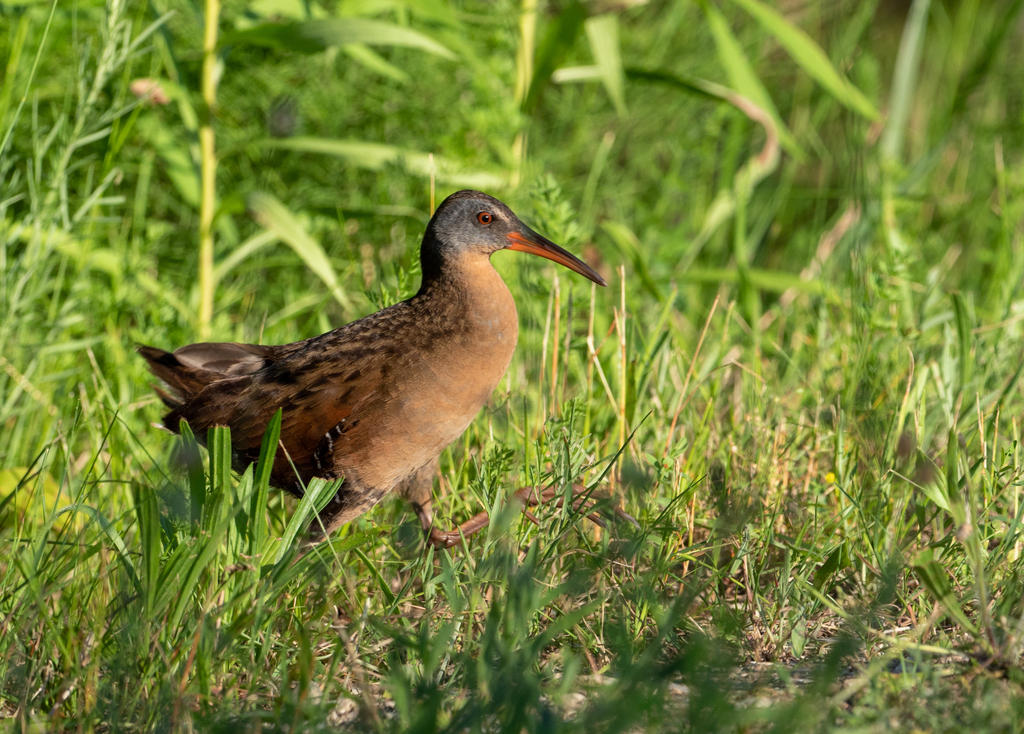
(c) Forest Botial-Jarvis, some rights reserved (CC BY) · licence
Family: Rallidae · Class: Aves · Order: Gruiformes
Rallus limicola (Virginia Rail) is a California animal in the Rallidae family.
The Virginia Rail is a small, secretive wetland bird measuring 20 to 27 cm (8 to 11 inches) in length with a wingspan of 32 to 38 cm (13 to 15 inches). Adults weigh between 65 to 95 grams (2.3 to 3.4 ounces). The species displays rusty-brown upperparts with dark streaks and bars, grayish-brown underparts, and distinctive white undertail coverts that flash conspicuously during flight. The bill is long, slightly decurved, and reddish-orange at the base with a darker tip. Legs and feet are orange-red to brownish-red. Adults exhibit a grayish face and throat, while juveniles show more mottled plumage with duller coloration. Virginia Rails breed across much of temperate North America, including suitable wetland habitats throughout California. The species occurs from sea level to approximately 2,400 meters (7,900 feet) elevation in the state. California populations include both year-round residents and migrants, with northern breeding populations wintering in the southern portions of the range. The species is found in freshwater and brackish marshes from the Central Valley to coastal regions, including the San Francisco Bay Area, Sierra Nevada foothills, and scattered locations in southern California. This rail inhabits shallow freshwater and brackish marshes with dense emergent vegetation, particularly cattails, bulrushes, and sedges. Optimal habitat features water depths of 2.5 to 15 cm (1 to 6 inches) with approximately 50 percent vegetation coverage. The species requires areas with both open water for foraging and dense cover for nesting and escape from predators. Virginia Rails utilize managed wetlands, natural marshes, irrigation ditches, and seasonal wetlands. Virginia Rails are omnivorous, consuming aquatic invertebrates, small fish, amphibians, seeds, and plant matter. They forage by probing soft substrates and gleaning prey from vegetation surfaces. The species exhibits crepuscular and nocturnal activity patterns, remaining hidden in dense vegetation during daylight hours. Breeding occurs from April through August in California, with peak activity from May to July. Females construct platform nests of woven marsh vegetation, typically placed 15 to 41 cm (6 to 16 inches) above water level. Clutch size ranges from 5 to 13 eggs, with an average of 8 to 10 eggs. Incubation lasts 18 to 20 days, and chicks are precocial, leaving the nest within hours of hatching. Virginia Rails are not federally or state-listed in California, and populations appear stable across most of their range as of December 2025. However, the species faces ongoing threats from wetland habitat loss and degradation, water level management practices that eliminate suitable water depths, and urban development in wetland areas. Climate change poses additional concerns through altered precipitation patterns and increased drought frequency. Conservation efforts focus on maintaining and restoring wetland habitats through waterfowl management areas, mitigation banking, and partnerships with private landowners to preserve seasonal flooding regimes in agricultural wetlands.
Classification
Class: Aves · Order: Gruiformes · Family: Rallidae
Frequently asked questions
How is Rallus limicola classified?
Rallus limicola belongs to class Aves, order Gruiformes, family Rallidae.
What family does Rallus limicola belong to?
Rallus limicola is in the Rallidae family.
What is Rallus limicola?
The Virginia Rail is a small, secretive wetland bird measuring 20 to 27 cm (8 to 11 inches) in length with a wingspan of 32 to 38 cm (13 to 15 inches).
Is Rallus limicola found in California?
Yes. Rallus limicola is recorded in California in The California Species Project's catalogue.
Related species
Other California species in the same genus, family, or bioregion.
Data from The California Species Project — 14,000+ California species with verified data from CNPS, CDFW, USFWS, and more.