Rallus obsoletus levipes
Light-footed Ridgway's rail
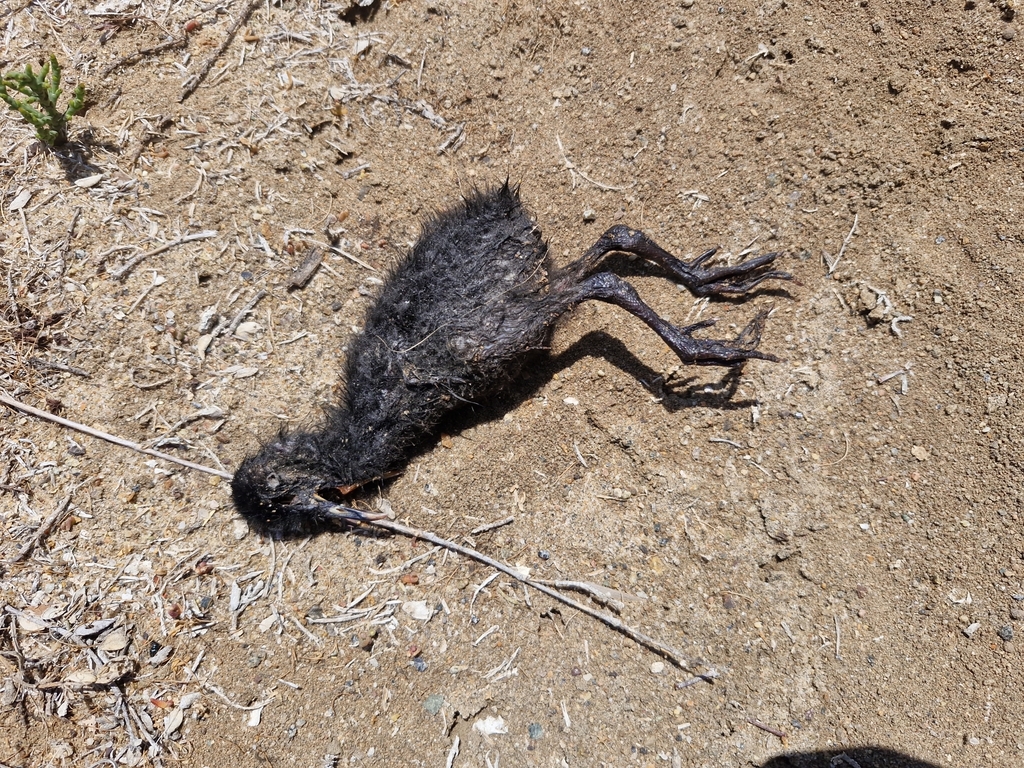
(c) Diego Maldonado de la Torre, some rights reserved (CC BY) · licence
Family: Rallidae · Class: Aves · Order: Gruiformes
Conservation status: FP · Endangered · G3T1T2 S1
Rallus obsoletus levipes (Light-footed Ridgway's rail) is a California animal in the Rallidae family.
The light-footed Ridgway's rail is a secretive marsh bird measuring approximately 14 inches (35.6 cm) in length with a hen-like body structure. This subspecies displays long legs, elongated toes adapted for walking on soft marsh substrates, and a slightly down-curved bill suited for probing mud and vegetation. The bird exhibits cinnamon-brown plumage with darker barring on the back and wings, providing effective camouflage within dense marsh vegetation. Formerly known as the light-footed clapper rail (Rallus longirostris levipes), this subspecies occurs exclusively in coastal southern California and northwestern Baja California, Mexico. According to the U.S. Fish and Wildlife Service, the species has experienced significant range reduction, with current populations concentrated in scattered salt marshes from Ventura County south to San Diego County. The species was historically more widespread throughout coastal wetlands of southern California but now occupies less than 50% of formerly suitable habitat. Light-footed Ridgway's rails inhabit coastal salt marshes, lagoons, and estuarine environments. They require dense stands of cordgrass (Spartina) in the lower littoral zone for nesting, combined with shallow water areas and exposed mudflats for foraging. During high tides, the birds seek refuge in adjacent higher marsh vegetation or upland areas. The species demonstrates strong fidelity to specific marsh systems that provide the necessary combination of nesting cover, foraging areas, and tidal refugia. These rails are primarily active during dawn and dusk, foraging for crabs, marine worms, snails, and small fish in tidal channels and mudflats. Breeding occurs from March through August, with pairs constructing platform nests of marsh vegetation above the high tide line. Females typically lay 6-10 buff-colored eggs marked with brown spots. The species exhibits secretive behavior, often remaining hidden within dense vegetation and relying on vocalizations for territorial communication and pair bonding. The light-footed Ridgway's rail was listed as federally endangered on October 13, 1970, and maintains endangered status under both federal and California state legislation. Primary threats include habitat loss from coastal development, pollution, predation by introduced species, and sea level rise associated with climate change. Despite conservation challenges, population monitoring has shown encouraging trends, with the 2016 census recording 646 breeding pairs across 18 marshes throughout southern California, representing the highest documented population count since systematic monitoring began. Recovery efforts focus on habitat restoration, predator control, and protection of remaining marsh systems through collaborative partnerships between federal agencies, state wildlife departments, and local conservation organizations. Continued monitoring and adaptive management remain essential for this subspecies' long-term persistence in California's increasingly urbanized coastal environment.
Classification
Class: Aves · Order: Gruiformes · Family: Rallidae
Conservation status
FP · Endangered · G3T1T2 S1
Frequently asked questions
How is Rallus obsoletus levipes classified?
Rallus obsoletus levipes belongs to class Aves, order Gruiformes, family Rallidae.
What family does Rallus obsoletus levipes belong to?
Rallus obsoletus levipes is in the Rallidae family.
Is Rallus obsoletus levipes protected or of conservation concern?
Rallus obsoletus levipes carries the following status: FP · Endangered · G3T1T2 S1.
What is Rallus obsoletus levipes?
The light-footed Ridgway's rail is a secretive marsh bird measuring approximately 14 inches (35.6 cm) in length with a hen-like body structure.
Is Rallus obsoletus levipes found in California?
Yes. Rallus obsoletus levipes is recorded in California in The California Species Project's catalogue.
Related species
Other California species in the same genus, family, or bioregion.
Data from The California Species Project — 14,000+ California species with verified data from CNPS, CDFW, USFWS, and more.