Rana boylii
Foothill Yellow-legged Frog
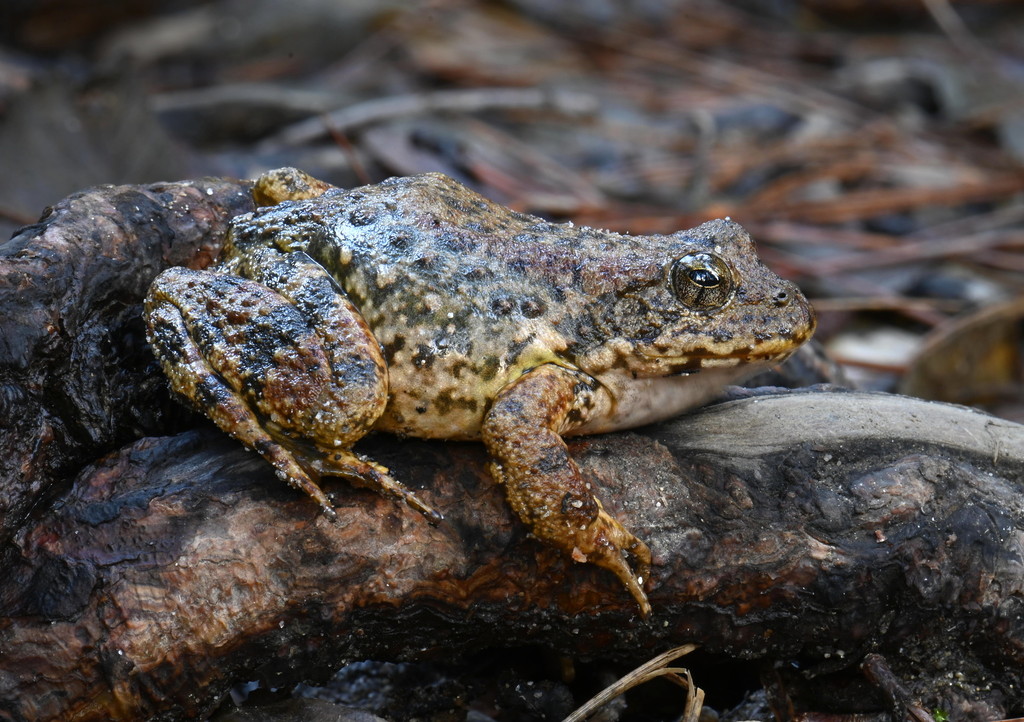
(c) Alan Rockefeller, some rights reserved (CC BY) · licence
Family: Ranidae · Class: Amphibia · Order: Anura
Conservation status: G3 S3
Rana boylii (Foothill Yellow-legged Frog) is a California animal in the Ranidae family.
The foothill yellow-legged frog (Rana boylii) is a small to medium-sized amphibian with rough, pebbly skin that is generally mottled gray, olive, or brown in coloration. The species derives its common name from the distinctive yellow shading present on its belly and underside of the rear legs, which serves as a key identifying characteristic. Historically, the foothill yellow-legged frog ranged from the Willamette River drainage in Oregon south to the San Gabriel Mountains in southern California. Today, the species maintains much of its historical distribution but has experienced range contractions, particularly at the southern ends of some population segments. The frog currently occurs in seven counties in Oregon and 36 counties in California, inhabiting foothill and mountain streams from the Pacific Coast to the western slopes of the Sierra Nevada and Cascade Mountains. This stream-associated species occupies elevations up to approximately 5,000 feet and occurs across diverse vegetation types including valley-foothill hardwood, valley-foothill hardwood-conifer, valley-foothill riparian, ponderosa pine, mixed conifer, mixed chaparral, and wet meadows. The frog maintains a close association with aquatic habitats and is rarely observed far from water's edge. Breeding habitat consists of shallow, rocky streams that receive at least partial direct sunlight exposure. Foothill yellow-legged frogs are stream-breeding anurans that require flowing water for reproduction and development. The species functions as an ecological sentinel for assessing stream ecosystem health. Adults remain closely tied to riparian corridors throughout their life cycle, utilizing both aquatic and adjacent terrestrial habitats. The foothill yellow-legged frog comprises six geographically and genetically distinct population segments (DPS), each facing different conservation challenges. The U.S. Fish and Wildlife Service listed the South Coast DPS and South Sierra DPS as endangered on September 28, 2023, due to strong patterns of declining stream occupancy, rapid reductions in occupied range, and predicted inability to survive catastrophic events (USFWS 2023). The North Feather DPS and Central Coast DPS received threatened status due to decreasing stream occupancy levels and potential for various threats to cause additional population declines. The North Coast DPS and North Sierra DPS were determined not warranted for listing based on data showing high occupancy levels throughout their ranges. The species faces multiple threats including altered water flows related to water infrastructure development, competition and predation by non-native species, and disease. Climate change poses additional challenges through altered precipitation patterns and temperature changes, while high-severity wildfires increasingly impact habitat quality. Water-related recreation activities and ongoing habitat conversion and degradation continue to threaten remaining populations across the species' range.
Classification
Class: Amphibia · Order: Anura · Family: Ranidae
Conservation status
G3 S3
Frequently asked questions
How is Rana boylii classified?
Rana boylii belongs to class Amphibia, order Anura, family Ranidae.
What family does Rana boylii belong to?
Rana boylii is in the Ranidae family.
Is Rana boylii protected or of conservation concern?
Rana boylii carries the following status: G3 S3.
What is Rana boylii?
The foothill yellow-legged frog (Rana boylii) is a small to medium-sized amphibian with rough, pebbly skin that is generally mottled gray, olive, or brown in coloration.
Is Rana boylii found in California?
Yes. Rana boylii is recorded in California in The California Species Project's catalogue.
Related species
Other California species in the same genus, family, or bioregion.
Data from The California Species Project — 14,000+ California species with verified data from CNPS, CDFW, USFWS, and more.