Rana boylii pop. 3
Foothill yellow- legged frog - north Sierra DPS
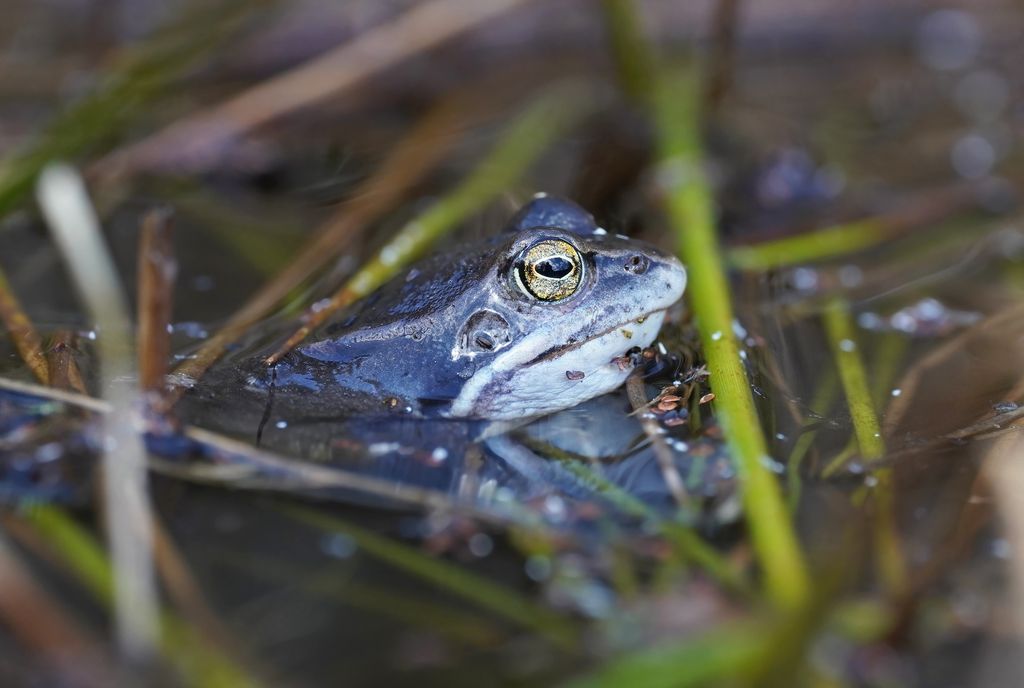
(c) Julia Moning, some rights reserved (CC BY) · licence
Family: Ranidae · Class: Amphibia · Order: Anura
Conservation status: ST · G3T2 S2
Rana boylii pop. 3 (Foothill yellow- legged frog - north Sierra DPS) is a California animal in the Ranidae family.
The foothill yellow-legged frog (Rana boylii) North Sierra distinct population segment is a small to medium-sized amphibian measuring 1.5 to 3.2 inches in length (USFWS 2025). The species displays rough, pebbly skin with mottled gray, olive, or brown coloration on the dorsal surface. True to its name, the frog exhibits distinctive yellow shading on its belly and the underside of its rear legs, distinguishing it from other California ranids. The North Sierra DPS occupies a geographically limited range primarily in Yuba, Sierra, Nevada, and Placer Counties, California. This population segment represents the transition zone between the northern and central ecoregions of the Sierra Nevada Mountains and contains the most Level IV ecoregions of any foothill yellow-legged frog DPS, indicating highly variable environmental conditions (USFWS 2021). The North Sierra DPS is notable as the only known area where the foothill yellow-legged frog currently coexists with the endangered Sierra Nevada yellow-legged frog (Rana sierrae). This population inhabits rocky streams and adjacent riparian areas in foothill and montane environments. The species requires perennial or near-perennial streams with rocky substrates, pool-riffle complexes, and stable flow regimes. Adults utilize shallow, slow-moving water areas along stream margins for foraging and reproduction. Tadpoles depend on extended hydroperiods to complete metamorphosis, requiring streams that maintain adequate water levels throughout the larval development period. Foothill yellow-legged frogs are primarily aquatic, rarely venturing far from water sources. Adults are opportunistic predators, feeding on terrestrial and aquatic invertebrates including flies, beetles, spiders, and other arthropods. Breeding occurs from March through May, with timing varying by elevation and local climate conditions. Females deposit egg masses attached to the downstream side of rocks or vegetation in shallow water areas with gentle currents. Tadpoles require 3-4 months to complete metamorphosis, making them vulnerable to water level fluctuations during the dry season. The North Sierra DPS currently maintains a state listing as threatened in California, with a global rank of G3T2 S2, indicating significant conservation concern. According to California Department of Fish and Wildlife notes, listing status varies by clade within the foothill yellow-legged frog complex. Unlike several other distinct population segments that received federal protection in 2023, the U.S. Fish and Wildlife Service determined that federal listing was not warranted for the North Sierra DPS (USFWS 2021). However, this population faces ongoing threats including altered stream flows from water diversions and dam operations, habitat degradation from development and land use changes, competition and predation from non-native species, and climate change impacts on stream hydrology. The variable environmental conditions within this DPS may provide some resilience against climate-related threats, but continued monitoring and conservation efforts remain essential for long-term population viability.
Classification
Class: Amphibia · Order: Anura · Family: Ranidae
Conservation status
ST · G3T2 S2
Frequently asked questions
How is Rana boylii pop. 3 classified?
Rana boylii pop. 3 belongs to class Amphibia, order Anura, family Ranidae.
What family does Rana boylii pop. 3 belong to?
Rana boylii pop. 3 is in the Ranidae family.
Is Rana boylii pop. 3 protected or of conservation concern?
Rana boylii pop. 3 carries the following status: ST · G3T2 S2.
What is Rana boylii pop. 3?
The foothill yellow-legged frog (Rana boylii) North Sierra distinct population segment is a small to medium-sized amphibian measuring 1.5 to 3.2 inches in length (USFWS 2025).
Is Rana boylii pop. 3 found in California?
Yes. Rana boylii pop. 3 is recorded in California in The California Species Project's catalogue.
Related species
Other California species in the same genus, family, or bioregion.
Data from The California Species Project — 14,000+ California species with verified data from CNPS, CDFW, USFWS, and more.