Rana boylii pop. 4
Foothill yellow- legged frog - central coast DPS
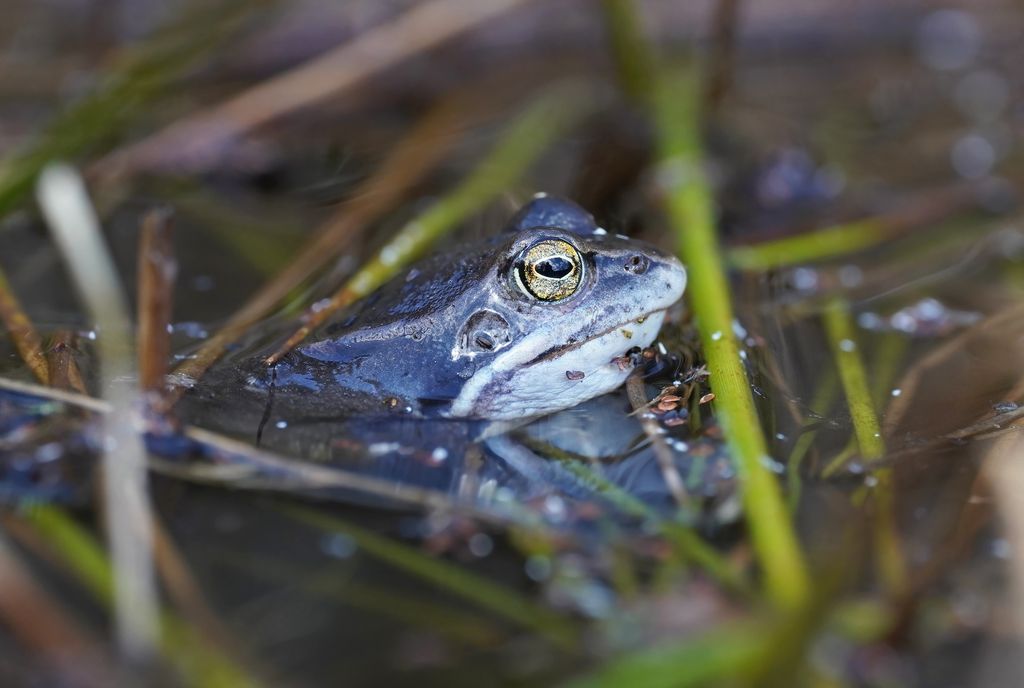
(c) Julia Moning, some rights reserved (CC BY) · licence
Family: Ranidae · Class: Amphibia · Order: Anura
Conservation status: SE · Threatened · G3T2 S2
Rana boylii pop. 4 (Foothill yellow- legged frog - central coast DPS) is a California animal in the Ranidae family.
The foothill yellow-legged frog Central Coast distinct population segment (DPS) is a small to medium-sized amphibian measuring 1.5 to 3.2 inches (38 to 81 mm) in length. This stream-dwelling species displays rough, pebbly skin that is generally mottled gray, olive, or brown dorsally. The species derives its common name from distinctive yellow coloration on the belly and undersides of the hind legs. Adults possess relatively short legs compared to other ranid frogs and lack dorsolateral folds along the back. The Central Coast DPS encompasses coastal drainages from approximately San Francisco Bay south to the Santa Ynez River in Santa Barbara County, California. This population occupies streams within the Coast Range mountains and coastal watersheds, representing one of four distinct population segments recognized by the U.S. Fish and Wildlife Service. According to USFWS assessments, this DPS has experienced declining stream occupancy and range reductions from its historical distribution (USFWS 2023). Foothill yellow-legged frogs are stream-obligate species, primarily inhabiting rocky or cobble-bottomed streams with areas of shallow water and gravel bars for breeding. The species occurs in streams ranging from small tributaries to larger mainstem channels, typically at elevations below 6,000 feet. Adults require streams with permanent or near-permanent water flow, while breeding sites consist of shallow areas with gravel substrates where water velocity is reduced. Terrestrial habitat includes riparian zones with vegetation types ranging from chaparral to hardwood-conifer forests. Breeding occurs from late winter through early summer, with timing varying by elevation and local climate conditions. Females deposit egg masses containing 200 to 1,000 eggs attached to rocks or vegetation in shallow water areas. Tadpoles require approximately one year to metamorphose, overwintering in stream pools before transforming into juveniles. Adults are primarily nocturnal, foraging along stream edges and in adjacent terrestrial areas for insects, spiders, and other invertebrates. The species exhibits strong site fidelity, with individuals often returning to the same stream reaches. The Central Coast DPS was listed as threatened under the Endangered Species Act effective September 28, 2023, and is designated as endangered under the California Endangered Species Act. USFWS assigned threatened status due to decreasing stream occupancy levels and vulnerability to catastrophic events (USFWS 2023). Primary threats include altered water flows from dams and diversions, competition and predation by non-native species such as American bullfrogs and crayfish, disease, and climate change effects on precipitation and temperature patterns. In January 2025, USFWS proposed designating 249,942 acres of critical habitat for this DPS to support recovery efforts. The Service included a 4(d) rule allowing certain habitat restoration and forest management activities that may benefit the species while reducing wildfire risks.
Classification
Class: Amphibia · Order: Anura · Family: Ranidae
Conservation status
SE · Threatened · G3T2 S2
Frequently asked questions
How is Rana boylii pop. 4 classified?
Rana boylii pop. 4 belongs to class Amphibia, order Anura, family Ranidae.
What family does Rana boylii pop. 4 belong to?
Rana boylii pop. 4 is in the Ranidae family.
Is Rana boylii pop. 4 protected or of conservation concern?
Rana boylii pop. 4 carries the following status: SE · Threatened · G3T2 S2.
What is Rana boylii pop. 4?
The foothill yellow-legged frog Central Coast distinct population segment (DPS) is a small to medium-sized amphibian measuring 1.5 to 3.2 inches (38 to 81 mm) in length.
Is Rana boylii pop. 4 found in California?
Yes. Rana boylii pop. 4 is recorded in California in The California Species Project's catalogue.
Related species
Other California species in the same genus, family, or bioregion.
Data from The California Species Project — 14,000+ California species with verified data from CNPS, CDFW, USFWS, and more.