Rana boylii pop. 5
Foothill yellow- legged frog - south Sierra DPS
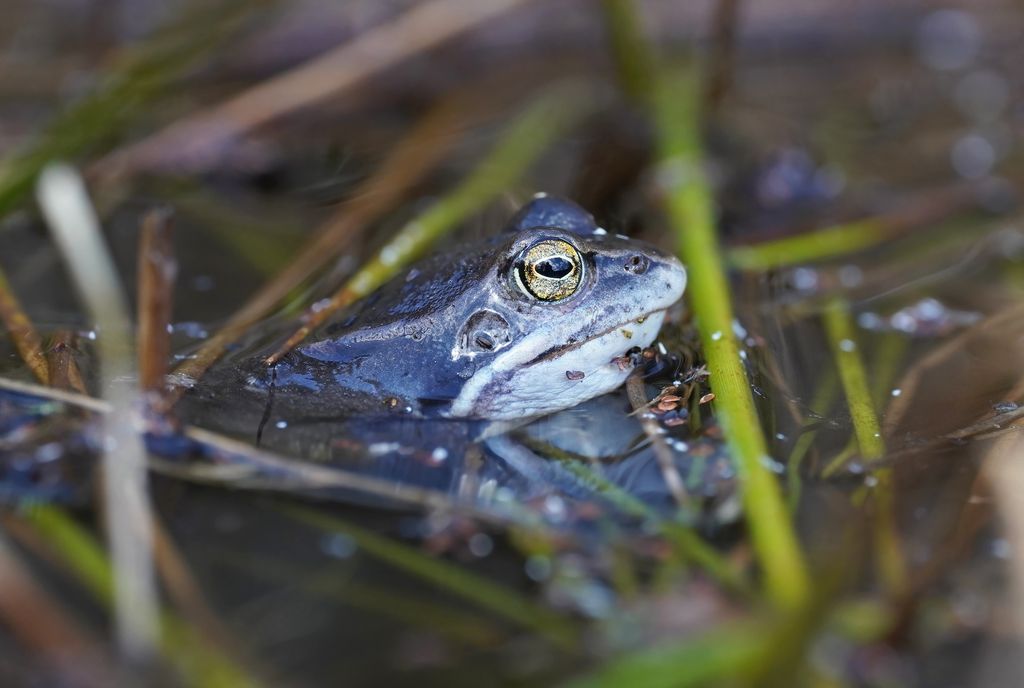
(c) Julia Moning, some rights reserved (CC BY) · licence
Family: Ranidae · Class: Amphibia · Order: Anura
Conservation status: SE · Endangered · G3T2 S2
Rana boylii pop. 5 (Foothill yellow- legged frog - south Sierra DPS) is a California animal in the Ranidae family.
The foothill yellow-legged frog is a small to medium-sized amphibian measuring 1.5 to 3.2 inches (38 to 81 mm) in length. The species displays rough, pebbly skin that is generally mottled gray, olive, or brown on the dorsal surface. True to its common name, the frog exhibits distinctive yellow coloration on its belly and the underside of its hind legs, distinguishing it from other ranid frogs in its range. The South Sierra distinct population segment (DPS) of the foothill yellow-legged frog occurs in the Sierra Nevada Mountains south of the American River sub-basin, extending south to the Transverse Range in Kern County, California. This DPS represents one of six genetically distinct population segments identified through molecular analysis, with extreme geographic subdivision documented between clades (McCartney-Melstad et al. 2018). This population inhabits rocky streams and adjacent riparian areas in foothill and montane environments. The species requires perennial or near-perennial streams with rocky substrates for breeding, utilizing cobble and gravel areas for egg deposition. Adults occupy terrestrial habitats within the riparian corridor, including areas with hardwood-conifer, valley-foothill riparian, ponderosa pine, mixed conifer, mixed chaparral, and wet meadow vegetation types. The species demonstrates considerable habitat flexibility regarding vegetation type and macroclimate conditions across its range. Foothill yellow-legged frogs are aquatic breeders with complex life cycles tied to stream hydrology. Breeding typically occurs from March through May, with timing varying by elevation and local climate conditions. Females deposit egg masses attached to cobble or bedrock substrates in areas with specific flow and temperature requirements. Tadpoles require 3 to 4 months to complete metamorphosis, during which they graze on algae and organic matter in stream environments. Adults are primarily insectivorous, feeding on a variety of terrestrial and aquatic invertebrates. The South Sierra DPS was listed as endangered under the Endangered Species Act in 2023, reflecting severe population declines and range contractions. California also lists this population as endangered under the California Endangered Species Act. The species has been extirpated from significant portions of its historical range due to habitat loss and modification. Primary threats include altered stream flows from water infrastructure including dams and diversions, competition and predation from non-native species such as bullfrogs and fish, mining activities, and climate change impacts on hydrology. In 2025, the U.S. Fish and Wildlife Service proposed designation of 307,777 acres of critical habitat for the South Sierra DPS. Historical declines were initially attributed to mining activities and water infrastructure development, while current threats continue to impact remaining populations through habitat fragmentation and altered ecosystem processes. The species functions as an indicator of stream ecosystem health, making its conservation important for broader watershed management.
Classification
Class: Amphibia · Order: Anura · Family: Ranidae
Conservation status
SE · Endangered · G3T2 S2
Frequently asked questions
How is Rana boylii pop. 5 classified?
Rana boylii pop. 5 belongs to class Amphibia, order Anura, family Ranidae.
What family does Rana boylii pop. 5 belong to?
Rana boylii pop. 5 is in the Ranidae family.
Is Rana boylii pop. 5 protected or of conservation concern?
Rana boylii pop. 5 carries the following status: SE · Endangered · G3T2 S2.
What is Rana boylii pop. 5?
The foothill yellow-legged frog is a small to medium-sized amphibian measuring 1.5 to 3.2 inches (38 to 81 mm) in length.
Is Rana boylii pop. 5 found in California?
Yes. Rana boylii pop. 5 is recorded in California in The California Species Project's catalogue.
Related species
Other California species in the same genus, family, or bioregion.
Data from The California Species Project — 14,000+ California species with verified data from CNPS, CDFW, USFWS, and more.