Rana boylii pop. 6
Foothill yellow- legged frog - south coast DPS
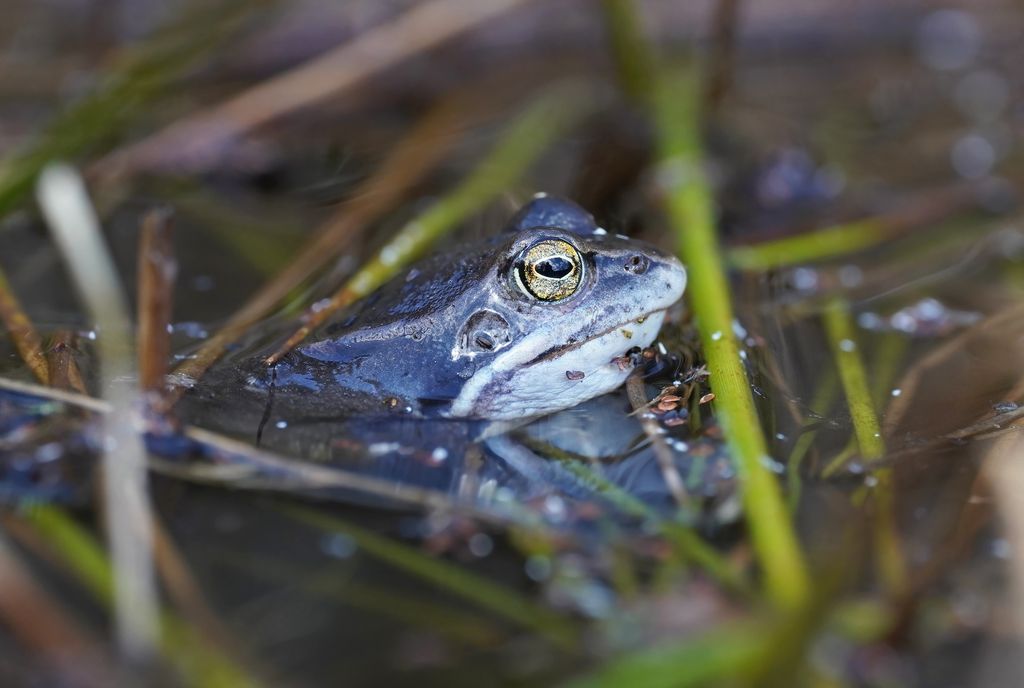
(c) Julia Moning, some rights reserved (CC BY) · licence
Family: Ranidae · Class: Amphibia · Order: Anura
Conservation status: SE · Endangered · G3T1 S1
Rana boylii pop. 6 (Foothill yellow- legged frog - south coast DPS) is a California animal in the Ranidae family.
The foothill yellow-legged frog South Coast distinct population segment (DPS) is a small to medium-sized amphibian characterized by rough, pebbly skin that is generally mottled gray, olive, or brown. The species derives its name from the distinctive yellow shading on its belly and underside of the rear legs. Adults typically measure 32 to 70 mm (1.3 to 2.8 inches) in snout-vent length, with females generally larger than males. Historically, the South Coast DPS occurred throughout the central Coast Range south of San Francisco Bay to San Benito and Fresno Counties. However, this population has experienced severe range contraction and now occupies only a fraction of its historical range. According to the U.S. Fish and Wildlife Service, this DPS has shown a strong pattern of declining stream occupancy and rapid reductions in occupied range (USFWS 2023). Foothill yellow-legged frogs inhabit perennial and intermittent streams in a variety of vegetation types, including hardwood-conifer, valley-foothill riparian, ponderosa pine, mixed conifer, mixed chaparral, and wet meadow communities. The species demonstrates considerable flexibility in terrestrial habitat requirements but maintains specific aquatic habitat needs. Adults require streams with rocky substrates, riffles, and pools for breeding, while tadpoles develop in shallow, slow-moving water with rocky or gravelly bottoms. Breeding occurs from March through May, with timing dependent on water temperature and flow conditions. Females deposit egg masses containing 150 to 1,000 eggs on the downstream side of rocks in flowing water. Tadpoles require extended development periods of 3 to 7 months, making them vulnerable to habitat modifications that alter natural flow regimes. Adults are primarily insectivorous, feeding on terrestrial arthropods along stream margins, while tadpoles graze on algae and organic matter. The South Coast DPS was listed as endangered under the federal Endangered Species Act on September 28, 2023, due to severe population declines and habitat loss. Primary threats include altered water flows from dams and diversions, competition and predation from non-native species such as bullfrogs and crayfish, disease, and climate change effects on precipitation and temperature patterns. Historical mining activities and the development of California's extensive water infrastructure network contributed to initial population declines. The U.S. Fish and Wildlife Service has proposed designating 10,077 acres of critical habitat for the South Coast DPS, the smallest proposed critical habitat area among the four listed DPS (USFWS 2025). The California Department of Fish and Wildlife notes that listing status varies by clade within the species complex. Current conservation efforts focus on habitat restoration, flow management, and monitoring of remaining populations to prevent extinction of this critically imperiled amphibian.
Classification
Class: Amphibia · Order: Anura · Family: Ranidae
Conservation status
SE · Endangered · G3T1 S1
Frequently asked questions
How is Rana boylii pop. 6 classified?
Rana boylii pop. 6 belongs to class Amphibia, order Anura, family Ranidae.
What family does Rana boylii pop. 6 belong to?
Rana boylii pop. 6 is in the Ranidae family.
Is Rana boylii pop. 6 protected or of conservation concern?
Rana boylii pop. 6 carries the following status: SE · Endangered · G3T1 S1.
What is Rana boylii pop. 6?
The foothill yellow-legged frog South Coast distinct population segment (DPS) is a small to medium-sized amphibian characterized by rough, pebbly skin that is generally mottled gray, olive, or brown.
Is Rana boylii pop. 6 found in California?
Yes. Rana boylii pop. 6 is recorded in California in The California Species Project's catalogue.
Related species
Other California species in the same genus, family, or bioregion.
Data from The California Species Project — 14,000+ California species with verified data from CNPS, CDFW, USFWS, and more.