Rana chiricahuensis
Chiricahua leopard frog
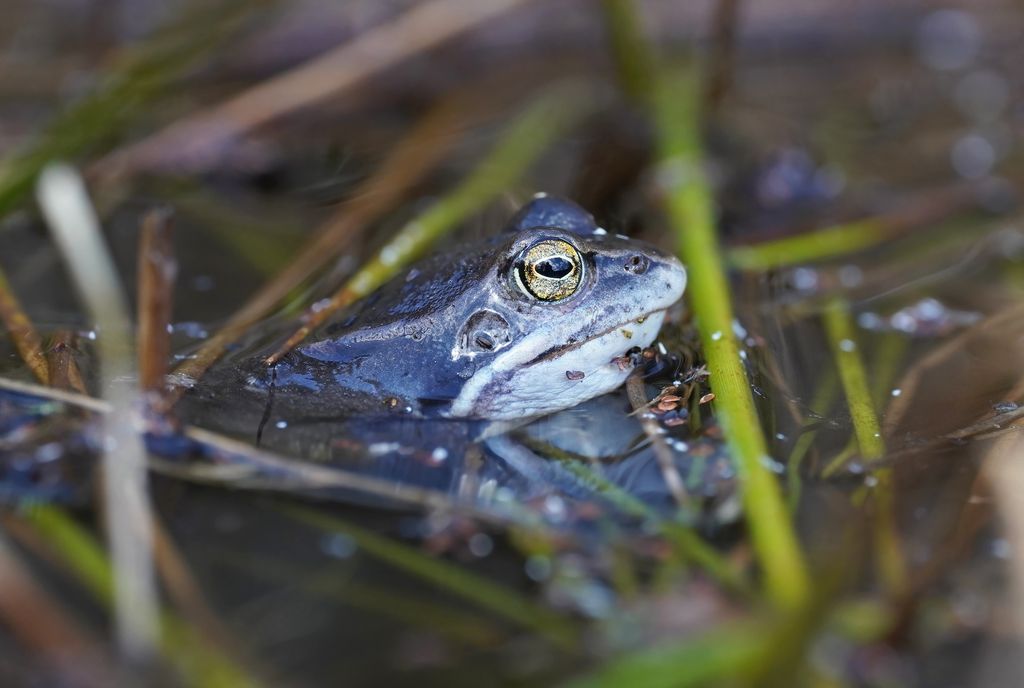
(c) Julia Moning, some rights reserved (CC BY) · licence
Family: Ranidae · Class: Amphibia · Order: Anura
Conservation status: Threatened
Rana chiricahuensis (Chiricahua leopard frog) is a California animal in the Ranidae family.
The Chiricahua leopard frog is a medium-sized amphibian distinguished by its distinctive coloration pattern of small, raised cream-colored spots on dark thighs and relatively rough skin texture. Adults typically display dorsolateral folds that are interrupted and deflected medially, with coloration often green on the head and back transitioning to darker tones on the sides. The species produces a distinctive call that aids in identification during breeding season. The Chiricahua leopard frog ranges across central and southeastern Arizona, west-central and southwestern New Mexico, and extends into Mexico including northeastern Sonora, northwestern and west-central Chihuahua in the Sierra Madre Occidental, and possibly northern Durango (USFWS 2012). The species has experienced significant range contraction from its historical distribution, with current populations concentrated in scattered localities across this reduced range. This species inhabits aquatic and semi-aquatic environments in mountainous regions, typically occupying streams, springs, stock tanks, and natural pools. Chiricahua leopard frogs require permanent or semi-permanent water sources with adequate depth for breeding and larval development. The species shows preference for areas with emergent vegetation such as bulrushes and cattails that provide attachment sites for egg masses during reproduction. Breeding occurs when environmental conditions are favorable, with females depositing egg masses containing approximately 2,000 to 5,000 eggs that float on water surfaces. Eggs measure 2.0 to 2.8 millimeters in diameter and are attached to emergent vegetation or submerged roots and twigs (USFWS 2012). Under optimal conditions, individuals may live up to 10 years in the wild (USFWS 2012). The species exhibits complex population dynamics with dispersal patterns that influence metapopulation connectivity across fragmented habitats. The U.S. Fish and Wildlife Service listed the Chiricahua leopard frog as threatened under the Endangered Species Act, with critical habitat designated across 39 units encompassing approximately 10,386 acres as of 2012 (USFWS 2012). Primary threats include habitat destruction and modification from mining activities, water diversions, stream channelization, groundwater pumping, livestock grazing, invasive species, and climate change. The invasive American bullfrog poses a particularly significant threat through predation and competition. Recovery efforts focus on population reestablishment, habitat restoration, invasive species control, and creation of refugial populations. Current recovery goals require establishing robust breeding populations containing at least 60 adults with diverse age class distributions, organized into metapopulations across the species' range. As of recent assessments, the species shows modest population gains in Arizona while apparently declining in New Mexico, with overall status in the United States considered static to improving (USFWS 2011).
Classification
Class: Amphibia · Order: Anura · Family: Ranidae
Conservation status
Threatened
Frequently asked questions
How is Rana chiricahuensis classified?
Rana chiricahuensis belongs to class Amphibia, order Anura, family Ranidae.
What family does Rana chiricahuensis belong to?
Rana chiricahuensis is in the Ranidae family.
Is Rana chiricahuensis protected or of conservation concern?
Rana chiricahuensis carries the following status: Threatened.
What is Rana chiricahuensis?
The Chiricahua leopard frog is a medium-sized amphibian distinguished by its distinctive coloration pattern of small, raised cream-colored spots on dark thighs and relatively rough skin texture.
Is Rana chiricahuensis found in California?
Yes. Rana chiricahuensis is recorded in California in The California Species Project's catalogue.
Related species
Other California species in the same genus, family, or bioregion.
Data from The California Species Project — 14,000+ California species with verified data from CNPS, CDFW, USFWS, and more.