Rattus rattus
Black Rat
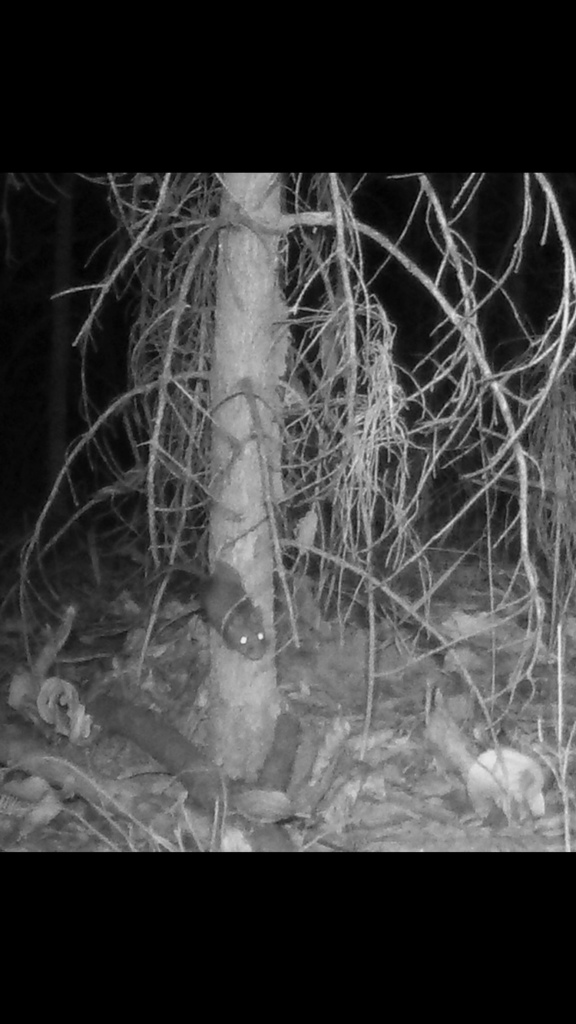
(c) Emma, some rights reserved (CC BY) · licence
Family: Muridae · Class: Mammalia · Order: Rodentia
Rattus rattus (Black Rat) is a California animal in the Muridae family.
The black rat (Rattus rattus) is a medium-sized rodent measuring 16 to 24 cm (6.3 to 9.4 inches) in head-body length, with a tail that exceeds body length by 15 to 25 cm (5.9 to 9.8 inches). Adults typically weigh 75 to 230 grams (2.6 to 8.1 ounces). The species displays considerable color variation, ranging from black to brown or gray dorsally, with lighter underparts. The ears are large and prominent, extending beyond the fur when pressed forward. The tail is scaly, nearly hairless, and uniformly dark above and below, distinguishing it from the Norway rat, which has a bicolored tail. Black rats are native to tropical Asia but have achieved nearly worldwide distribution through human commerce and transportation. In California, populations are established throughout most urban and suburban areas, coastal regions, and agricultural zones. The species is particularly abundant in the Central Valley, San Francisco Bay Area, Los Angeles Basin, and coastal counties from San Diego to Humboldt. Black rats have colonized many offshore islands, including the Channel Islands, where they have significantly impacted native ecosystems. This highly adaptable species occupies diverse habitats but shows preference for elevated locations and structured environments. Black rats commonly inhabit buildings, warehouses, ships, and residential areas, typically nesting in attics, wall voids, and roof spaces. In natural settings, they occur in woodlands, scrublands, and riparian zones, often climbing trees and constructing nests in dense vegetation. The species thrives from sea level to elevations exceeding 1,200 meters (3,937 feet) in California's mountain regions. Black rats are primarily nocturnal and highly agile climbers, capable of moving along thin branches and wires. They are omnivorous, consuming fruits, seeds, nuts, insects, eggs, and occasionally small vertebrates. Reproduction occurs year-round in favorable conditions, with females producing 3 to 6 litters annually. Gestation lasts 21 to 24 days, resulting in litters of 5 to 10 young. Sexual maturity is reached at 3 to 4 months of age. The species exhibits complex social behaviors, including dominance hierarchies and territorial marking through scent glands. Black rats are not protected under federal or California state endangered species legislation and are classified as an invasive species throughout their introduced range. They are considered one of the world's most problematic invasive mammals, causing extensive ecological and economic damage. In California, black rats threaten native wildlife through predation on eggs and nestlings of ground-nesting birds, competition for resources, and disease transmission. They have contributed to population declines of several seabird species on California's offshore islands. Management efforts focus on exclusion, trapping, and poisoning programs, particularly in ecologically sensitive areas. The species serves as a reservoir for multiple zoonotic diseases, including plague, typhus, and leptospirosis, making population control a public health priority.
Classification
Class: Mammalia · Order: Rodentia · Family: Muridae
Frequently asked questions
How is Rattus rattus classified?
Rattus rattus belongs to class Mammalia, order Rodentia, family Muridae.
What family does Rattus rattus belong to?
Rattus rattus is in the Muridae family.
What is Rattus rattus?
The black rat (Rattus rattus) is a medium-sized rodent measuring 16 to 24 cm (6.3 to 9.4 inches) in head-body length, with a tail that exceeds body length by 15 to 25 cm (5.9 to 9.8 inches).
Is Rattus rattus found in California?
Yes. Rattus rattus is recorded in California in The California Species Project's catalogue.
Related species
Other California species in the same genus, family, or bioregion.
Data from The California Species Project — 14,000+ California species with verified data from CNPS, CDFW, USFWS, and more.