Rectiostoma fernaldella
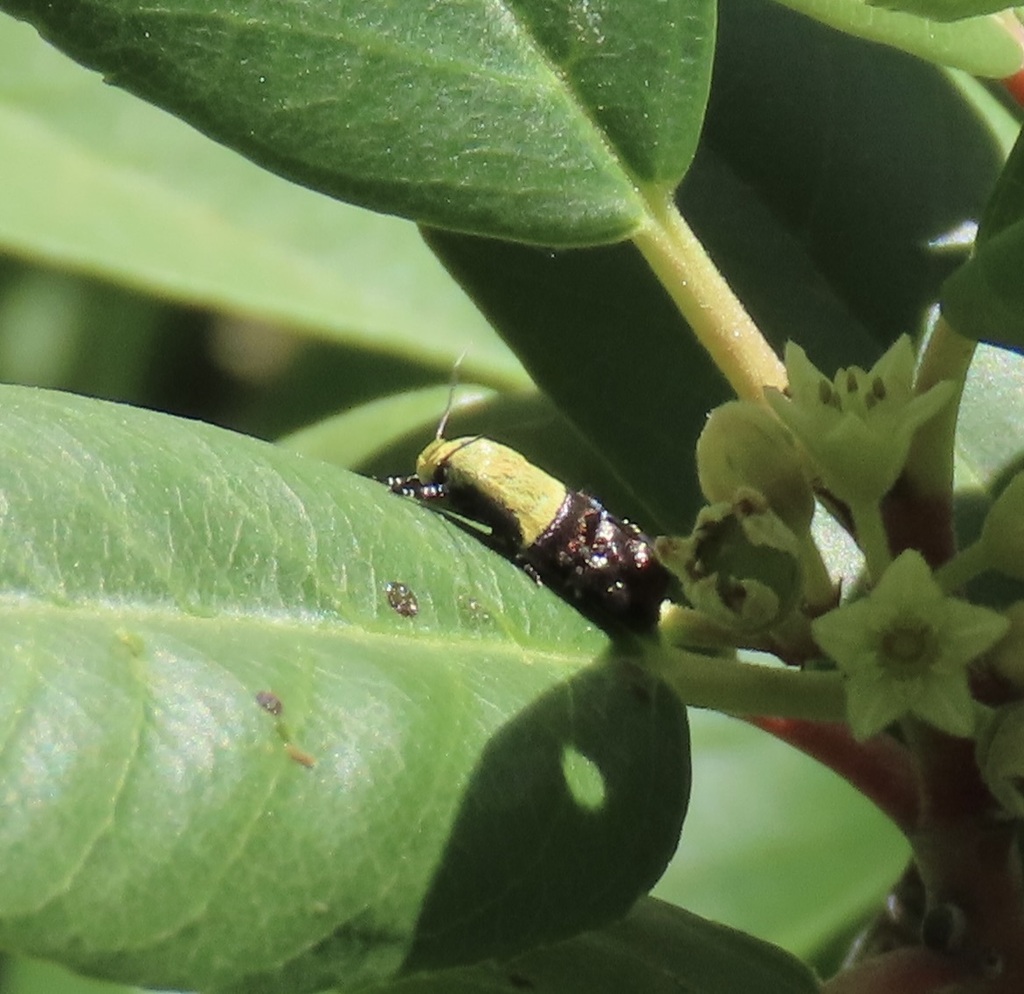
(c) Barbara Banfield, some rights reserved (CC BY) · licence
Family: Stenomatidae · Class: Insecta · Order: Lepidoptera
Rectiostoma fernaldella is a California animal in the Stenomatidae family.
Rectiostoma fernaldella is a small moth species belonging to the family Stenomatidae, a group commonly known as concealer moths. This lepidopteran species represents one of the lesser-documented members of its genus, with limited comprehensive studies available in the scientific literature. Adult moths of R. fernaldella are characterized by the typical oecophorid body plan, featuring narrow forewings and relatively broad hindwings. The wingspan measurements and specific coloration patterns for this species require further documentation through systematic collection and study. Like other members of the Stenomatidae family, adults likely possess a mottled appearance that provides camouflage against bark and vegetation surfaces. The geographic range of Rectiostoma fernaldella appears to be restricted to specific regions of California, though precise distribution boundaries remain incompletely mapped. The species' occurrence patterns suggest it may be endemic to particular ecological zones within the state, potentially associated with specific plant communities or microclimatic conditions. Further systematic surveys are needed to establish comprehensive range maps and population distribution data. Habitat preferences for R. fernaldella are not thoroughly documented in available literature. Based on ecological patterns observed in related oecophorid species, this moth likely inhabits areas with suitable host plant communities. The species may show preference for specific vegetation types, elevation ranges, or moisture conditions, though these habitat requirements await detailed field studies to confirm. The life cycle and behavioral ecology of Rectiostoma fernaldella remain largely unstudied. Oecophorid moths typically undergo complete metamorphosis, with larvae often developing as concealed feeders within plant tissues, rolled leaves, or organic detritus. Adult flight periods, mating behaviors, and oviposition preferences for this species have not been systematically documented. The number of generations per year, overwintering stage, and seasonal activity patterns require investigation through field observations and laboratory studies. Larval host plant associations for R. fernaldella are not established in current literature. Many oecophorid species show specificity to particular plant families or genera, with larvae feeding on leaves, stems, seeds, or other plant materials. Identifying the host plants will be crucial for understanding the species' ecological requirements and potential conservation needs. The conservation status of Rectiostoma fernaldella has not been formally assessed by state or federal agencies. The species lacks federal or California state listing status, and global conservation rankings are not available. Without comprehensive population surveys, distribution mapping, and threat assessments, the conservation needs of this species remain unknown. The apparent lack of recent collection records or published studies suggests that R. fernaldella may be either extremely rare, restricted to highly localized habitats, or simply overlooked by researchers due to its cryptic nature and limited accessibility of suitable collecting sites.
Classification
Class: Insecta · Order: Lepidoptera · Family: Stenomatidae
Frequently asked questions
How is Rectiostoma fernaldella classified?
Rectiostoma fernaldella belongs to class Insecta, order Lepidoptera, family Stenomatidae.
What family does Rectiostoma fernaldella belong to?
Rectiostoma fernaldella is in the Stenomatidae family.
What is Rectiostoma fernaldella?
Rectiostoma fernaldella is a small moth species belonging to the family Stenomatidae, a group commonly known as concealer moths.
Is Rectiostoma fernaldella found in California?
Yes. Rectiostoma fernaldella is recorded in California in The California Species Project's catalogue.
Related species
Other California species in the same genus, family, or bioregion.
Data from The California Species Project — 14,000+ California species with verified data from CNPS, CDFW, USFWS, and more.