Recurvaria nanella
Lesser Bud Moth
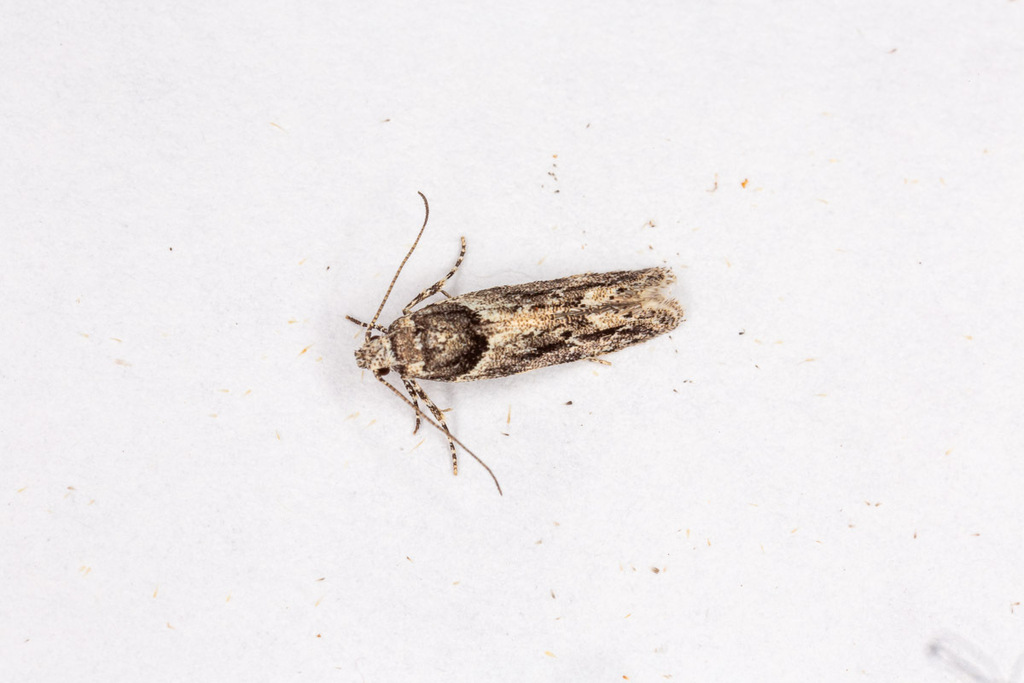
(c) Drepanostoma, some rights reserved (CC BY) · licence
Family: Gelechiidae · Class: Insecta · Order: Lepidoptera
Recurvaria nanella (Lesser Bud Moth) is a California animal in the Gelechiidae family.
The Lesser Bud Moth (Recurvaria nanella) is a small microlepidopteran belonging to the family Gelechiidae. Adults typically measure 8 to 12 mm in wingspan, with narrow forewings that are brown to grayish-brown with darker markings and pale scaling. The hindwings are lighter, often pale gray or whitish, and are fringed with long scales characteristic of the family. When at rest, the moth holds its wings roof-like over the body, creating a triangular profile. The antennae are simple in both sexes, and the head bears small compound eyes with a coiled proboscis. Recurvaria nanella occurs across much of North America, with records from southern Canada through the United States. The species is documented from California, though specific distributional data within the state remains limited. Historical records suggest the moth may be more widespread than currently documented, potentially occurring in multiple counties across various elevational zones. The species inhabits areas where its host plants are present, typically in mixed woodlands, forest edges, and riparian zones. Larvae are associated with deciduous trees and shrubs, particularly members of the Rosaceae family including wild cherry, apple, and related species. Adults are active during the warmer months, typically from late spring through early fall, and are attracted to artificial lights at night. Lesser Bud Moths are univoltine, producing one generation per year in most locations. Females lay small, white eggs singly on host plant foliage or bark crevices during late summer. Larvae initially mine within leaves, creating characteristic serpentine galleries, before moving to feed externally on foliage. As temperatures cool, larvae construct silken hibernacula in bark crevices or leaf litter where they overwinter. Pupation occurs in spring within the larval shelter or in a silk-lined cell in the soil. Adults emerge in late spring to early summer, with peak flight activity typically occurring in June and July. The diet consists primarily of plant material during the larval stage, with young caterpillars mining leaf tissue and older instars feeding on leaf surfaces. Adults likely feed on nectar from various flowering plants, though specific foraging preferences have not been well documented. Recurvaria nanella currently lacks formal conservation status designations at federal or state levels. The species appears to be naturally uncommon or patchily distributed, which may reflect specialized habitat requirements or limited survey effort for small moths. Like many microlepidoptera, the Lesser Bud Moth faces potential threats from habitat loss, particularly the removal of native host plants from forested and riparian areas. Urban development and agricultural conversion of natural areas may impact local populations. Climate change could affect the species through altered host plant phenology and shifted growing seasons. The limited taxonomic and ecological research on this species highlights the need for additional survey work to better understand its distribution, abundance, and conservation needs in California and throughout its range.
Classification
Class: Insecta · Order: Lepidoptera · Family: Gelechiidae
Frequently asked questions
How is Recurvaria nanella classified?
Recurvaria nanella belongs to class Insecta, order Lepidoptera, family Gelechiidae.
What family does Recurvaria nanella belong to?
Recurvaria nanella is in the Gelechiidae family.
What is Recurvaria nanella?
The Lesser Bud Moth (Recurvaria nanella) is a small microlepidopteran belonging to the family Gelechiidae.
Is Recurvaria nanella found in California?
Yes. Recurvaria nanella is recorded in California in The California Species Project's catalogue.
Related species
Other California species in the same genus, family, or bioregion.
Data from The California Species Project — 14,000+ California species with verified data from CNPS, CDFW, USFWS, and more.