Reithrodontomys megalotis distichlis
Salinas Harvest Mouse
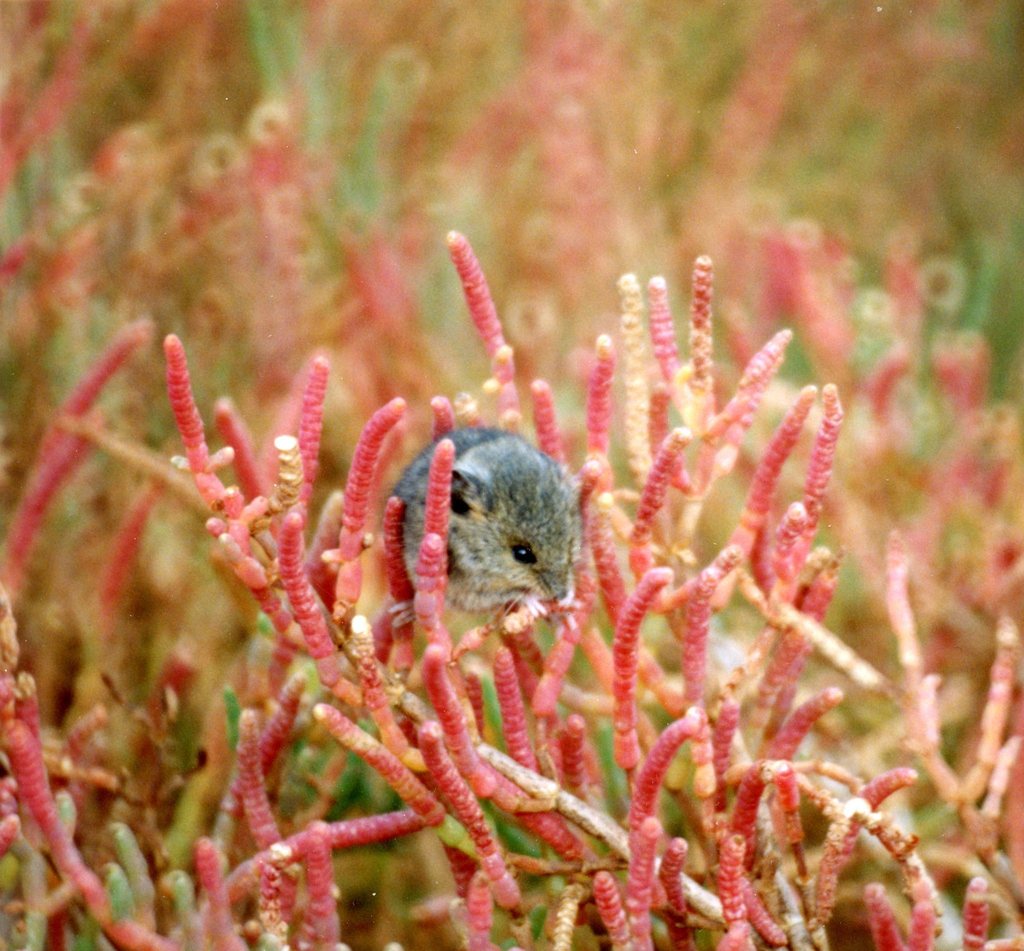
(c) Bob Dodge, some rights reserved (CC BY) · licence
Family: Cricetidae · Class: Mammalia · Order: Rodentia
Conservation status: G5T1 S2
Reithrodontomys megalotis distichlis (Salinas Harvest Mouse) is a California animal in the Cricetidae family.
The Salinas harvest mouse (Reithrodontomys megalotis distichlis) is a subspecies of the western harvest mouse endemic to the Salinas Valley region of California. This small rodent represents one of several geographically distinct subspecies of Reithrodontomys megalotis found throughout western North America. Adults typically measure 70-100 mm (2.8-3.9 inches) in body length, with a tail of similar or slightly greater length. The dorsal pelage is generally brownish-gray to buff-colored, while the ventral surface is lighter, ranging from white to pale gray. Like other harvest mice, this subspecies possesses large eyes, prominent ears, and a long, semi-prehensile tail that aids in climbing among vegetation. The Salinas harvest mouse is restricted to the Salinas Valley in Monterey County, California. This narrow endemic distribution makes it particularly vulnerable to habitat loss and fragmentation. The subspecies' range corresponds closely with the valley's agricultural and wetland areas, though its historical distribution was likely more extensive before widespread habitat conversion. This subspecies inhabits wetland margins, grasslands, and areas with dense herbaceous vegetation within the Salinas Valley. It shows a preference for areas with sufficient cover provided by grasses, sedges, and forbs. Unlike its salt marsh-dwelling relatives in the San Francisco Bay area, the Salinas harvest mouse occupies freshwater and brackish habitats rather than strictly saline environments. The species utilizes both native plant communities and some agricultural edge habitats where suitable vegetation structure exists. Salinas harvest mice are primarily nocturnal and semi-arboreal, using their climbing abilities to navigate through dense vegetation. Their diet consists mainly of seeds from grasses and forbs, supplemented by green vegetation and occasionally small invertebrates. Breeding typically occurs during the warmer months when food resources are most abundant. Females construct spherical nests of woven grasses, either above ground in dense vegetation or occasionally in shallow burrows. Litter sizes range from 2-5 young, with multiple litters possible per breeding season under favorable conditions. The Salinas harvest mouse faces significant conservation challenges due to its extremely limited range and small population size. The subspecies is ranked as G5T1 globally and S2 at the state level, indicating it is critically imperiled throughout its range. Primary threats include habitat loss from agricultural intensification, urban development, and wetland drainage within the Salinas Valley. The conversion of native grasslands and wetland margins to row crops has substantially reduced available habitat. Water management practices that alter natural hydrology in valley wetlands also impact suitable habitat conditions. Climate change may exacerbate these threats through altered precipitation patterns and increased drought frequency. The subspecies' conservation status reflects the precarious nature of many California endemic rodent subspecies with restricted distributions. Habitat protection and restoration within the Salinas Valley are essential for the long-term persistence of this subspecies.
Classification
Class: Mammalia · Order: Rodentia · Family: Cricetidae
Conservation status
G5T1 S2
Frequently asked questions
How is Reithrodontomys megalotis distichlis classified?
Reithrodontomys megalotis distichlis belongs to class Mammalia, order Rodentia, family Cricetidae.
What family does Reithrodontomys megalotis distichlis belong to?
Reithrodontomys megalotis distichlis is in the Cricetidae family.
Is Reithrodontomys megalotis distichlis protected or of conservation concern?
Reithrodontomys megalotis distichlis carries the following status: G5T1 S2.
What is Reithrodontomys megalotis distichlis?
The Salinas harvest mouse (Reithrodontomys megalotis distichlis) is a subspecies of the western harvest mouse endemic to the Salinas Valley region of California.
Is Reithrodontomys megalotis distichlis found in California?
Yes. Reithrodontomys megalotis distichlis is recorded in California in The California Species Project's catalogue.
Related species
Other California species in the same genus, family, or bioregion.
Data from The California Species Project — 14,000+ California species with verified data from CNPS, CDFW, USFWS, and more.