Rena humilis
Western Threadsnake
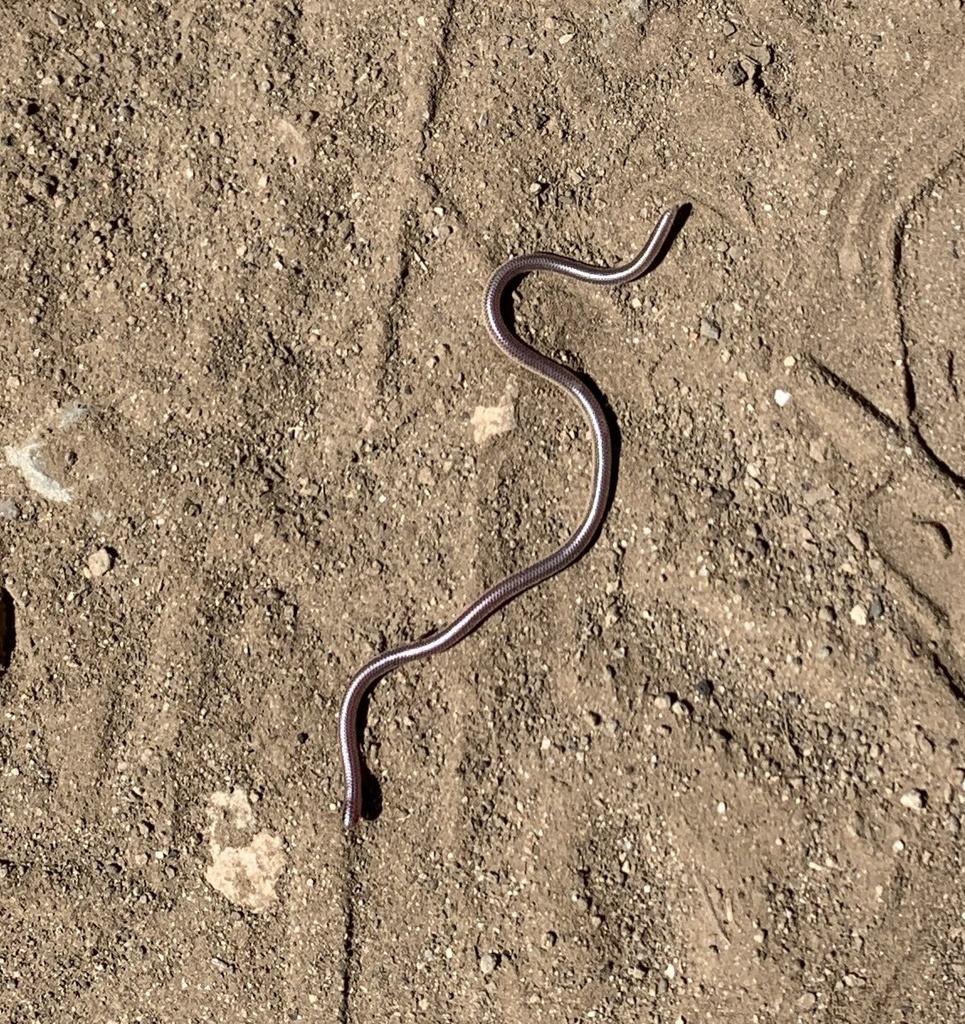
no rights reserved · CC0
Family: Leptotyphlopidae · Class: Reptilia · Order: Squamata
Rena humilis (Western Threadsnake) is a California animal in the Leptotyphlopidae family.
The Western Threadsnake is among the smallest snake species in North America, measuring 150 to 380 mm (6 to 15 inches) in total length with a maximum diameter of 6 mm (0.25 inches). The body is cylindrical and worm-like, covered in small, overlapping scales that give it a smooth, polished appearance. Coloration ranges from pink to brown or purple-brown dorsally, with a lighter ventral surface. The head is small and indistinct from the neck, with vestigial eyes appearing as dark spots beneath translucent scales. The tail terminates in a small spine used for anchoring during burrowing. The Western Threadsnake occurs in the southwestern United States and northwestern Mexico. In California, the species is found primarily in the southern desert regions, including the Colorado and Sonoran deserts. Its range extends from sea level to approximately 1,500 meters (4,920 feet) in elevation, with records from Imperial, Riverside, San Bernardino, and eastern San Diego counties. The distribution follows desert washes and alluvial fans where suitable substrate and prey are available. This fossorial species inhabits sandy or gravelly soils in desert scrub, creosote bush flats, and rocky hillsides. Western Threadsnakes require loose substrate for burrowing and are typically found beneath rocks, logs, or other surface cover objects. They favor areas with adequate moisture retention and proximity to ant colonies, which serve as their primary food source. The species tolerates extreme temperature variations typical of desert environments. Western Threadsnakes are highly specialized myrmecophages, feeding almost exclusively on ant larvae, pupae, and occasionally small adult ants. They locate prey by following chemical trails to ant nests, where they consume developing stages directly from brood chambers. The species is oviparous, with females laying 2 to 7 elongated, thin-shelled eggs during summer months. Eggs measure approximately 15 mm (0.6 inches) in length and hatch after 6 to 8 weeks. Juveniles resemble adults but are proportionally more slender. Activity patterns are primarily crepuscular and nocturnal, with individuals emerging from underground retreats during cooler periods. During winter months, they enter a state of reduced activity in deeper soil layers. The Western Threadsnake currently has no federal or state conservation listing status. According to NatureServe, the species is ranked G5 (globally secure), indicating stable populations across its range. However, localized threats include habitat degradation from urban development, agriculture, and off-road vehicle use in desert areas. Climate change may impact the species through altered precipitation patterns affecting soil moisture and prey availability. The cryptic nature and specialized habitat requirements of Western Threadsnakes make population monitoring challenging, though the species appears to maintain stable numbers in suitable habitat. Their role as predators of social insects contributes to ecosystem balance in desert communities.
Classification
Class: Reptilia · Order: Squamata · Family: Leptotyphlopidae
Frequently asked questions
How is Rena humilis classified?
Rena humilis belongs to class Reptilia, order Squamata, family Leptotyphlopidae.
What family does Rena humilis belong to?
Rena humilis is in the Leptotyphlopidae family.
What is Rena humilis?
The Western Threadsnake is among the smallest snake species in North America, measuring 150 to 380 mm (6 to 15 inches) in total length with a maximum diameter of 6 mm (0.25 inches).
Is Rena humilis found in California?
Yes. Rena humilis is recorded in California in The California Species Project's catalogue.
More California species
This species has no close relatives in our California data — here are other species to explore.
Data from The California Species Project — 14,000+ California species with verified data from CNPS, CDFW, USFWS, and more.