Renia factiosalis
Sociable Renia Moth
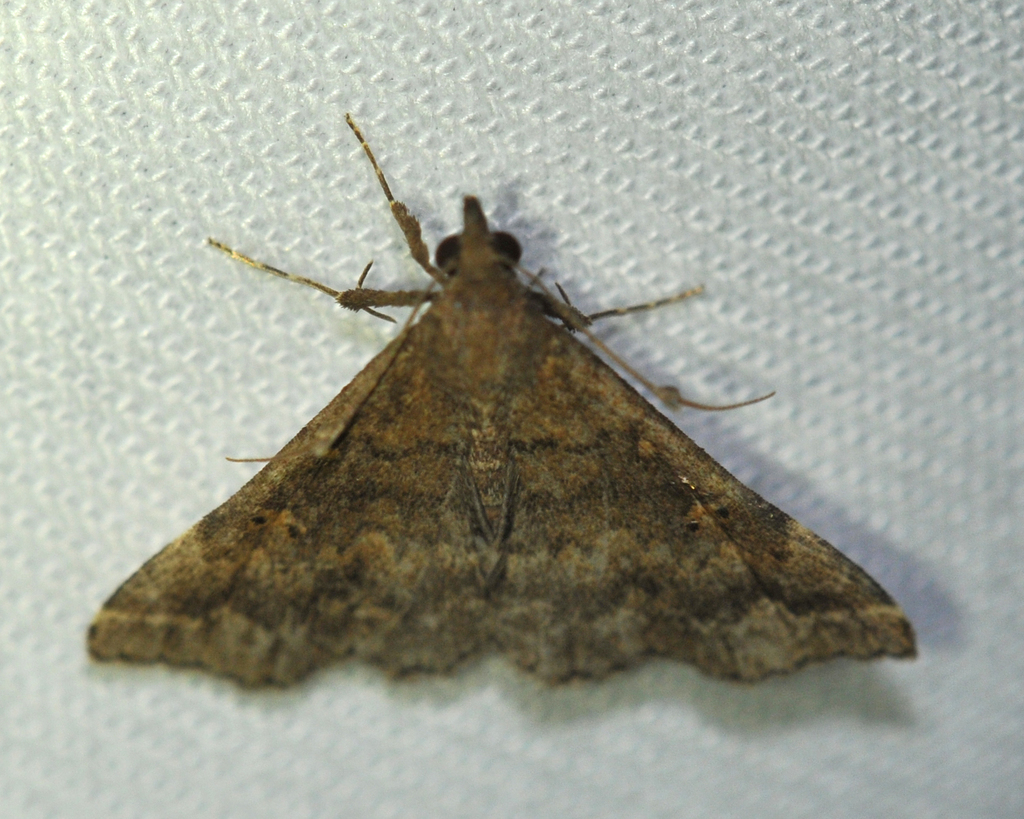
(c) Roger Rittmaster, some rights reserved (CC BY) · licence
Family: Erebidae · Class: Insecta · Order: Lepidoptera
Renia factiosalis (Sociable Renia Moth) is a California animal in the Erebidae family.
The Sociable Renia Moth (Renia factiosalis) is a small nocturnal moth belonging to the erebid family Erebidae. Adults typically measure 12 to 18 mm (0.47 to 0.71 inches) in wingspan. The forewings are pale brown to grayish-brown with darker transverse lines and a distinctive reniform spot near the center of each wing. The hindwings are lighter in coloration, ranging from pale buff to whitish. The moth's thorax and head are covered in brownish scales that match the forewing coloration, providing effective camouflage when at rest on tree bark or dead vegetation. The species occurs across much of North America, with records from southern Canada through the United States to northern Mexico. In California, Renia factiosalis has been documented in various counties, though comprehensive distribution data remain limited. The moth appears to be most commonly encountered in coastal and inland valleys, foothills, and lower montane regions. Historical records suggest the species has maintained relatively stable populations across its range, though systematic monitoring data are lacking. Sociable Renia Moths inhabit diverse environments including mixed woodlands, riparian corridors, chaparral, oak woodlands, and urban areas with suitable vegetation. The species shows particular association with areas containing its larval host plants, which include various herbaceous plants and low shrubs. Adults are typically found from sea level to approximately 1,500 meters (4,900 feet) elevation, though they may occur at higher elevations in suitable microhabitats. The moth demonstrates adaptability to both natural and modified landscapes, including agricultural areas and suburban environments. Adults are primarily nocturnal and are attracted to artificial lights, making them frequent visitors to porch lights and moth traps. Flight period varies by location and elevation but generally extends from late spring through early fall, with peak activity during summer months. Multiple generations per year are likely in warmer regions. Larvae feed on a variety of herbaceous plants, developing through five instars before pupating in soil or leaf litter. The pupal stage overwinters in most locations, with adults emerging the following growing season. Males use pheromones to locate females for mating, and females deposit eggs singly or in small clusters on or near host plants. Renia factiosalis currently holds no special conservation status at federal or state levels. The species appears to maintain stable populations across most of its range and shows tolerance for habitat modification. However, like many moths, it faces potential threats from habitat loss, light pollution that disrupts natural behavior patterns, and pesticide use in agricultural and urban areas. Climate change may alter the species' distribution and phenology, particularly at range margins. The moth's apparent adaptability to diverse habitats and its broad host plant range suggest resilience to moderate environmental changes, though long-term population monitoring would provide better insight into conservation needs.
Classification
Class: Insecta · Order: Lepidoptera · Family: Erebidae
Frequently asked questions
How is Renia factiosalis classified?
Renia factiosalis belongs to class Insecta, order Lepidoptera, family Erebidae.
What family does Renia factiosalis belong to?
Renia factiosalis is in the Erebidae family.
What is Renia factiosalis?
The Sociable Renia Moth (Renia factiosalis) is a small nocturnal moth belonging to the erebid family Erebidae.
Is Renia factiosalis found in California?
Yes. Renia factiosalis is recorded in California in The California Species Project's catalogue.
Related species
Other California species in the same genus, family, or bioregion.
Data from The California Species Project — 14,000+ California species with verified data from CNPS, CDFW, USFWS, and more.