Retinia sabiniana
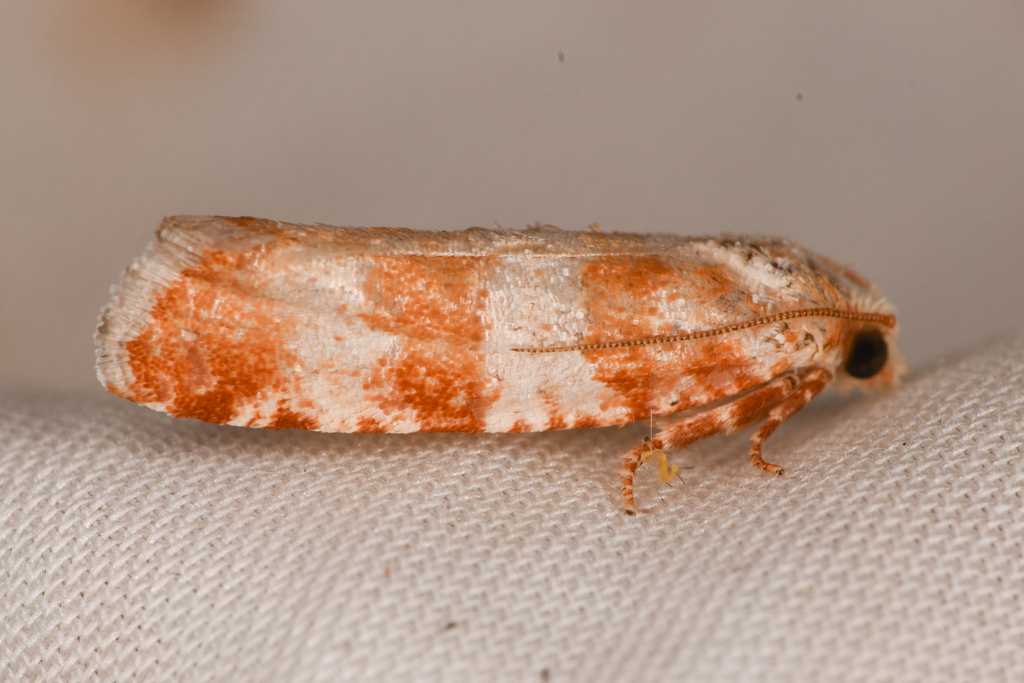
(c) Trevor Van Loon, some rights reserved (CC BY) · licence
Family: Tortricidae · Class: Insecta · Order: Lepidoptera
Retinia sabiniana is a California animal in the Tortricidae family.
Retinia sabiniana is a small tortricid moth in the family Tortricidae, subfamily Olethreutinae. This species belongs to a genus of moths whose larvae typically bore into coniferous tissues, creating characteristic pitch-filled galleries. Adult moths are generally small with forewings measuring approximately 8-12 mm in length, displaying mottled brown and gray coloration typical of bark-dwelling tortricids. The species occurs in California, though specific distributional records remain limited in published literature. Based on the genus characteristics and the species epithet 'sabiniana,' which references Pinus sabiniana (gray pine or foothill pine), this moth likely has a close ecological association with California's native pine ecosystems. Gray pine occurs primarily in the Sierra Nevada foothills, Coast Ranges, and scattered locations in the Transverse Ranges at elevations between 150-1,200 meters. Retinia sabiniana appears to inhabit foothill woodland and lower montane forest habitats where its probable host plant, gray pine, is present. These ecosystems typically experience Mediterranean climate patterns with hot, dry summers and mild, wet winters. Gray pine woodlands often occur on well-drained slopes and ridges with rocky or sandy soils, frequently in association with blue oak (Quercus douglasii) and interior live oak (Q. wislizeni). Like other Retinia species, R. sabiniana larvae likely bore into pine tissues, potentially targeting new growth, bark, or reproductive structures. The larval feeding creates resinous pitch masses that serve as protective chambers during development. Adult flight periods for related species typically occur during spring or early summer months, coinciding with optimal host plant phenology. Females deposit eggs on or near suitable pine tissues, and larvae develop within the tree over one or more years depending on environmental conditions. The conservation status of Retinia sabiniana has not been formally assessed by state or federal agencies. The species appears on California Department of Fish and Wildlife's Special Animals List, indicating it is tracked by the California Natural Diversity Database (CNDDB) as a species of potential conservation concern (BugGuide 2016). However, specific population data, trend information, and threat assessments are not currently available in the scientific literature. The limited documentation of this species may reflect either genuine rarity, restricted distribution, or simply insufficient survey effort for this taxonomic group. California's diverse tortricid fauna includes many poorly studied species, particularly those with specialized host plant relationships in foothill and montane ecosystems that face ongoing habitat pressures from development, altered fire regimes, and climate change.
Classification
Class: Insecta · Order: Lepidoptera · Family: Tortricidae
Frequently asked questions
How is Retinia sabiniana classified?
Retinia sabiniana belongs to class Insecta, order Lepidoptera, family Tortricidae.
What family does Retinia sabiniana belong to?
Retinia sabiniana is in the Tortricidae family.
What is Retinia sabiniana?
Retinia sabiniana is a small tortricid moth in the family Tortricidae, subfamily Olethreutinae.
Is Retinia sabiniana found in California?
Yes. Retinia sabiniana is recorded in California in The California Species Project's catalogue.
Related species
Other California species in the same genus, family, or bioregion.
Data from The California Species Project — 14,000+ California species with verified data from CNPS, CDFW, USFWS, and more.