Rhaphiomidas acton
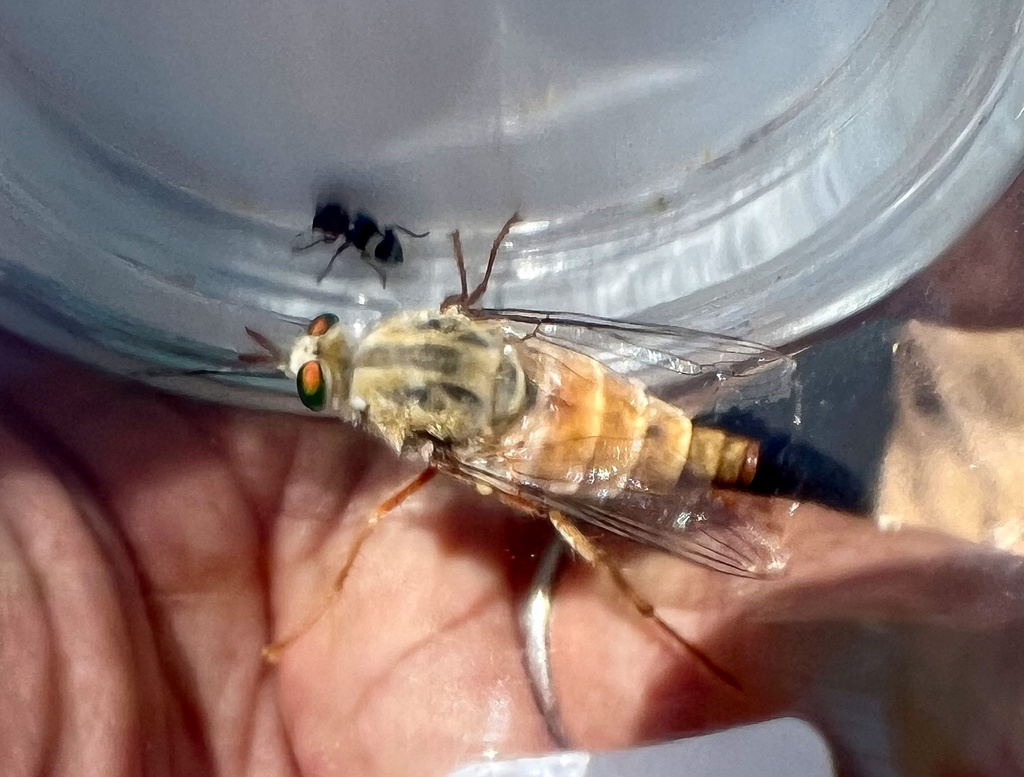
(c) nmoorhatch, some rights reserved (CC BY) · licence
Family: Mydidae · Class: Insecta · Order: Diptera
Rhaphiomidas acton is a California animal in the Mydidae family.
Rhaphiomidas acton is a large fly species belonging to the family Mydidae, commonly known as flower-loving flies. This species is part of the diverse genus Rhaphiomidas, which comprises more than 30 species distributed across western North America. Adult R. acton are robust dipterans characterized by their substantial size and distinctive morphology typical of the Mydidae family, though specific measurements for this species have not been well documented in the scientific literature. The species occurs in California, where it is known from scattered locations primarily in the Sacramento and San Joaquin valleys. Based on taxonomic records, R. acton appears to be endemic to California's Central Valley region, though precise distribution boundaries and population centers require further documentation. The species' range overlaps with other members of the Rhaphiomidas genus, including the federally endangered Delhi Sands flower-loving fly (R. terminatus abdominalis). Rhaphiomidas acton inhabits areas with alkaline soils and open habitats characteristic of California's interior valleys. Like other flower-loving flies, this species likely requires specific substrate conditions for larval development, though detailed habitat requirements remain poorly documented. The alkaline soil preferences observed in related species suggest R. acton may similarly depend on specialized edaphic conditions for successful reproduction. Adult flower-loving flies are active during warm months and are important pollinators of various native plant species. Rhaphiomidas acton subspecies acton has been identified as a pollinator of palmate-bracted bird's beak (Cordylanthus palmatus), a federally endangered plant species (USFWS 2010). Adults visit flowers to feed on nectar, making them effective pollinators for several California native plants. The species exhibits typical mydid fly behavior, with adults being strong fliers and active during daylight hours. Larval development occurs in soil, where immatures likely feed on organic matter, though specific life history details remain undocumented. No federal or state conservation status has been assigned to Rhaphiomidas acton, and population trends are unknown. However, the species' apparent restriction to California's Central Valley suggests potential vulnerability to habitat loss from agricultural conversion and urban development. The region has experienced extensive habitat modification over the past century, which may have impacted flower-loving fly populations. Additionally, the species' role as a pollinator of endangered plants like palmate-bracted bird's beak indicates its ecological importance extends beyond its own conservation status. Detailed ecological studies of Rhaphiomidas acton are lacking, and much of the basic biology remains undocumented. The species would benefit from systematic surveys to determine current distribution, population status, and specific habitat requirements. Enhanced understanding of this pollinator's ecology could inform conservation strategies for both the species and the endangered plants it serves.
Classification
Class: Insecta · Order: Diptera · Family: Mydidae
Frequently asked questions
How is Rhaphiomidas acton classified?
Rhaphiomidas acton belongs to class Insecta, order Diptera, family Mydidae.
What family does Rhaphiomidas acton belong to?
Rhaphiomidas acton is in the Mydidae family.
What is Rhaphiomidas acton?
Rhaphiomidas acton is a large fly species belonging to the family Mydidae, commonly known as flower-loving flies.
Is Rhaphiomidas acton found in California?
Yes. Rhaphiomidas acton is recorded in California in The California Species Project's catalogue.
Related species
Other California species in the same genus, family, or bioregion.
Data from The California Species Project — 14,000+ California species with verified data from CNPS, CDFW, USFWS, and more.