Rhaphiomidas terminatus abdominalis
Delhi sands flower-loving fly
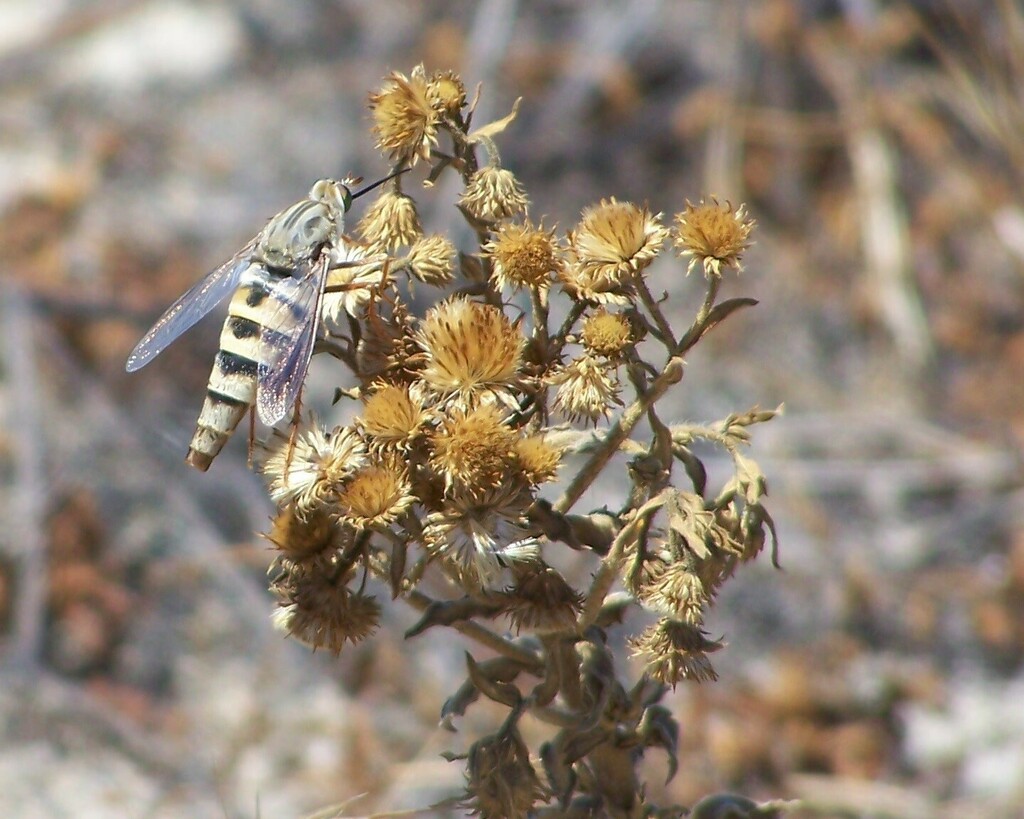
(c) nmoorhatch, some rights reserved (CC BY) · licence
Family: Mydidae · Class: Insecta · Order: Diptera
Conservation status: Endangered · G1T1 S1
Rhaphiomidas terminatus abdominalis (Delhi sands flower-loving fly) is a California animal in the Mydidae family.
The Delhi Sands flower-loving fly is a large, robust dipteran endemic to the Inland Empire of southern California. Adults measure approximately 25-30 millimeters (1.0-1.2 inches) in length, making them among the largest flies in North America. The species exhibits sexual dimorphism, with males displaying prominent feathery antennae and females having shorter, less ornate antennae. The body is dark brown to black with golden-yellow setae covering the thorax and abdomen. The wings are clear with distinctive dark veining patterns. This species occurs exclusively within the Delhi Sands formation, covering approximately 40 square miles in San Bernardino and Riverside Counties, California (USFWS 1996). The remaining occupied habitat is now largely restricted to southwestern San Bernardino County, with most populations concentrated in a highly fragmented area near Colton. The Delhi Sands represent a unique geological formation not found elsewhere on Earth, consisting of fine, wind-deposited soils derived from ancient lakebeds. The fly inhabits areas with Delhi series soils characterized by fine sand substrate and sparse vegetation cover. This specialized habitat supports a distinctive plant community including buckwheat species, scale-broom, and various annual forbs. The open, sandy areas provide essential conditions for the species' ground-dwelling larval stage and adult emergence sites. Adults are typically found in areas with some vegetative cover that provides nectar sources and shelter. Adult Delhi Sands flower-loving flies are active from late July through September, with peak emergence occurring in August. Adults are diurnal and exhibit flower-visiting behavior, feeding on nectar from various native plants including buckwheat and other composites. The species displays strong site fidelity, with adults rarely dispersing far from emergence sites. Mating occurs shortly after emergence, and females deposit eggs in sandy substrates. The larval stage is poorly understood but likely involves predation on other soil-dwelling invertebrates, similar to other mydid flies. The complete life cycle is presumed to span multiple years. The Delhi Sands flower-loving fly holds the distinction of being the first and only fly listed under the Endangered Species Act, receiving federal endangered status in 1993. The species serves as a flagship for the entire Delhi Sands ecosystem, which supports numerous other rare species including the Los Angeles pocket mouse, Mormon metalmark butterfly subspecies, burrowing owl, and western meadowlark. Primary threats include habitat destruction from urban and industrial development, habitat fragmentation, invasive plant species, and recreational activities that disturb the fragile sand substrate. According to NatureServe, the species has experienced a population decline exceeding 30% in recent years, with small population size increasing susceptibility to genetic bottlenecks. Conservation efforts focus on habitat protection, restoration of degraded sites, and coordination with local development projects to minimize impacts. Recovery planning emphasizes maintaining connectivity between remaining habitat patches and protecting the specialized soil conditions essential for the species' survival.
Classification
Class: Insecta · Order: Diptera · Family: Mydidae
Conservation status
Endangered · G1T1 S1
Frequently asked questions
How is Rhaphiomidas terminatus abdominalis classified?
Rhaphiomidas terminatus abdominalis belongs to class Insecta, order Diptera, family Mydidae.
What family does Rhaphiomidas terminatus abdominalis belong to?
Rhaphiomidas terminatus abdominalis is in the Mydidae family.
Is Rhaphiomidas terminatus abdominalis protected or of conservation concern?
Rhaphiomidas terminatus abdominalis carries the following status: Endangered · G1T1 S1.
What is Rhaphiomidas terminatus abdominalis?
The Delhi Sands flower-loving fly is a large, robust dipteran endemic to the Inland Empire of southern California.
Is Rhaphiomidas terminatus abdominalis found in California?
Yes. Rhaphiomidas terminatus abdominalis is recorded in California in The California Species Project's catalogue.
Related species
Other California species in the same genus, family, or bioregion.
Data from The California Species Project — 14,000+ California species with verified data from CNPS, CDFW, USFWS, and more.