Rhaphiomidas terminatus terminatus
El Segundo Flower- Loving Fly
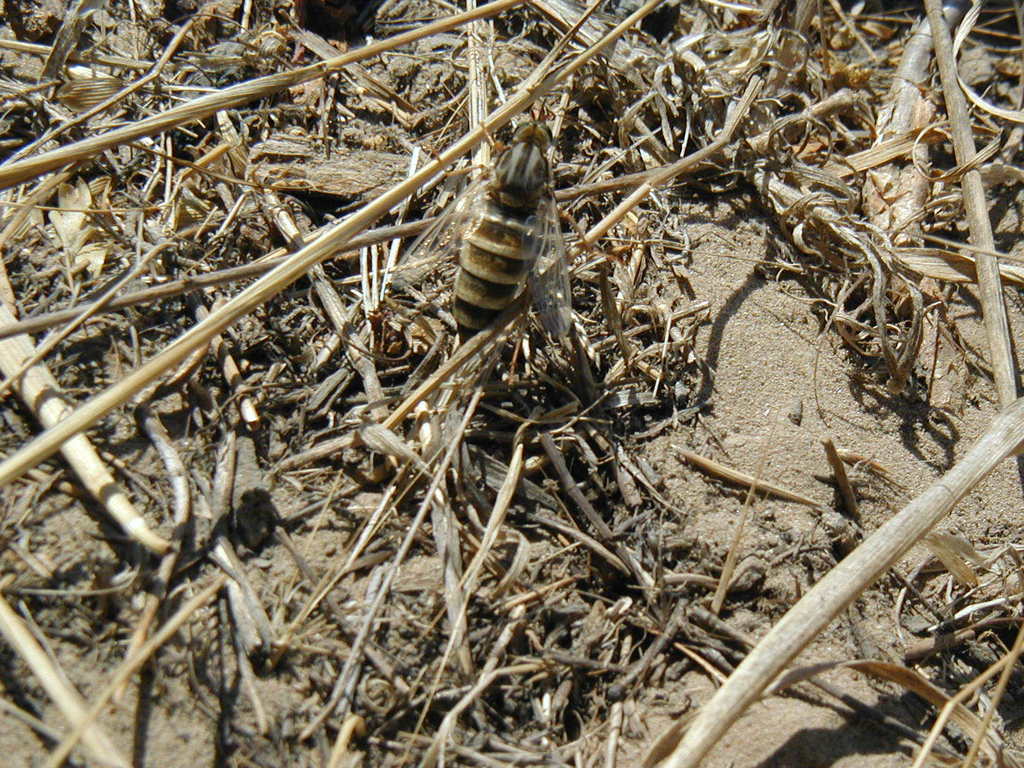
(c) kclarksdnhmorg, some rights reserved (CC BY) · licence
Family: Mydidae · Class: Insecta · Order: Diptera
Conservation status: G1T1 S1
Rhaphiomidas terminatus terminatus (El Segundo Flower- Loving Fly) is a California animal in the Mydidae family.
The El Segundo flower-loving fly is a large, robust dipteran in the family Mydidae, distinguished by its substantial size and distinctive appearance among California's native fly fauna. Adults are characterized by their prominent proboscis adapted for nectar feeding and their relatively large body size compared to other fly species. The species exhibits the typical apiocerid body plan with elongated legs and a pronounced thorax, though detailed morphological descriptions remain limited in published literature. This subspecies is endemic to coastal Southern California, with historical records from Los Angeles County. The El Segundo flower-loving fly represents one of two subspecies of Rhaphiomidas terminatus, with the nominate subspecies R. t. terminatus having a distinct but overlapping range in the region. Current distribution appears highly restricted, reflecting the subspecies' specialized habitat requirements and sensitivity to urban development pressures. The species inhabits coastal dune scrub and remnant native vegetation communities in the Los Angeles Basin. These habitats are characterized by sandy soils, low-growing shrubs, and native wildflower communities that provide essential nectar resources. The El Segundo area, from which the subspecies takes its common name, historically supported extensive coastal prairie and dune ecosystems that have been largely eliminated through urban development. Remaining habitat fragments are typically found in undeveloped areas near Los Angeles International Airport and adjacent preserved lands. As flower-loving flies, adults are specialized nectar feeders that play important roles as pollinators in their native ecosystems. The elongated proboscis allows access to nectar from various native flowering plants, though specific host plant relationships have not been thoroughly documented. Adult activity periods likely coincide with peak blooming seasons of native flora, typically occurring during spring and early summer months. Like other apiocerid flies, larvae are presumed to develop in sandy soils, though specific larval ecology remains poorly studied. The El Segundo flower-loving fly faces severe conservation challenges due to extensive habitat loss and fragmentation in coastal Los Angeles County. The Global/State conservation rank of G1T1 S1 indicates this subspecies is critically imperiled, with extremely limited distribution and population size. This species is included on the California Department of Fish and Wildlife's Special Animals List. Urban development, airport expansion, and invasive plant species represent primary threats to remaining habitat. The highly fragmented nature of surviving coastal dune scrub habitat limits population connectivity and increases vulnerability to local extinctions. Unlike the closely related Delhi Sands flower-loving fly (R. t. abdominalis), which received federal endangered species protection, the El Segundo subspecies lacks formal federal listing status despite its precarious conservation status. Conservation efforts focus on habitat preservation and restoration within the limited remaining range, though the small geographic extent and urban pressures present ongoing challenges for long-term population viability.
Classification
Class: Insecta · Order: Diptera · Family: Mydidae
Conservation status
G1T1 S1
Frequently asked questions
How is Rhaphiomidas terminatus terminatus classified?
Rhaphiomidas terminatus terminatus belongs to class Insecta, order Diptera, family Mydidae.
What family does Rhaphiomidas terminatus terminatus belong to?
Rhaphiomidas terminatus terminatus is in the Mydidae family.
Is Rhaphiomidas terminatus terminatus protected or of conservation concern?
Rhaphiomidas terminatus terminatus carries the following status: G1T1 S1.
What is Rhaphiomidas terminatus terminatus?
The El Segundo flower-loving fly is a large, robust dipteran in the family Mydidae, distinguished by its substantial size and distinctive appearance among California's native fly fauna.
Is Rhaphiomidas terminatus terminatus found in California?
Yes. Rhaphiomidas terminatus terminatus is recorded in California in The California Species Project's catalogue.
Related species
Other California species in the same genus, family, or bioregion.
Data from The California Species Project — 14,000+ California species with verified data from CNPS, CDFW, USFWS, and more.