Rhaphiomidas trochilus
San Joaquin Valley Giant Flower-loving Fly
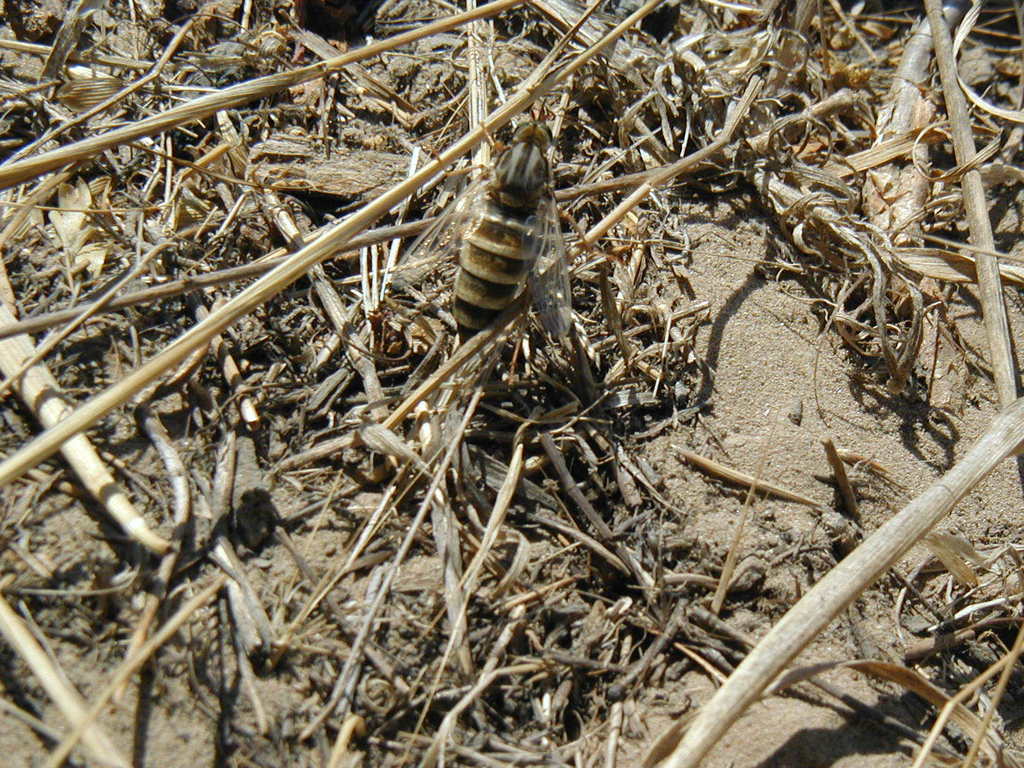
(c) kclarksdnhmorg, some rights reserved (CC BY) · licence
Family: Mydidae · Class: Insecta · Order: Diptera
Conservation status: G1 S1
Rhaphiomidas trochilus (San Joaquin Valley Giant Flower-loving Fly) is a California animal in the Mydidae family.
The San Joaquin Valley giant flower-loving fly is a large dipteran species in the family Mydidae, known for its robust build and distinctive appearance. Adults are among the larger flies in North America, measuring approximately 15-25 mm in length with wingspans reaching 40 mm (Cole 1969). The species exhibits the characteristic features of flower-loving flies, including a prominent proboscis adapted for nectar feeding and strong flight capabilities. Rhaphiomidas trochilus is endemic to California's Central Valley, specifically the San Joaquin Valley region. According to the U.S. Fish and Wildlife Service, the species has a highly restricted distribution within this area (USFWS 2015). Historical records indicate the species once occurred more widely throughout suitable habitat in the San Joaquin Valley, but current populations appear fragmented and localized. The species inhabits remaining native grassland and scrubland areas within the San Joaquin Valley floor and adjacent foothills. These habitats are characterized by sandy soils and native plant communities that support the fly's nectar sources (USFWS 2015). Much of the species' original habitat has been converted to agricultural use or urban development, significantly reducing available habitat. The flies appear to require intact native plant communities that bloom during their flight period. As indicated by their common name, San Joaquin Valley giant flower-loving flies are primarily nectarivorous, feeding on flowers of native plants during their adult stage. The species likely follows a typical apiocereid life cycle, with larvae developing in soil where they may prey on other arthropods (Cole 1969), though specific host relationships and larval biology remain poorly documented. Adults are active during specific seasons when suitable nectar sources are available, though detailed phenology data is lacking. The San Joaquin Valley giant flower-loving fly has no current federal listing status but carries a Global/State Rank of G1 S1, indicating it is critically imperiled both globally and within California (NatureServe 2023). In 2015, the U.S. Fish and Wildlife Service received a petition to list the species as endangered or threatened and found that the petition presented substantial scientific information indicating listing may be warranted based on habitat destruction and other factors (USFWS 2015). However, in December 2018, the Service determined that listing was not warranted at that time (USFWS 2018). The species remains eligible for conservation grants as an unlisted species under federal programs. Primary threats to the species include ongoing habitat loss and fragmentation due to agricultural conversion and urban development throughout the San Joaquin Valley. The extensive modification of native grassland ecosystems has eliminated much of the species' historical range. Climate change may pose additional threats through altered precipitation patterns and temperature regimes that affect both the fly and its nectar sources. The species' apparent rarity and restricted distribution make it vulnerable to local extinctions from habitat disturbance or environmental stochasticity. This species is included on the California Department of Fish and Wildlife's Special Animals List.
Classification
Class: Insecta · Order: Diptera · Family: Mydidae
Conservation status
G1 S1
Frequently asked questions
How is Rhaphiomidas trochilus classified?
Rhaphiomidas trochilus belongs to class Insecta, order Diptera, family Mydidae.
What family does Rhaphiomidas trochilus belong to?
Rhaphiomidas trochilus is in the Mydidae family.
Is Rhaphiomidas trochilus protected or of conservation concern?
Rhaphiomidas trochilus carries the following status: G1 S1.
What is Rhaphiomidas trochilus?
The San Joaquin Valley giant flower-loving fly is a large dipteran species in the family Mydidae, known for its robust build and distinctive appearance.
Is Rhaphiomidas trochilus found in California?
Yes. Rhaphiomidas trochilus is recorded in California in The California Species Project's catalogue.
Related species
Other California species in the same genus, family, or bioregion.
Data from The California Species Project — 14,000+ California species with verified data from CNPS, CDFW, USFWS, and more.