Rhigognostis interrupta
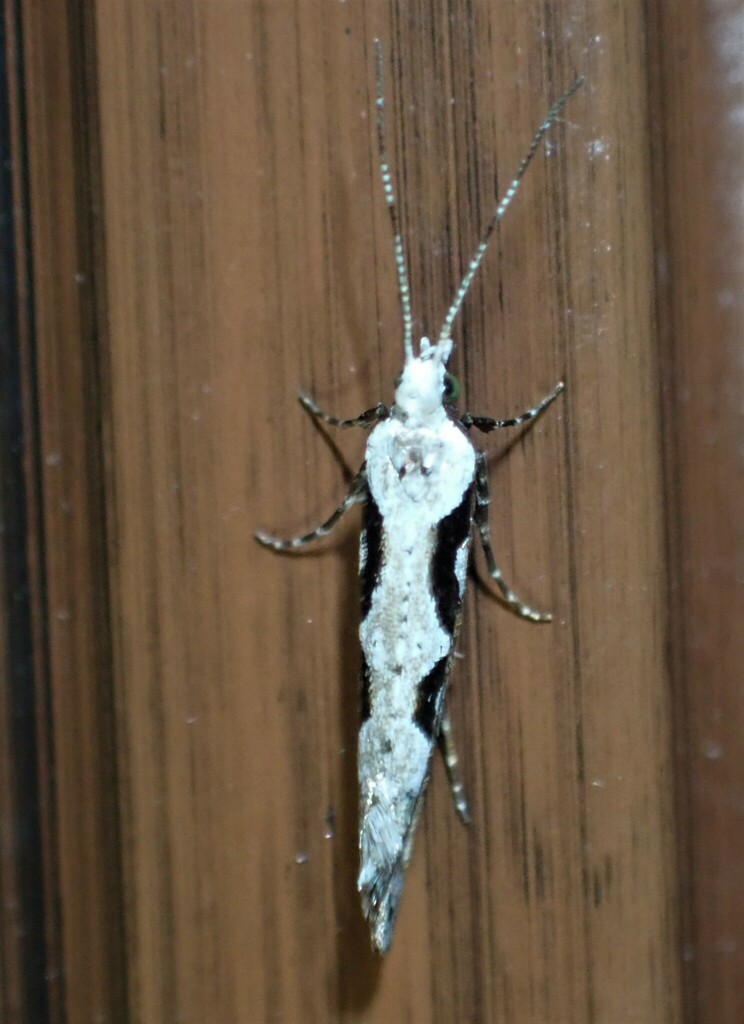
(c) Louis Imbeau, some rights reserved (CC BY) · licence
Family: Plutellidae · Class: Insecta · Order: Lepidoptera
Rhigognostis interrupta is a California animal in the Plutellidae family.
Rhigognostis interrupta is a small moth in the family Plutellidae, a group commonly known as diamond-back moths or micro-moths. This species belongs to a genus of specialized moths whose larvae typically develop as leaf miners or stem borers in various plant families. Adult moths in the genus Rhigognostis are characterized by narrow forewings with intricate patterns and relatively long antennae compared to body size. The distribution and range of Rhigognostis interrupta appears to be poorly documented in the scientific literature, with limited occurrence records available through standard biodiversity databases. The species may have a restricted range within California or western North America, though specific locality data remains scarce. Like many micro-moths, this species may be under-collected due to its small size and potentially limited flight period. Habitat requirements for Rhigognostis interrupta are not well-documented, though members of the Plutellidae family typically inhabit areas where their host plants occur. Many species in this family are associated with specific plant families, often Brassicaceae, Amaranthaceae, or other herbaceous plants. The larvae likely develop as internal feeders within plant tissues, either mining leaves or boring into stems or other plant parts. The life history and behavioral ecology of Rhigognostis interrupta remain largely unstudied. Adult moths in the Plutellidae family are typically small, with wingspans rarely exceeding 20 millimeters. They are often crepuscular or nocturnal, becoming active at dusk or during nighttime hours. Larvae undergo complete metamorphosis, likely pupating within or near their host plants. The number of generations per year and specific timing of adult emergence periods are unknown for this species. The conservation status of Rhigognostis interrupta has not been formally assessed by state or federal agencies. The apparent lack of recent collection records and limited distributional data suggests this species may be rare, though it could also reflect insufficient survey effort for small moths in general. Many micro-moth species remain poorly known due to identification challenges and limited taxonomic expertise. Without adequate survey data, it is difficult to determine whether population trends represent actual rarity or simply reflect collection gaps. The primary conservation concern for this and similar micro-moth species is habitat loss and fragmentation, particularly if they have narrow host plant requirements. Climate change may also affect the synchronization between moth emergence and host plant phenology. Targeted surveys using appropriate collection methods, including light trapping and examination of potential host plants, would be necessary to better understand the species' current status and distribution. Taxonomic verification of existing specimens and DNA barcoding could help clarify the species' identity and relationships within the genus Rhigognostis.
Classification
Class: Insecta · Order: Lepidoptera · Family: Plutellidae
Frequently asked questions
How is Rhigognostis interrupta classified?
Rhigognostis interrupta belongs to class Insecta, order Lepidoptera, family Plutellidae.
What family does Rhigognostis interrupta belong to?
Rhigognostis interrupta is in the Plutellidae family.
What is Rhigognostis interrupta?
Rhigognostis interrupta is a small moth in the family Plutellidae, a group commonly known as diamond-back moths or micro-moths.
Is Rhigognostis interrupta found in California?
Yes. Rhigognostis interrupta is recorded in California in The California Species Project's catalogue.
Related species
Other California species in the same genus, family, or bioregion.
Data from The California Species Project — 14,000+ California species with verified data from CNPS, CDFW, USFWS, and more.