Rhinichthys nevadensis
Desert Speckled Dace
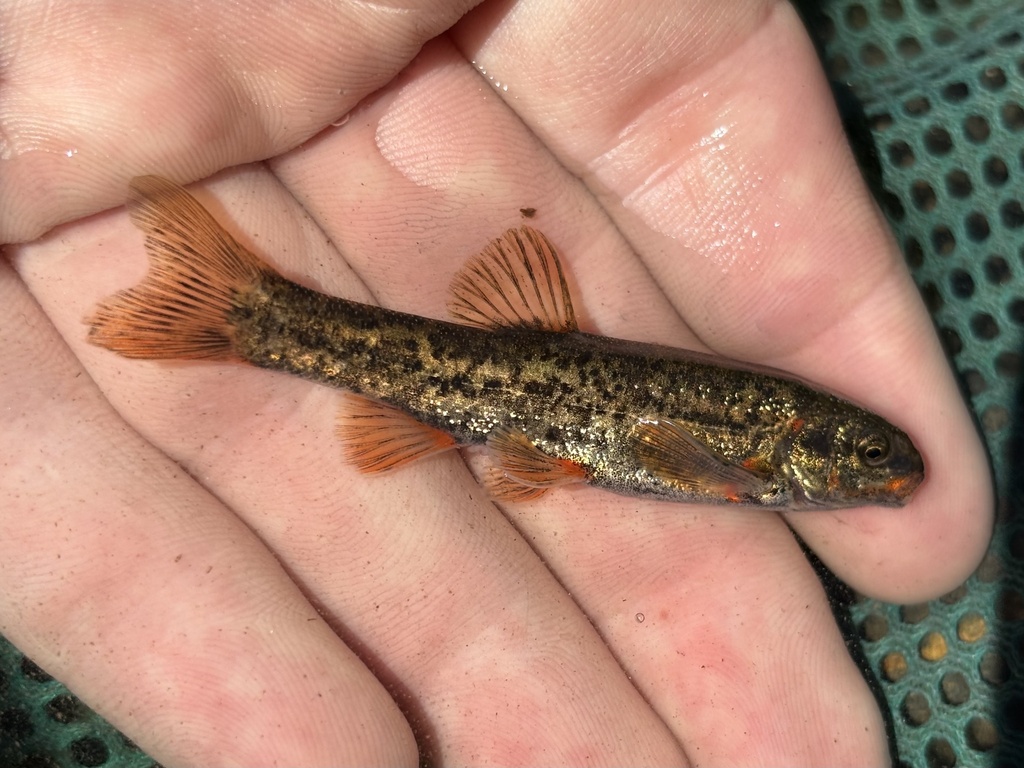
(c) Zakqary Roy, some rights reserved (CC BY) · licence
Family: Cyprinidae · Class: Actinopterygii · Order: Cypriniformes
Rhinichthys nevadensis (Desert Speckled Dace) is a California animal in the Cyprinidae family.
The Desert speckled dace is a small freshwater fish in the minnow family Cyprinidae, endemic to western North America. This species represents one of the most morphologically and ecologically variable fishes in the region, with numerous subspecies adapted to specific desert aquatic habitats (USFWS 2024). Adult Desert speckled dace typically measure 50 to 100 mm (2 to 4 inches) in total length. The body is elongated and somewhat laterally compressed, with a slightly subterminal mouth adapted for bottom feeding. Coloration varies considerably among populations but generally includes a mottled or speckled pattern of dark spots on a lighter background, ranging from olive-brown to gray dorsally with lighter sides and belly. The fins are typically clear to slightly dusky, and breeding males may develop more intense coloration and tubercles on the head and fins. The species occurs throughout much of the Great Basin and adjacent areas of western North America, from the Columbia River drainage in southern British Columbia, Canada, south to the Gila River in Arizona and portions of northern Sonora, Mexico (USFWS 2024). In California, Desert speckled dace are found in various isolated desert basins including the Owens Valley, Death Valley region, and associated spring systems. Multiple subspecies occur in California, each adapted to specific watersheds or spring complexes, including populations in Ash Meadows, Long Valley, and the Amargosa River system. Desert speckled dace inhabit a remarkable diversity of aquatic environments for a desert fish, ranging from small coldwater streams to hot spring systems with temperatures exceeding 30°C (86°F). According to the California Department of Fish and Wildlife, speckled dace from the Owens Basin occupy habitats ranging from small coldwater streams to hot-spring systems. They are typically found in areas with rocky or gravel substrates, moderate to swift current, and permanent water flow. The species demonstrates exceptional physiological tolerance, with some populations surviving in highly mineralized waters or thermal springs that would be lethal to most other fish species. Desert speckled dace are opportunistic omnivores, feeding primarily on algae, aquatic insects, and organic detritus scraped from substrate surfaces. Their subterminal mouth position facilitates benthic feeding. Spawning typically occurs from late spring through early summer, with females depositing adhesive eggs in gravel nests prepared by males in shallow, flowing water. The species exhibits remarkable local adaptation, with different populations showing distinct ecological and morphological characteristics suited to their specific habitats. Conservation status varies significantly among subspecies and populations. Several subspecies have received federal protection under the Endangered Species Act, including the Ash Meadows speckled dace (Rhinichthys osculus nevadensis), which is federally listed as endangered. Other populations, including the Long Valley speckled dace, have been subject to listing petitions due to habitat threats and population declines (USFWS 2021). Primary threats include habitat modification, groundwater pumping, introduction of non-native species, and climate change effects on already limited desert water sources. The isolation of desert populations makes them particularly vulnerable to local extinctions.
Classification
Class: Actinopterygii · Order: Cypriniformes · Family: Cyprinidae
Frequently asked questions
How is Rhinichthys nevadensis classified?
Rhinichthys nevadensis belongs to class Actinopterygii, order Cypriniformes, family Cyprinidae.
What family does Rhinichthys nevadensis belong to?
Rhinichthys nevadensis is in the Cyprinidae family.
What is Rhinichthys nevadensis?
The Desert speckled dace is a small freshwater fish in the minnow family Cyprinidae, endemic to western North America.
Is Rhinichthys nevadensis found in California?
Yes. Rhinichthys nevadensis is recorded in California in The California Species Project's catalogue.
Related species
Other California species in the same genus, family, or bioregion.
Data from The California Species Project — 14,000+ California species with verified data from CNPS, CDFW, USFWS, and more.