Rhinichthys osculus klamathensis
Klamath speckled dace
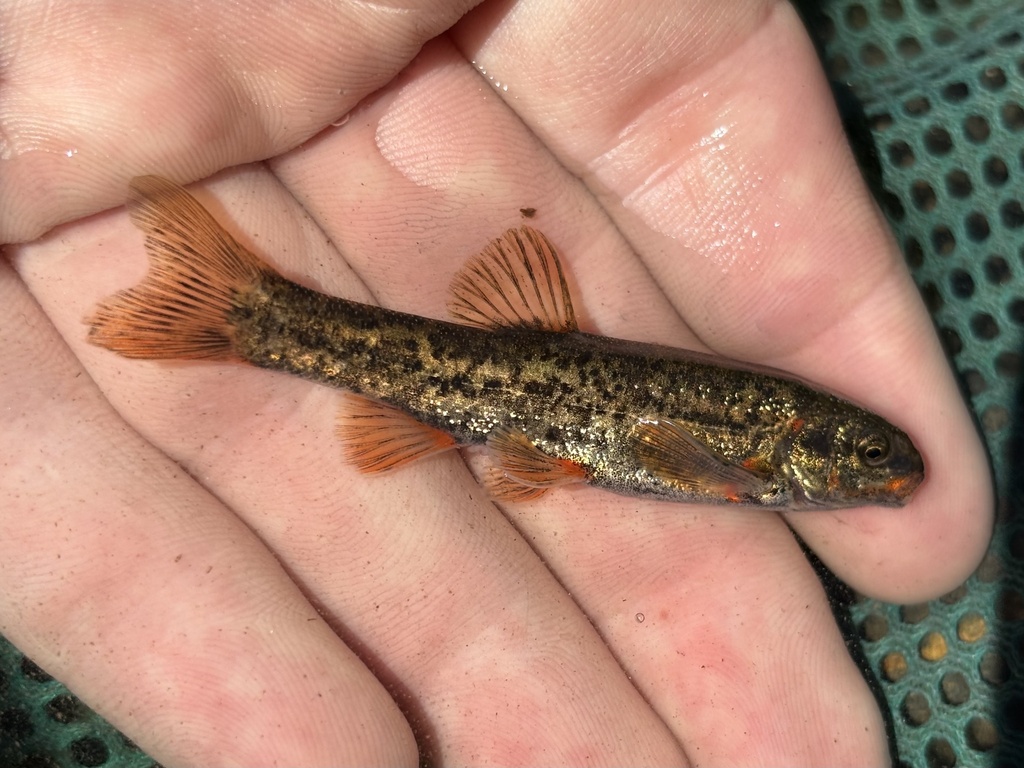
(c) Zakqary Roy, some rights reserved (CC BY) · licence
Family: Leuciscidae · Class: Actinopterygii · Order: Cypriniformes
Rhinichthys osculus klamathensis (Klamath speckled dace) is a California animal in the Leuciscidae family.
The Klamath speckled dace (Rhinichthys osculus klamathensis) is a small freshwater fish subspecies within the family Leuciscidae. Adults typically measure 50 to 75 mm (2.0 to 3.0 inches) in total length, with a streamlined, fusiform body adapted for life in flowing water. The species displays the characteristic speckled pattern that gives it its common name, with small dark spots scattered across a olive-brown to grayish dorsal surface and lighter sides. The ventral surface is typically cream to white in coloration. Males during breeding season may develop more pronounced coloration and slightly enlarged fins. This subspecies is endemic to the Klamath River Basin, occurring primarily in Oregon and northern California. In California, populations are found in the Klamath River system and its tributaries, including the Scott River, Shasta River, and Salmon River watersheds in Siskiyou County. The species also extends into southern Oregon within the same drainage system. Historically, the Klamath speckled dace maintained a broader distribution throughout the basin, but current populations are more fragmented due to habitat modifications. Klamath speckled dace inhabit clear, cool streams and rivers with rocky or gravel substrates. They prefer areas with moderate to swift current and well-oxygenated water. The species is typically found in riffle and run habitats where water flows over cobble and boulder substrates, providing both feeding opportunities and shelter. Adults occupy areas with depths ranging from 0.3 to 1.5 meters (1 to 5 feet), though juveniles may use shallower marginal areas. Water temperatures in occupied habitats generally remain below 20°C (68°F) during summer months. The species is primarily insectivorous, feeding on aquatic invertebrates including mayfly nymphs, caddisfly larvae, chironomid larvae, and small crustaceans. Adults also consume algae and detritus, particularly during periods when invertebrate prey is less abundant. Spawning occurs from late spring through early summer, typically May through July, when water temperatures reach 12 to 16°C (54 to 61°F). Females deposit adhesive eggs in gravel nests prepared by males in shallow riffle areas. Clutch sizes range from 200 to 800 eggs, depending on female size and condition. The Klamath speckled dace is not currently listed under federal or California endangered species legislation, but faces ongoing conservation concerns. Primary threats include habitat degradation from agricultural runoff, water diversions, and dam construction that alters natural flow regimes. Sedimentation from logging and mining activities has reduced suitable spawning habitat in portions of the range. Water temperature increases associated with climate change and reduced summer flows pose additional challenges. Competition and hybridization with introduced fish species, particularly other dace subspecies, may affect genetic integrity of native populations. Monitoring efforts by California Department of Fish and Wildlife and Oregon Department of Fish and Wildlife track population trends and habitat conditions throughout the subspecies' range.
Classification
Class: Actinopterygii · Order: Cypriniformes · Family: Leuciscidae
Frequently asked questions
How is Rhinichthys osculus klamathensis classified?
Rhinichthys osculus klamathensis belongs to class Actinopterygii, order Cypriniformes, family Leuciscidae.
What family does Rhinichthys osculus klamathensis belong to?
Rhinichthys osculus klamathensis is in the Leuciscidae family.
What is Rhinichthys osculus klamathensis?
The Klamath speckled dace (Rhinichthys osculus klamathensis) is a small freshwater fish subspecies within the family Leuciscidae.
Is Rhinichthys osculus klamathensis found in California?
Yes. Rhinichthys osculus klamathensis is recorded in California in The California Species Project's catalogue.
Related species
Other California species in the same genus, family, or bioregion.
Data from The California Species Project — 14,000+ California species with verified data from CNPS, CDFW, USFWS, and more.