Rhinichthys osculus lethoporus
Independence Valley speckled dace
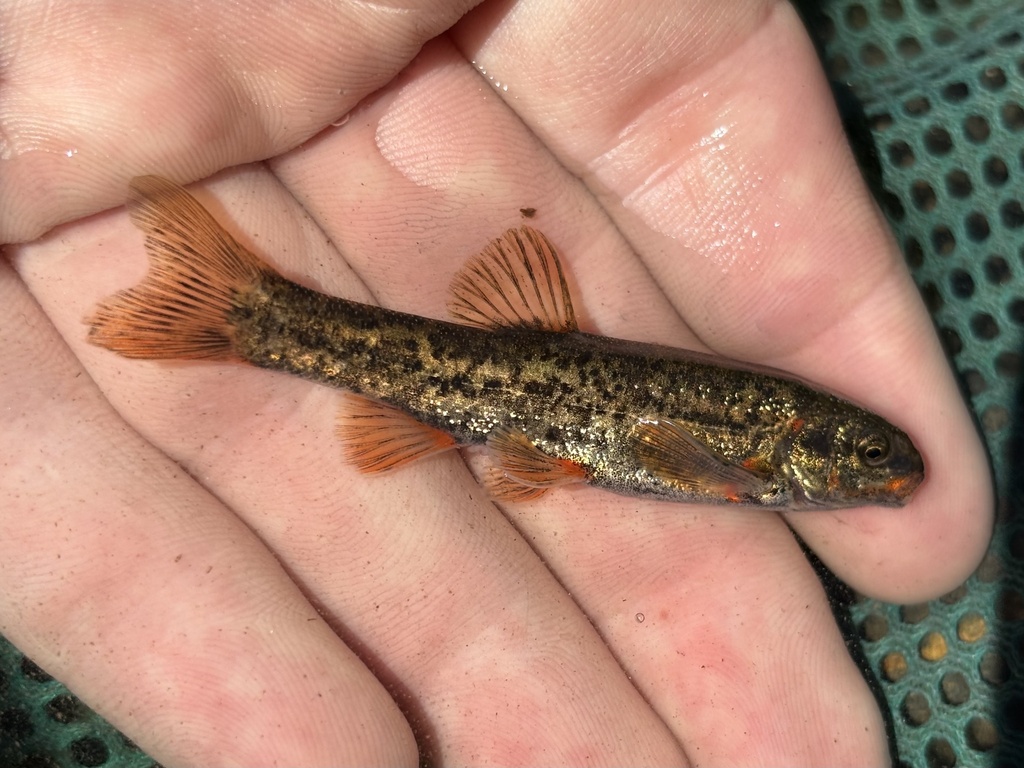
(c) Zakqary Roy, some rights reserved (CC BY) · licence
Family: Cyprinidae · Class: Actinopterygii · Order: Cypriniformes
Conservation status: Endangered
Rhinichthys osculus lethoporus (Independence Valley speckled dace) is a California animal in the Cyprinidae family.
The Independence Valley speckled dace is a small freshwater fish endemic to a single spring system in northern Nevada. As a subspecies of the widespread speckled dace (Rhinichthys osculus), this fish represents one of the most geographically restricted vertebrates in North America. Adults typically measure 50 to 80 mm (2.0 to 3.1 inches) in total length, with a streamlined body adapted for life in flowing water. The species displays the characteristic speckled pattern of dark spots on olive-brown to gray dorsal surfaces, with lighter silvery sides and a pale ventral surface. Like other speckled dace, it possesses a subterminal mouth positioned for bottom feeding and prominent eyes adapted for clear water environments. The Independence Valley speckled dace occurs exclusively in Independence Valley, Elko County, Nevada, representing one of the most restricted ranges of any North American fish species. The subspecies is found only in a few springs and associated stream reaches within this remote valley in northeastern Nevada. This extremely limited distribution makes the species particularly vulnerable to localized environmental changes or habitat disturbance. Historically, the range may have been slightly larger, but current populations are confined to a handful of spring-fed habitats within the valley system. This subspecies inhabits cool, clear spring waters and associated stream channels with rocky or gravel substrates. The springs maintain relatively constant temperatures year-round, typically ranging from 10 to 15°C (50 to 59°F). Water depths occupied by the species range from shallow riffles less than 30 cm deep to pools up to 1 meter in depth. The fish requires well-oxygenated water with moderate to swift current flow, conditions typical of spring-fed systems. Aquatic vegetation and algal mats provide cover and support invertebrate prey communities essential for the species' survival. Independence Valley speckled dace feed primarily on aquatic invertebrates, including mayfly nymphs, caddisfly larvae, midges, and small crustaceans. Like other speckled dace, they are opportunistic feeders, foraging along the substrate and occasionally taking terrestrial insects that fall into the water. Spawning likely occurs in spring and early summer when water temperatures begin to warm, with females depositing adhesive eggs in gravel nests. The species exhibits typical dace reproductive behavior, with males establishing territories during spawning season. Lifespan is estimated at 2 to 3 years, though specific demographic studies are limited. The U.S. Fish and Wildlife Service listed the Independence Valley speckled dace as endangered on October 10, 1989, and a recovery plan was finalized on May 12, 1998. The species faces threats from groundwater pumping, which could reduce spring flows essential for habitat maintenance. Livestock grazing and recreational activities pose additional risks through habitat degradation and water quality impacts. The extremely small population size and restricted range make this subspecies highly vulnerable to stochastic events such as drought, pollution, or disease outbreaks. Conservation efforts focus on habitat protection, water rights management, and monitoring of population trends. Recovery success depends on maintaining stable spring flows and protecting the limited aquatic habitat within Independence Valley.
Classification
Class: Actinopterygii · Order: Cypriniformes · Family: Cyprinidae
Conservation status
Endangered
Frequently asked questions
How is Rhinichthys osculus lethoporus classified?
Rhinichthys osculus lethoporus belongs to class Actinopterygii, order Cypriniformes, family Cyprinidae.
What family does Rhinichthys osculus lethoporus belong to?
Rhinichthys osculus lethoporus is in the Cyprinidae family.
Is Rhinichthys osculus lethoporus protected or of conservation concern?
Rhinichthys osculus lethoporus carries the following status: Endangered.
What is Rhinichthys osculus lethoporus?
The Independence Valley speckled dace is a small freshwater fish endemic to a single spring system in northern Nevada.
Is Rhinichthys osculus lethoporus found in California?
Yes. Rhinichthys osculus lethoporus is recorded in California in The California Species Project's catalogue.
Related species
Other California species in the same genus, family, or bioregion.
Data from The California Species Project — 14,000+ California species with verified data from CNPS, CDFW, USFWS, and more.