Rhinichthys osculus nevadensis
Ash Meadows speckled dace
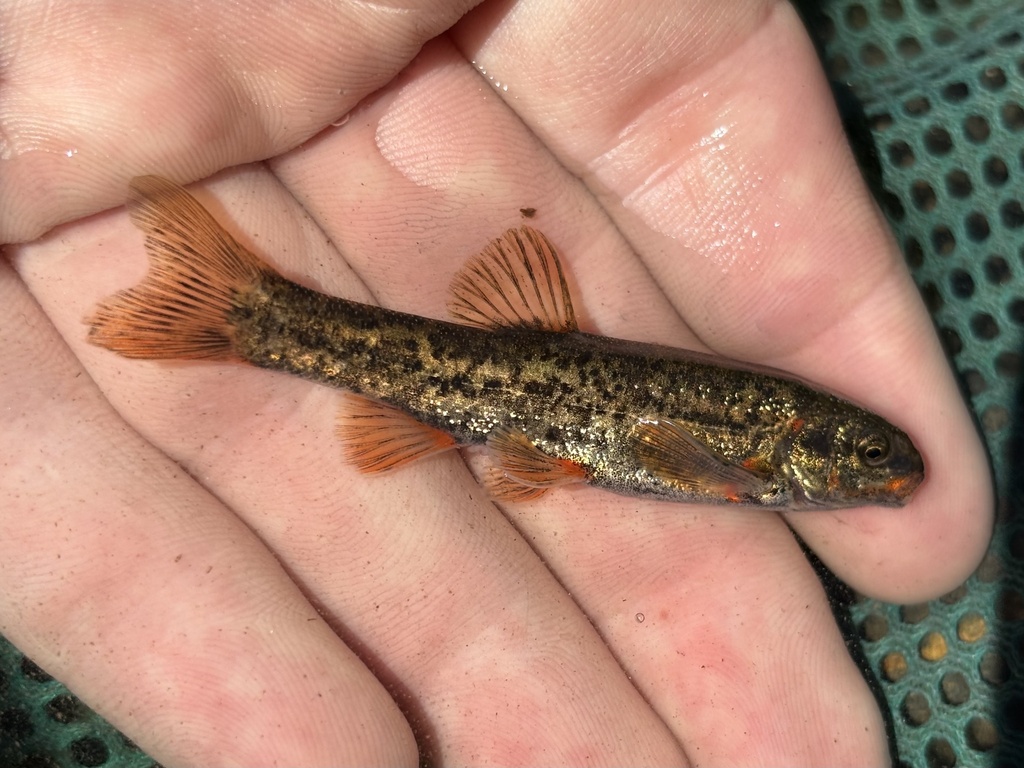
(c) Zakqary Roy, some rights reserved (CC BY) · licence
Family: Cyprinidae · Class: Actinopterygii · Order: Cypriniformes
Conservation status: Endangered
Rhinichthys osculus nevadensis (Ash Meadows speckled dace) is a California animal in the Cyprinidae family.
The Ash Meadows speckled dace is a small cyprinid fish endemic to the spring-fed aquatic systems of Ash Meadows, Nevada. This subspecies of speckled dace was initially described as Rhinichthys nevadensis by Gilbert in 1893 and is distinguished from other speckled dace populations by its unique genetic and morphological characteristics adapted to the desert spring environment. Historically, the Ash Meadows speckled dace occupied a broader range within the Ash Meadows ecosystem, but its current distribution is severely restricted. According to the U.S. Fish and Wildlife Service, dace populations and suitable habitat have been severely reduced by agricultural and residential development and groundwater pumping, with the species presently found only in a small fraction of its historic range (USFWS 2023). The species now occurs exclusively in Nevada within the Ash Meadows National Wildlife Refuge complex. The species inhabits spring systems and aquatic habitats formed by spring waters, including headwater spring pools, spring outflow creeks, and marshes created by spring flows. The dace appears to favor areas with swift flow within each habitat type (USFWS 2023). Critical habitat designation encompasses approximately 36 acres, including the aquatic environments and 50 meters on both sides of these waters. Much of this critical habitat overlaps with designated areas for the Ash Meadows Amargosa pupfish and spring-loving centaury. Ash Meadows speckled dace behavior and ecological requirements are closely tied to the unique thermal spring environment. The species has adapted to the consistent temperatures and flow patterns characteristic of desert spring systems. Like other speckled dace, this subspecies likely feeds on aquatic invertebrates, algae, and organic detritus, though specific dietary studies for this population are limited. The Ash Meadows speckled dace was listed as endangered under the Endangered Species Act in 1982. According to the Recovery Plan for Endangered and Threatened Species of Ash Meadows, Nevada, the total population size is estimated at approximately 500 individuals. The species faces ongoing threats from habitat alteration, exotic species introduction, and water management impacts. Historical habitat destruction was severe, including the elimination of approximately 2,000 acres of marshland in Carson Slough during the 1960s due to peat-mining operations, which destroyed habitat supporting this species along with the Ash Meadows Amargosa pupfish and the now-extinct Ash Meadows killifish. Conservation efforts focus on habitat protection within Ash Meadows National Wildlife Refuge, water source security, population monitoring, and research on species biology. The refuge protects 12 threatened and endangered species and 26 endemic species, making it a globally significant biodiversity hotspot. Recovery actions include reestablishing populations, conducting management activities within essential habitat, and determining recovery criteria for long-term species viability.
Classification
Class: Actinopterygii · Order: Cypriniformes · Family: Cyprinidae
Conservation status
Endangered
Frequently asked questions
How is Rhinichthys osculus nevadensis classified?
Rhinichthys osculus nevadensis belongs to class Actinopterygii, order Cypriniformes, family Cyprinidae.
What family does Rhinichthys osculus nevadensis belong to?
Rhinichthys osculus nevadensis is in the Cyprinidae family.
Is Rhinichthys osculus nevadensis protected or of conservation concern?
Rhinichthys osculus nevadensis carries the following status: Endangered.
What is Rhinichthys osculus nevadensis?
The Ash Meadows speckled dace is a small cyprinid fish endemic to the spring-fed aquatic systems of Ash Meadows, Nevada.
Is Rhinichthys osculus nevadensis found in California?
Yes. Rhinichthys osculus nevadensis is recorded in California in The California Species Project's catalogue.
Related species
Other California species in the same genus, family, or bioregion.
Data from The California Species Project — 14,000+ California species with verified data from CNPS, CDFW, USFWS, and more.