Rhinichthys osculus oligoporus
Clover Valley speckled dace
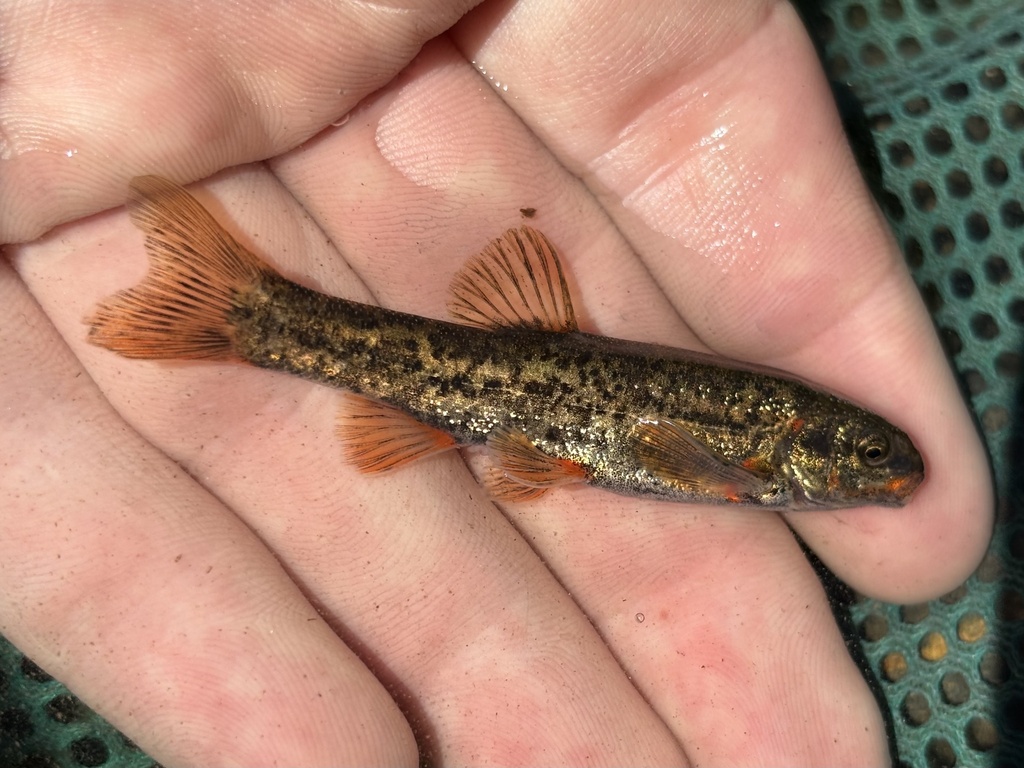
(c) Zakqary Roy, some rights reserved (CC BY) · licence
Family: Cyprinidae · Class: Actinopterygii · Order: Cypriniformes
Conservation status: Endangered
Rhinichthys osculus oligoporus (Clover Valley speckled dace) is a California animal in the Cyprinidae family.
The Clover Valley speckled dace is a small freshwater fish subspecies endemic to three isolated spring systems in Clover Valley, Elko County, Nevada. Adults typically measure 60 to 90 mm (2.4 to 3.5 inches) in total length. Like other speckled dace subspecies, this fish displays a fusiform body shape with a slightly compressed profile. The dorsal surface is typically olive to brown, with darker speckled patterns giving the species its common name, while the ventral surface is lighter in coloration. Historically, the Clover Valley speckled dace was distributed throughout the Clover Valley drainage system in northeastern Nevada. Currently, the subspecies exists only in three spring systems: Bradish Spring, Wright Ranch Spring, and Clover Valley Warm Spring, all located in Elko County, Nevada. This represents a significant reduction from its historical range, with the species now occupying a total area of less than one square mile. The subspecies inhabits cold freshwater springs and their outflow channels, as well as thermal springs with varying substrate types. These spring systems maintain relatively constant temperatures and water levels throughout the year, providing critical habitat stability. The springs feature both rocky and silted substrates, with water temperatures ranging from cool artesian flows to thermal discharge areas. Speckled dace generally occupy a wide variety of habitats from cold streams with rocky substrates to small thermal springs with silt substrates (USFWS 2024). Clover Valley speckled dace are opportunistic feeders, consuming aquatic invertebrates, algae, and organic detritus. Spawning typically occurs during spring months when water temperatures begin to rise. Adults construct nests in gravel substrates where available, with females depositing adhesive eggs that attach to rocks and vegetation. The species exhibits site fidelity, remaining within the limited confines of individual spring systems throughout their lifecycle. The U.S. Fish and Wildlife Service listed the Clover Valley speckled dace as endangered on October 10, 1989, with the recovery plan finalized on May 12, 1998 (USFWS). The species faces multiple threats primarily related to its extremely limited distribution and small population size. Habitat modification for agricultural irrigation has altered natural spring flows and water levels. Competition and predation pressure from non-native fish species, including introduced trout and other game fish, pose ongoing threats to native populations. Water diversions for livestock and agricultural use continue to impact spring discharge rates and habitat quality. Recovery efforts focus on habitat protection and restoration within the three remaining spring systems. Water rights acquisition and management agreements with private landowners are essential components of conservation strategy. Population monitoring and habitat assessment programs track species status and environmental conditions. The species' population trend was reported as stable in recent recovery reports to Congress (USFWS 2010), though the extremely small range makes the subspecies vulnerable to catastrophic events. Current population estimates remain limited, reflecting the challenges of monitoring fish in small, isolated spring systems.
Classification
Class: Actinopterygii · Order: Cypriniformes · Family: Cyprinidae
Conservation status
Endangered
Frequently asked questions
How is Rhinichthys osculus oligoporus classified?
Rhinichthys osculus oligoporus belongs to class Actinopterygii, order Cypriniformes, family Cyprinidae.
What family does Rhinichthys osculus oligoporus belong to?
Rhinichthys osculus oligoporus is in the Cyprinidae family.
Is Rhinichthys osculus oligoporus protected or of conservation concern?
Rhinichthys osculus oligoporus carries the following status: Endangered.
What is Rhinichthys osculus oligoporus?
The Clover Valley speckled dace is a small freshwater fish subspecies endemic to three isolated spring systems in Clover Valley, Elko County, Nevada.
Is Rhinichthys osculus oligoporus found in California?
Yes. Rhinichthys osculus oligoporus is recorded in California in The California Species Project's catalogue.
Related species
Other California species in the same genus, family, or bioregion.
Data from The California Species Project — 14,000+ California species with verified data from CNPS, CDFW, USFWS, and more.