Rhinichthys osculus robustus
Lahontan speckled dace
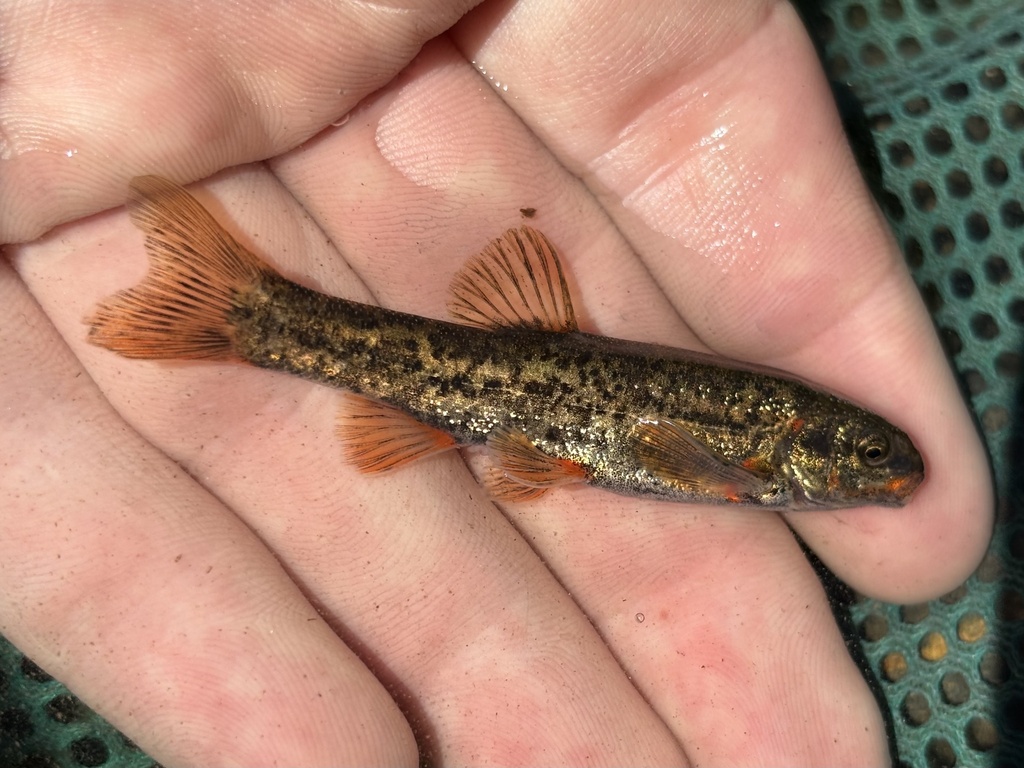
(c) Zakqary Roy, some rights reserved (CC BY) · licence
Family: Leuciscidae · Class: Actinopterygii · Order: Cypriniformes
Rhinichthys osculus robustus (Lahontan speckled dace) is a California animal in the Leuciscidae family.
The Lahontan speckled dace (Rhinichthys osculus robustus) is a small freshwater fish in the minnow family Leuciscidae, endemic to the Lahontan Basin of California, Nevada, and Oregon. This subspecies of speckled dace typically measures 50 to 100 mm (2 to 4 inches) in total length. The body is elongated and cylindrical with a slightly compressed posterior region. Coloration varies from olive-brown to gray-brown dorsally, fading to silver or white ventrally. The distinguishing speckled pattern consists of small dark spots scattered across the sides and back, with spots becoming more pronounced during breeding season. Males develop tubercles on the head and pectoral fins during spawning periods. Historically, Lahontan speckled dace occupied streams and lakes throughout the Lahontan Basin, which includes the Truckee, Carson, and Walker river systems in California and Nevada. In California, populations occur in the eastern Sierra Nevada region, primarily in Mono and Inyo counties. The species inhabits portions of the Truckee River system, including tributaries such as Sagehen Creek, and historically occurred in Walker Lake drainage systems. Current distribution is fragmented compared to historical range due to habitat modifications and water diversions. Lahontan speckled dace inhabit clear, cool streams and lake margins with rocky or gravelly substrates. They prefer areas with moderate to swift current and well-oxygenated water. The species is typically found at elevations ranging from 1,200 to 2,400 meters (4,000 to 8,000 feet) in the Sierra Nevada region. Adults occupy pool and riffle habitats, often seeking shelter under rocks and overhanging banks. Water temperatures in occupied habitats generally remain below 24°C (75°F) during summer months. This subspecies is an opportunistic omnivore, feeding on aquatic invertebrates, algae, and organic detritus. Primary prey items include chironomid larvae, mayfly nymphs, caddisfly larvae, and small crustaceans. Spawning occurs from late spring through early summer, typically May through July, when water temperatures reach 10 to 15°C (50 to 59°F). Females broadcast adhesive eggs over gravel substrates in shallow riffles, with clutch sizes ranging from 200 to 1,000 eggs depending on female size. Sexual maturity is reached at approximately one year of age, with maximum lifespan rarely exceeding four years. Lahontan speckled dace populations face significant conservation challenges throughout their range. Primary threats include habitat fragmentation from dam construction, water diversions for agricultural and municipal use, and stream channel modifications. Non-native fish introductions, particularly brook trout and brown trout, create competition and predation pressure. Climate change poses additional risks through altered precipitation patterns, increased water temperatures, and reduced snowpack in the Sierra Nevada. Several populations have experienced local extirpations, and remaining populations are often isolated in headwater reaches. Conservation efforts focus on habitat restoration, fish passage improvements, and water management strategies that maintain adequate stream flows.
Classification
Class: Actinopterygii · Order: Cypriniformes · Family: Leuciscidae
Frequently asked questions
How is Rhinichthys osculus robustus classified?
Rhinichthys osculus robustus belongs to class Actinopterygii, order Cypriniformes, family Leuciscidae.
What family does Rhinichthys osculus robustus belong to?
Rhinichthys osculus robustus is in the Leuciscidae family.
What is Rhinichthys osculus robustus?
The Lahontan speckled dace (Rhinichthys osculus robustus) is a small freshwater fish in the minnow family Leuciscidae, endemic to the Lahontan Basin of California, Nevada, and Oregon.
Is Rhinichthys osculus robustus found in California?
Yes. Rhinichthys osculus robustus is recorded in California in The California Species Project's catalogue.
Related species
Other California species in the same genus, family, or bioregion.
Data from The California Species Project — 14,000+ California species with verified data from CNPS, CDFW, USFWS, and more.