Rhionaeschna californica
California Darner
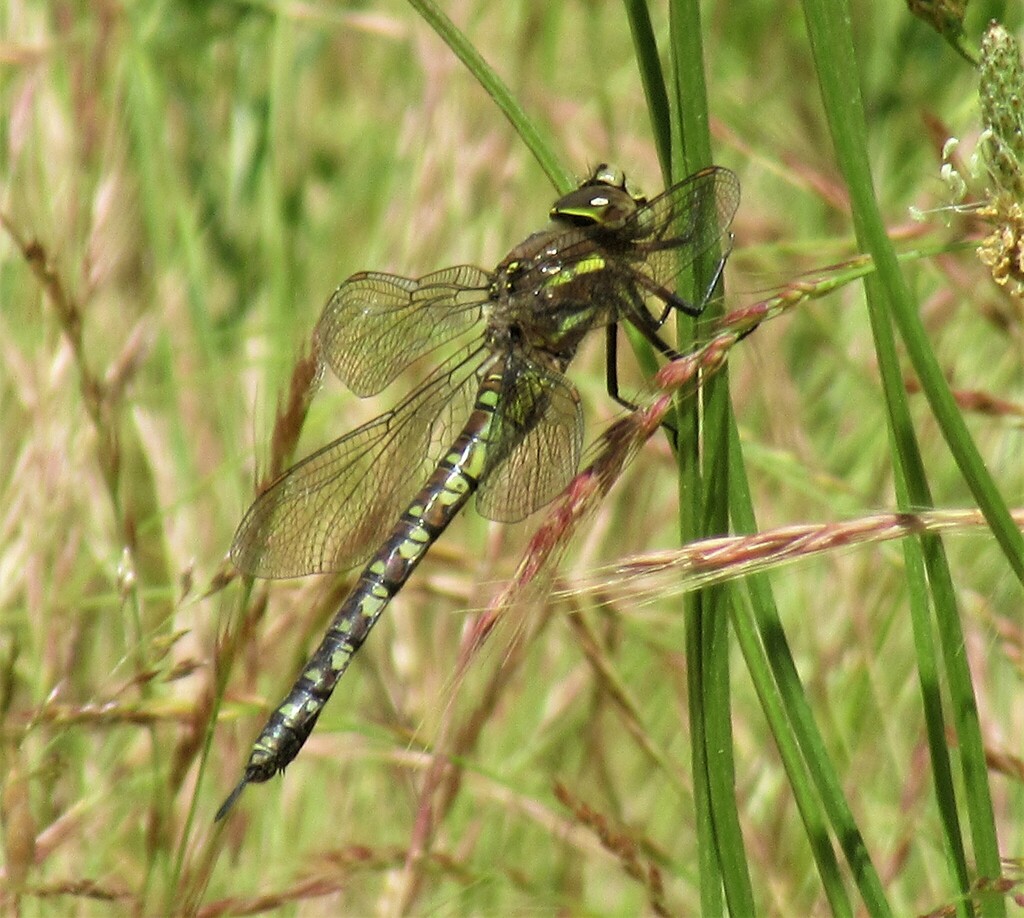
(c) sprcrkwild, some rights reserved (CC BY) · licence
Family: Aeshnidae · Class: Insecta · Order: Odonata
Rhionaeschna californica (California Darner) is a California animal in the Aeshnidae family.
The California darner (Rhionaeschna californica) is a large dragonfly in the family Aeshnidae, distinguished by its substantial size and powerful flight capabilities. Adults typically measure 72-77 mm (2.8-3.0 inches) in body length with wingspans reaching 90-100 mm (3.5-3.9 inches). The species exhibits the characteristic darner morphology with a robust thorax, elongated abdomen, and broad, clear wings. Males display blue and green coloration on the thorax with distinctive yellow markings, while females tend toward more subdued brown and green tones with yellow striping patterns along the abdomen. The California darner is endemic to western North America, with its range primarily concentrated in California, Oregon, and Nevada. Within California, the species occurs throughout much of the state from sea level to moderate elevations, inhabiting both coastal and inland regions. Historical records document populations from the Central Valley through the Sierra Nevada foothills, as well as in coastal mountain ranges and the southern California region. This species primarily inhabits flowing water systems including creeks, streams, and small rivers with rocky or sandy substrates. California darners show a preference for areas with moderate current flow and clear, well-oxygenated water. Adults are commonly observed near riparian vegetation zones where overhanging trees and shrubs provide perching sites and hunting grounds. The species tolerates a range of elevations from near sea level to approximately 1,500 meters (4,900 feet) in mountainous terrain. California darners are powerful aerial predators, capturing flying insects including mosquitoes, midges, small moths, and other soft-bodied prey. Adults are most active during daylight hours, with peak activity occurring in late morning and early afternoon. Males establish territories along stream corridors, patrolling linear beats of 50-100 meters while searching for mates and defending prime habitat from competitors. Mating occurs in flight, followed by tandem oviposition where pairs fly together as females deposit eggs in aquatic vegetation or directly into stream substrates. The aquatic larval stage, known as a naiad, develops over 1-2 years depending on water temperature and food availability. Naiads are ambush predators, feeding on aquatic insects, small crustaceans, and occasionally small fish or tadpoles. The California darner currently holds no federal or state conservation listing status, suggesting stable population levels across most of its range. However, like many freshwater-dependent species, California darners face potential threats from habitat degradation, water diversions, and climate change impacts on stream flow patterns. Urban development and agricultural practices that alter riparian corridors or introduce pollutants into waterways may affect local populations. Water management practices that significantly reduce stream flows during critical breeding periods could impact reproductive success. As of December 2025, the species appears to maintain viable populations throughout its historical range, though comprehensive population monitoring data remains limited for this and many odonate species in western North America.
Classification
Class: Insecta · Order: Odonata · Family: Aeshnidae
Frequently asked questions
How is Rhionaeschna californica classified?
Rhionaeschna californica belongs to class Insecta, order Odonata, family Aeshnidae.
What family does Rhionaeschna californica belong to?
Rhionaeschna californica is in the Aeshnidae family.
What is Rhionaeschna californica?
The California darner (Rhionaeschna californica) is a large dragonfly in the family Aeshnidae, distinguished by its substantial size and powerful flight capabilities.
Is Rhionaeschna californica found in California?
Yes. Rhionaeschna californica is recorded in California in The California Species Project's catalogue.
Related species
Other California species in the same genus, family, or bioregion.
Data from The California Species Project — 14,000+ California species with verified data from CNPS, CDFW, USFWS, and more.