Rhionaeschna multicolor
Blue-eyed Darner
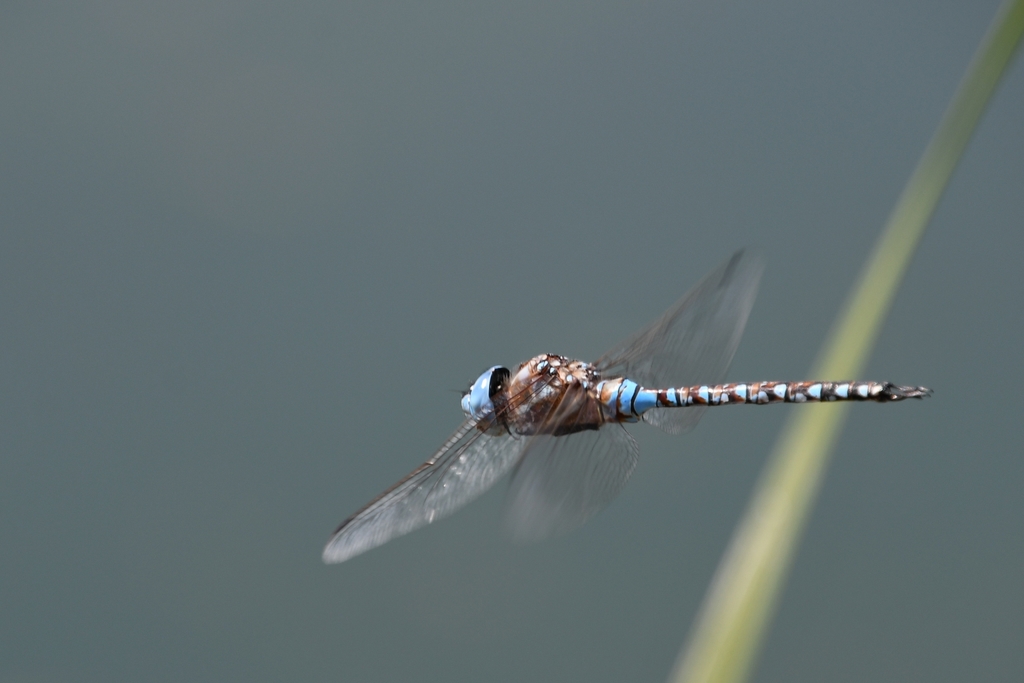
(c) Mike Ostrowski, some rights reserved (CC BY-SA) · licence
Family: Aeshnidae · Class: Insecta · Order: Odonata
Rhionaeschna multicolor (Blue-eyed Darner) is a California animal in the Aeshnidae family.
The Blue-eyed Darner is a large dragonfly species belonging to the darner family (Aeshnidae). Adults typically measure 70-80 mm (2.8-3.1 inches) in body length with a wingspan reaching 100-110 mm (3.9-4.3 inches) (BugGuide 2025). The species is distinguished by its prominent bright blue eyes, which give it its common name. The thorax displays a brown coloration with distinctive pale stripes, while the abdomen features alternating dark and light bands. Males and females show similar coloration patterns, though males may exhibit slightly more vivid markings during breeding season. Rhionaeschna multicolor has a widespread distribution across North America, ranging from southern Canada to northern Mexico. In California, the species occurs throughout much of the state, from coastal regions to inland areas. The species has been documented in various California counties, with records extending from sea level to moderate elevations in mountainous regions. According to BugGuide (2025), the species shows considerable geographic variation across its extensive range. Odonata Central records confirm the species' presence across multiple California ecoregions (Odonata Central 2025). Blue-eyed Darners inhabit a variety of aquatic environments, showing preference for still or slow-moving freshwater habitats. They are commonly found near ponds, lakes, marshes, and slow-flowing streams or rivers. The species demonstrates adaptability to both natural and artificial water bodies, including constructed ponds and reservoirs. Adults are often observed patrolling over open water areas and along vegetated shorelines. Larvae develop in the aquatic environment, requiring permanent or semi-permanent water bodies for successful reproduction. Adults are active fliers and skilled aerial predators, capturing prey insects on the wing. Their diet consists primarily of mosquitoes, midges, flies, and other small flying insects. Blue-eyed Darners exhibit territorial behavior, with males establishing and defending patrol routes over suitable breeding habitat (Paulson 2011). Mating occurs during flight, followed by egg-laying in aquatic vegetation or organic debris in shallow water. The species typically has one generation per year in most of its range, with larval development taking one to two years depending on local climate conditions (Needham et al. 2014). Adults are most active during warm, sunny days and are frequently observed from late spring through early fall. The Blue-eyed Darner currently holds no special conservation status at federal or state levels. The species appears to maintain stable populations across most of its range and demonstrates adaptability to human-modified landscapes. However, like many aquatic-dependent species, Blue-eyed Darners face potential threats from habitat loss, water pollution, and climate change impacts on freshwater ecosystems. Wetland preservation and restoration efforts benefit this species by maintaining the aquatic habitats essential for reproduction. The species serves as an indicator of healthy freshwater ecosystems and contributes to natural pest control through its predation on mosquitoes and other nuisance insects.
Classification
Class: Insecta · Order: Odonata · Family: Aeshnidae
Frequently asked questions
How is Rhionaeschna multicolor classified?
Rhionaeschna multicolor belongs to class Insecta, order Odonata, family Aeshnidae.
What family does Rhionaeschna multicolor belong to?
Rhionaeschna multicolor is in the Aeshnidae family.
What is Rhionaeschna multicolor?
The Blue-eyed Darner is a large dragonfly species belonging to the darner family (Aeshnidae).
Is Rhionaeschna multicolor found in California?
Yes. Rhionaeschna multicolor is recorded in California in The California Species Project's catalogue.
Related species
Other California species in the same genus, family, or bioregion.
Data from The California Species Project — 14,000+ California species with verified data from CNPS, CDFW, USFWS, and more.