Rhodostethia rosea
Ross's Gull
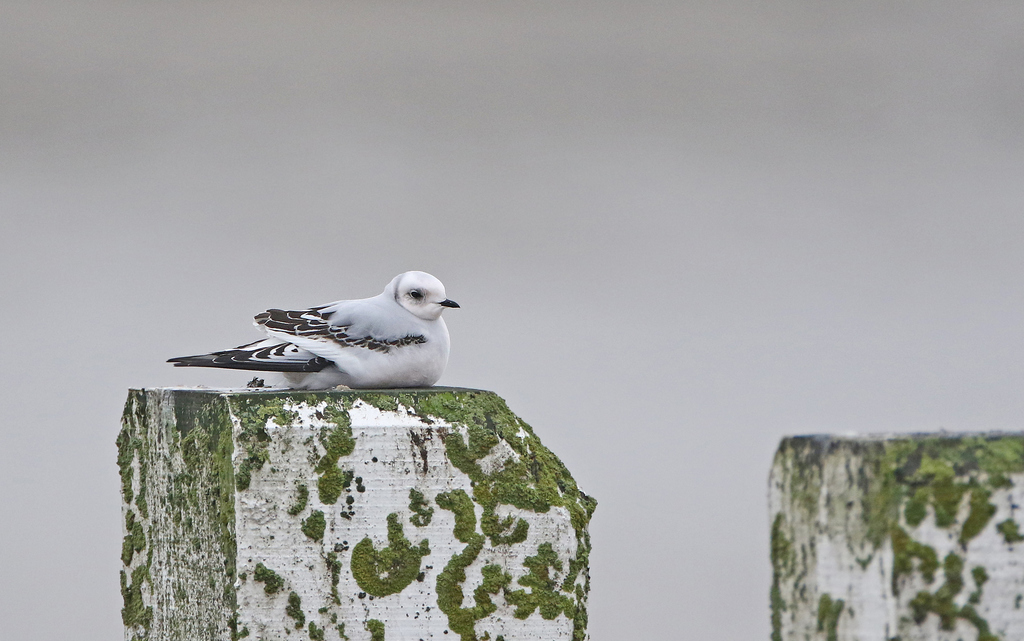
(c) Christoph Moning, some rights reserved (CC BY) · licence
Family: Laridae · Class: Aves · Order: Charadriiformes
Rhodostethia rosea (Ross's Gull) is a California animal in the Laridae family.
Ross's Gull is a small Arctic seabird measuring 29-32 cm (11.4-12.6 inches) in length with a wingspan of 77-80 cm (30-31 inches). Adults weigh approximately 180-250 grams. During breeding season, adults display distinctive rosy-pink underparts that give the species its common name, along with a pale gray mantle and wings. The head is white with a thin black collar around the neck. A key identifying feature is the wedge-shaped tail, unique among gulls. In flight, the wings appear narrow and pointed with distinctive dark trailing edges on the primaries. Non-breeding adults lose the pink coloration and black collar, becoming predominantly white and gray. Juveniles show brownish markings on the wings and back with a black terminal tail band. Ross's Gull breeds primarily in the Siberian Arctic, with small populations in northern Canada and Greenland. In North America, the species occurs regularly only in northern Alaska and the Canadian Arctic archipelago. In California, Ross's Gull is an extremely rare vagrant, with fewer than 20 documented records since the first state record in 1974. Most California sightings occur along the coast during fall and winter months, typically between October and February. Records include observations at Point Reyes, Monterey Bay, and various locations in Southern California. During the breeding season, Ross's Gulls inhabit tundra wetlands, including small ponds, marshes, and river deltas in the high Arctic. They nest in colonies on small islands or elevated areas near water. Outside the breeding season, the species is primarily pelagic, occurring in ice-free Arctic and subarctic waters. In California, vagrant individuals are typically observed in coastal waters, harbors, and occasionally inland at reservoirs and large lakes. Ross's Gulls feed primarily on small fish, marine invertebrates, and zooplankton. During breeding season, they also consume terrestrial insects and larvae. The species exhibits a distinctive feeding behavior, often picking prey from the water surface while hovering or swimming. Breeding occurs from June to August, with pairs constructing ground nests lined with grass and moss. Females typically lay 2-3 olive-brown eggs with dark spots. The incubation period lasts approximately 21-22 days, with both parents sharing responsibilities. Globally, Ross's Gull is not considered threatened, though population estimates are uncertain due to the species' remote breeding range. Climate change poses potential long-term threats through habitat modifications in the Arctic. The species is not protected under federal or California endangered species legislation. In California, Ross's Gull remains on the Review List of rare birds maintained by the California Bird Records Committee. The extreme rarity of this species in California makes each sighting significant for understanding vagrancy patterns and potential range shifts related to changing Arctic conditions.
Classification
Class: Aves · Order: Charadriiformes · Family: Laridae
Frequently asked questions
How is Rhodostethia rosea classified?
Rhodostethia rosea belongs to class Aves, order Charadriiformes, family Laridae.
What family does Rhodostethia rosea belong to?
Rhodostethia rosea is in the Laridae family.
What is Rhodostethia rosea?
Ross's Gull is a small Arctic seabird measuring 29-32 cm (11.4-12.6 inches) in length with a wingspan of 77-80 cm (30-31 inches).
Is Rhodostethia rosea found in California?
Yes. Rhodostethia rosea is recorded in California in The California Species Project's catalogue.
Related species
Other California species in the same genus, family, or bioregion.
Data from The California Species Project — 14,000+ California species with verified data from CNPS, CDFW, USFWS, and more.