Rhomphaea fictilium
Lizard Spider
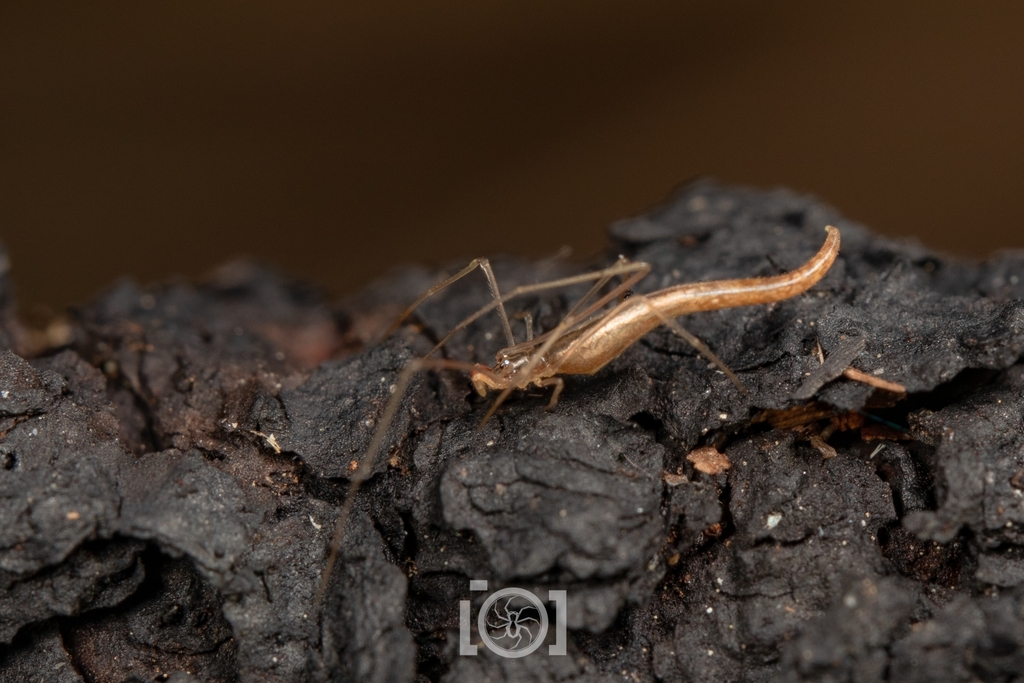
no rights reserved · CC0
Family: Theridiidae · Class: Arachnida · Order: Araneae
Rhomphaea fictilium (Lizard Spider) is a California animal in the Theridiidae family.
Rhomphaea fictilium, commonly known as the Lizard Spider, is a member of the family Theridiidae, commonly called cobweb weavers or house spiders. This arachnid belongs to a genus of small spiders known for their distinctive behavioral and ecological characteristics within the broader theridiid family. As a theridiid spider, R. fictilium constructs irregular, three-dimensional webs typical of this family, which are often found in corners, crevices, or among vegetation. The specific epithet 'fictilium' suggests associations with pottery or earthenware, possibly indicating habitat preferences for human-modified environments or areas with clay-like substrates. Members of the genus Rhomphaea are generally small spiders, typically measuring less than 5 millimeters in body length, with females usually larger than males as is common among spiders. The coloration and specific morphological features of R. fictilium have not been extensively documented in readily available scientific literature. Like other theridiids, this species likely exhibits sexual dimorphism, with males possessing enlarged pedipalps used in mating and often displaying different coloration patterns than females. The geographic distribution of R. fictilium within California remains poorly documented in current scientific databases. The genus Rhomphaea includes several species distributed across North America, but specific range information for this particular species requires further taxonomic and distributional research. Habitat preferences for R. fictilium are not well documented in available literature, though related Rhomphaea species typically inhabit areas with suitable web-building sites including vegetation, rock crevices, or human structures. Like other theridiid spiders, this species likely constructs sticky capture webs to ensnare small flying insects and other arthropod prey. The reproductive biology and seasonal activity patterns of R. fictilium have not been extensively studied or documented in accessible scientific sources. Female theridiids typically produce egg sacs which they guard until hatching, and this species likely follows similar reproductive patterns. The conservation status of R. fictilium has not been formally assessed by federal or state agencies, and the species does not appear on current endangered or threatened species lists. Population trends and threats to this species are unknown due to limited ecological research and monitoring efforts. Scientific documentation for this species remains extremely limited despite thorough searches of authoritative sources including USFWS databases, California Department of Fish and Wildlife resources, and established arachnological databases. The information presented here synthesizes available taxonomic data and general knowledge of related theridiid spiders. We welcome contributions of verified scientific data, photographs, or field observations to enhance this species account.
Classification
Class: Arachnida · Order: Araneae · Family: Theridiidae
Frequently asked questions
How is Rhomphaea fictilium classified?
Rhomphaea fictilium belongs to class Arachnida, order Araneae, family Theridiidae.
What family does Rhomphaea fictilium belong to?
Rhomphaea fictilium is in the Theridiidae family.
What is Rhomphaea fictilium?
Rhomphaea fictilium, commonly known as the Lizard Spider, is a member of the family Theridiidae, commonly called cobweb weavers or house spiders.
Is Rhomphaea fictilium found in California?
Yes. Rhomphaea fictilium is recorded in California in The California Species Project's catalogue.
Related species
Other California species in the same genus, family, or bioregion.
Data from The California Species Project — 14,000+ California species with verified data from CNPS, CDFW, USFWS, and more.