Rhopalapion longirostre
Hollyhock Weevil
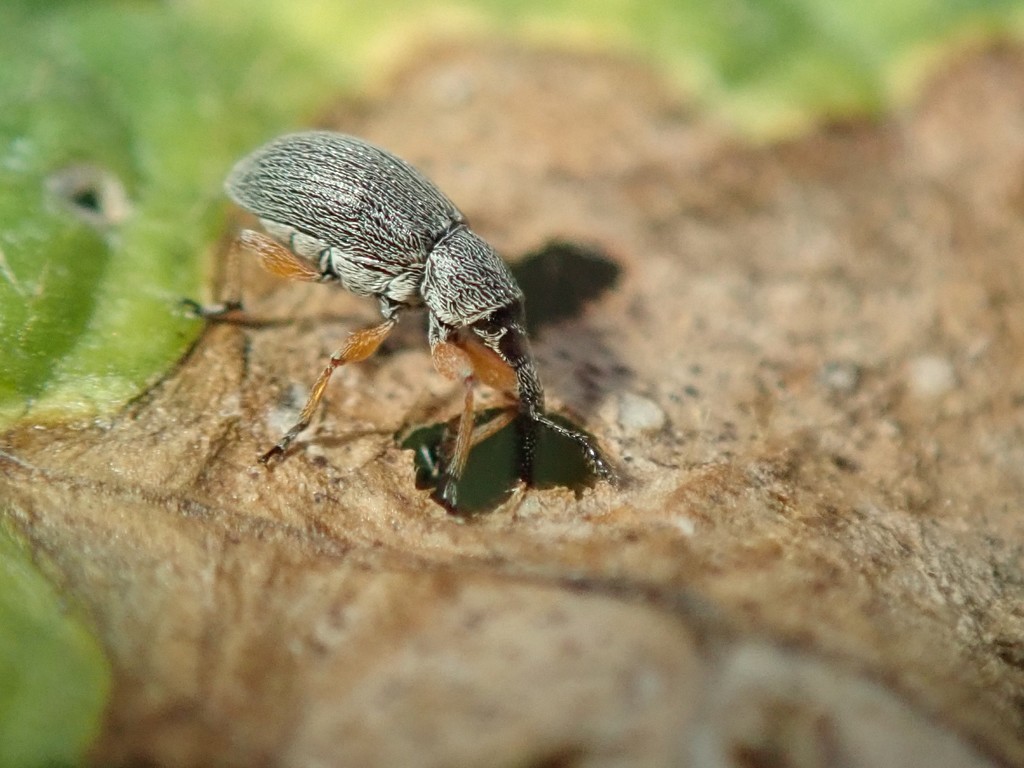
(c) Alexis Tinker-Tsavalas, some rights reserved (CC BY) · licence
Family: Apionidae · Class: Insecta · Order: Coleoptera
Rhopalapion longirostre (Hollyhock Weevil) is a California animal in the Apionidae family.
The Hollyhock Weevil is a small beetle in the family Apionidae, subfamily Apioninae. Adults typically measure 2-4 mm in length and display the characteristic elongated rostrum (snout) typical of weevils. The body is generally dark brown to black with a somewhat cylindrical shape. The rostrum is notably long and curved, particularly pronounced in females, which use it for boring holes in plant tissues for egg deposition. This species is non-native to North America, having been introduced from Europe and Asia around 1914 (BugGuide). The Hollyhock Weevil has established populations across much of the United States, including California, where it is now considered naturalized. Its current distribution extends throughout temperate regions where suitable host plants are available. The weevil inhabits gardens, disturbed areas, roadsides, and other locations where its primary host plants grow. It shows a strong preference for plants in the mallow family (Malvaceae), with hollyhock (Alcea rosea) being the most commonly utilized host. The species also develops on other mallows including common mallow (Malva neglecta) and cheese mallow (Malva parviflora). Adults are typically found on or near these host plants from spring through fall. Female Hollyhock Weevils bore holes in flower buds, stems, and seed pods of their host plants using their elongated rostrum. After creating these cavities, they deposit single eggs inside the plant tissues. Larvae develop within the plant, feeding on internal tissues including developing seeds and stem pith. This feeding behavior can cause flower buds to fail to open properly and may result in stem swelling or galling. Development from egg to adult typically requires several weeks, with multiple generations possible per year in favorable climates. Adults overwinter in leaf litter or other protected locations near host plants. The species exhibits typical weevil behavior, with adults being most active during warm, sunny conditions. When disturbed, they often employ thanatosis (playing dead) by drawing in their legs and dropping from the plant. Adults feed on leaves and flower petals of host plants, creating small, round feeding holes. Mating occurs on host plants, with females capable of reproducing for extended periods once fertilized. As an introduced species, the Hollyhock Weevil is not protected under federal or state conservation legislation. It is not listed as endangered, threatened, or of special concern by any regulatory agency. The species is considered established and stable throughout its introduced range in North America. While it can cause aesthetic damage to ornamental hollyhocks and related plants, it is generally not considered a serious agricultural pest. No conservation measures or management actions are currently directed toward this species, as it poses no known threat to native ecosystems or endangered plant species.
Classification
Class: Insecta · Order: Coleoptera · Family: Apionidae
Frequently asked questions
How is Rhopalapion longirostre classified?
Rhopalapion longirostre belongs to class Insecta, order Coleoptera, family Apionidae.
What family does Rhopalapion longirostre belong to?
Rhopalapion longirostre is in the Apionidae family.
What is Rhopalapion longirostre?
The Hollyhock Weevil is a small beetle in the family Apionidae, subfamily Apioninae.
Is Rhopalapion longirostre found in California?
Yes. Rhopalapion longirostre is recorded in California in The California Species Project's catalogue.
More California species
This species has no close relatives in our California data — here are other species to explore.
Data from The California Species Project — 14,000+ California species with verified data from CNPS, CDFW, USFWS, and more.