Rhopalomyia audibertiae
White Sage Leaf Gall Midge
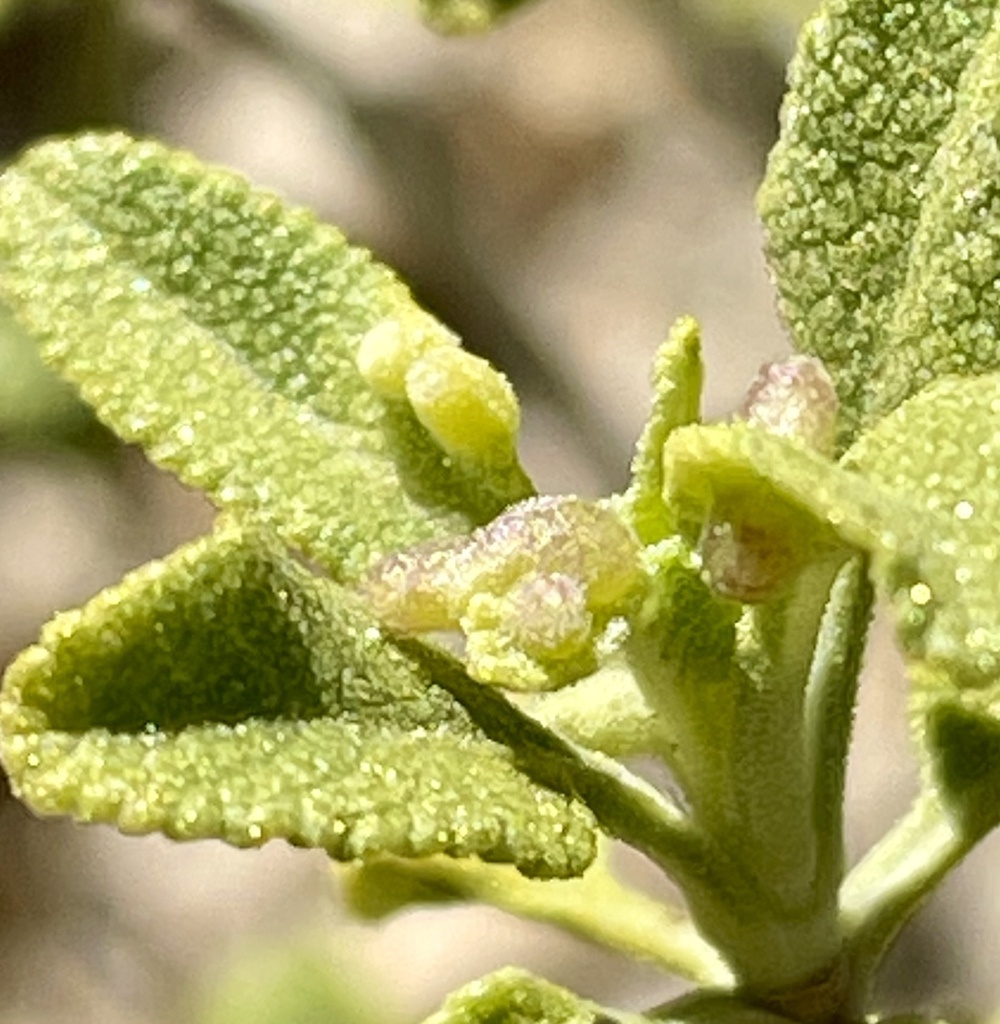
no rights reserved · CC0
Family: Cecidomyiidae · Class: Insecta · Order: Diptera
Rhopalomyia audibertiae (White Sage Leaf Gall Midge) is a California animal in the Cecidomyiidae family.
The White Sage Leaf Gall Midge (Rhopalomyia audibertiae) is a small dipteran insect in the family Cecidomyiidae, commonly known as gall midges. Like other members of this family, adults are tiny flies typically measuring 1-3 millimeters in length, with delicate bodies and relatively long antennae. The larvae are the ecologically significant stage, creating distinctive galls on their host plants through feeding activities that induce abnormal plant growth responses. This species occurs in western North America, with documented populations in California and likely extending into adjacent states where suitable host plants are present. The distribution closely follows that of its primary host, white sage (Salvia apiana), which is endemic to coastal sage scrub and chaparral communities of southern California and Baja California. Specific county-level distribution data for this midge species remains limited in the scientific literature. Rhopalomyia audibertiae inhabits coastal sage scrub and chaparral plant communities, particularly areas dominated by white sage. These ecosystems typically occur at elevations from sea level to approximately 1,500 meters (4,900 feet) in Mediterranean climate zones characterized by hot, dry summers and mild, wet winters. The species appears to be closely adapted to the phenology and chemistry of its sage host, with adult emergence likely timed to coincide with optimal conditions for oviposition and larval development. The ecology of this species centers on its specialized relationship with white sage. Female midges deposit eggs on sage leaves or stems, and the developing larvae induce formation of distinctive leaf galls. These galls provide both food and protection for the developing insects. The larval feeding stimulates abnormal cell division and growth in the plant tissue, creating enlarged, often rounded structures on the leaves. Gall formation represents a complex interaction between the insect's chemical signals and the plant's growth responses. Adult midges likely emerge during specific seasons, though detailed life cycle timing has not been well documented for this particular species. The conservation status of Rhopalomyia audibertiae has not been formally assessed by federal or state agencies, and the species does not appear on current endangered species lists. However, like many insects with narrow host plant requirements, this midge may face conservation challenges related to habitat loss and fragmentation. Coastal sage scrub ecosystems have experienced significant reduction throughout southern California due to urban development, agriculture, and altered fire regimes. White sage populations have declined in many areas, which could indirectly impact dependent herbivorous insects like gall midges. Climate change may pose additional threats through altered precipitation patterns and increased drought stress in Mediterranean ecosystems. The species' conservation needs remain poorly understood due to limited ecological research on this and related gall midge species. Comprehensive surveys of gall midge diversity and distribution in California's shrubland ecosystems would help assess the conservation status of this and similar specialized insects.
Classification
Class: Insecta · Order: Diptera · Family: Cecidomyiidae
Frequently asked questions
How is Rhopalomyia audibertiae classified?
Rhopalomyia audibertiae belongs to class Insecta, order Diptera, family Cecidomyiidae.
What family does Rhopalomyia audibertiae belong to?
Rhopalomyia audibertiae is in the Cecidomyiidae family.
What is Rhopalomyia audibertiae?
The White Sage Leaf Gall Midge (Rhopalomyia audibertiae) is a small dipteran insect in the family Cecidomyiidae, commonly known as gall midges.
Is Rhopalomyia audibertiae found in California?
Yes. Rhopalomyia audibertiae is recorded in California in The California Species Project's catalogue.
Related species
Other California species in the same genus, family, or bioregion.
Data from The California Species Project — 14,000+ California species with verified data from CNPS, CDFW, USFWS, and more.