Rhopalomyia ericameriae
Rosette Bud Gall Midge
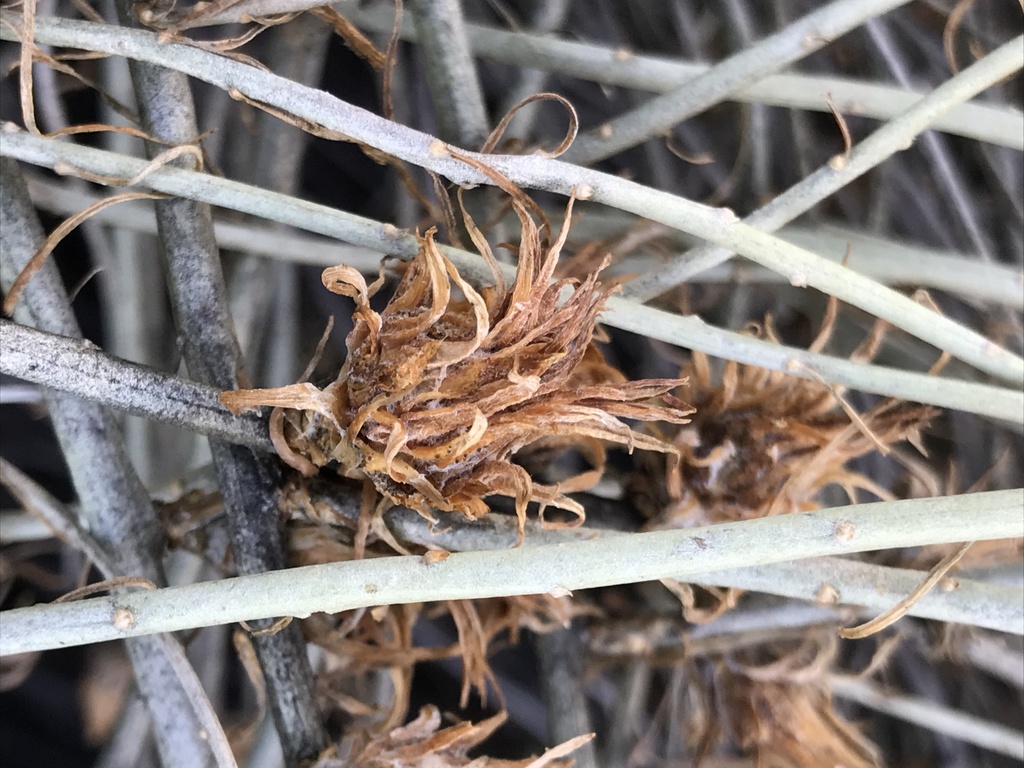
(c) Adam J. Searcy, some rights reserved (CC BY) · licence
Family: Cecidomyiidae · Class: Insecta · Order: Diptera
Rhopalomyia ericameriae (Rosette Bud Gall Midge) is a California animal in the Cecidomyiidae family.
The rosette bud gall midge is a small dipteran insect in the family Cecidomyiidae that induces distinctive gall formations on its host plants. Adults are tiny, delicate flies typical of gall midges, though specific morphological details have not been extensively documented in the literature. The species was originally described by Felt in 1912 based on specimens reared from galls collected in southern California (BugGuide). Rhopalomyia ericameriae was historically known only from the type specimens collected in the Puente Hills near Whittier, California, where it was reared in December 1910 from rosette galls on Zauschneria californica, now known as Epilobium canum or California fuchsia (BugGuide). The current distribution of this species remains poorly documented, with no comprehensive surveys conducted to determine if populations persist at the original collection site or have expanded to other locations within California. The species creates distinctive galls described by Felt as "apical rosettes or loose cones of leaves on dwarfed branches" on its host plant Zauschneria californica (California fuchsia) (BugGuide). These rosette galls form at the growing tips of branches, causing the normal leaf arrangement to become distorted into a compact, rose-like structure. The host plant is a native California perennial herb in the evening primrose family (Onagraceae) that typically grows in dry, rocky areas and chaparral habitats throughout much of California. Based on the original description, adult emergence occurs in December, suggesting the species completes its development during the fall and early winter months (BugGuide). Like other gall midges, females likely lay eggs in developing plant tissue, and the resulting larvae induce gall formation through chemical manipulation of plant growth hormones. The larvae develop within the protective gall structure, pupating before emerging as adults. However, some observations suggest variable emergence timing, with at least one midge observed on galls in September, indicating potential variation in the species' life cycle or multiple generations per year. The conservation status of Rhopalomyia ericameriae is unknown, as no systematic studies have been conducted to assess current population levels or distribution. The species appears to be known from very limited historical records, with no confirmed modern observations documented in the scientific literature. This lack of recent data may reflect either genuine rarity, restricted distribution, or simply insufficient survey effort for this inconspicuous insect group. The original collection site in the Puente Hills has experienced significant urban development over the past century, potentially impacting habitat availability for both the gall midge and its host plant. Detailed ecological studies of this species are lacking. The above information synthesizes available observations from historical taxonomic literature and online databases. Research is needed to determine current distribution, population status, and detailed life history characteristics of this California endemic gall midge.
Classification
Class: Insecta · Order: Diptera · Family: Cecidomyiidae
Frequently asked questions
How is Rhopalomyia ericameriae classified?
Rhopalomyia ericameriae belongs to class Insecta, order Diptera, family Cecidomyiidae.
What family does Rhopalomyia ericameriae belong to?
Rhopalomyia ericameriae is in the Cecidomyiidae family.
What is Rhopalomyia ericameriae?
The rosette bud gall midge is a small dipteran insect in the family Cecidomyiidae that induces distinctive gall formations on its host plants.
Is Rhopalomyia ericameriae found in California?
Yes. Rhopalomyia ericameriae is recorded in California in The California Species Project's catalogue.
Related species
Other California species in the same genus, family, or bioregion.
Data from The California Species Project — 14,000+ California species with verified data from CNPS, CDFW, USFWS, and more.