Rhopalomyia pomum
Sponge Gall Midge
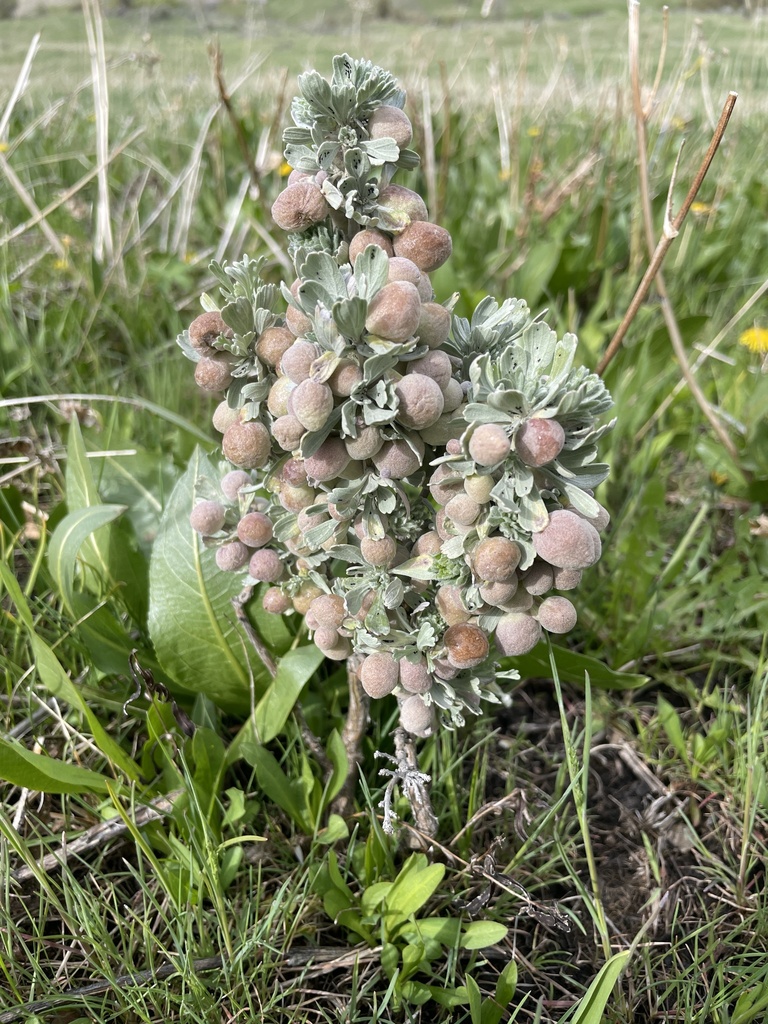
(c) crothfels, some rights reserved (CC BY) · licence
Family: Cecidomyiidae · Class: Insecta · Order: Diptera
Rhopalomyia pomum (Sponge Gall Midge) is a California animal in the Cecidomyiidae family.
Rhopalomyia pomum, commonly known as the sponge gall midge, is a small dipteran insect in the family Cecidomyiidae that induces distinctive galls on sagebrush. Adult midges are typically small, measuring less than 5 mm in length, with the characteristic features of gall midges including long antennae and delicate wings. The species is most readily identified by the large, spongy galls it creates rather than the adult insects themselves, which are rarely observed. This species occurs throughout western North America, with documented populations across the Great Basin region where its host plant, Artemisia tridentata (Great Basin sagebrush), is abundant. The range extends from California northward through Nevada, Oregon, Idaho, and into other intermountain western states. In California, the species is present in areas where sagebrush ecosystems dominate, primarily in the eastern Sierra Nevada, Modoc Plateau, and northern desert regions. Rhopalomyia pomum inhabits sagebrush steppe and shrubland ecosystems, specifically associated with Artemisia tridentata communities. These habitats typically occur at elevations ranging from 1,200 to 2,500 meters in semi-arid environments characterized by cold winters and dry summers. The species shows strong host plant specificity, with galls forming exclusively on Great Basin sagebrush. The species exhibits a specialized gall-forming lifestyle, with larvae developing within large, spongy galls that can reach up to 45 mm in diameter (BugGuide). These galls appear as soft, irregular masses on sagebrush stems and branches, providing both shelter and nutrition for developing larvae. The galls begin as small swellings and expand throughout the growing season as larvae feed on plant tissues. Adult emergence timing varies with local climate conditions, but generally occurs during late spring to early summer. Larvae are described as white to very pale orange, while pupae initially appear light orange, darkening to red with age (BugGuide). The species likely has one generation per year, synchronized with the growing season of its host plant. Currently, Rhopalomyia pomum does not hold any federal or state conservation listing status. However, the species' dependence on sagebrush ecosystems makes it potentially vulnerable to habitat loss and degradation. Sagebrush habitats throughout the western United States face ongoing pressures from urban development, agricultural conversion, invasive species such as cheatgrass, and altered fire regimes. Climate change may also impact the distribution and health of sagebrush communities, potentially affecting associated specialist species like R. pomum. While population trends for this species have not been systematically studied, its status likely reflects the overall condition of Great Basin sagebrush ecosystems. Conservation of large, intact sagebrush landscapes benefits this species along with numerous other sagebrush-dependent organisms. The California Department of Fish and Wildlife tracks this species in their Natural Diversity Database, indicating recognition of its ecological significance within California's sagebrush communities.
Classification
Class: Insecta · Order: Diptera · Family: Cecidomyiidae
Frequently asked questions
How is Rhopalomyia pomum classified?
Rhopalomyia pomum belongs to class Insecta, order Diptera, family Cecidomyiidae.
What family does Rhopalomyia pomum belong to?
Rhopalomyia pomum is in the Cecidomyiidae family.
What is Rhopalomyia pomum?
Rhopalomyia pomum, commonly known as the sponge gall midge, is a small dipteran insect in the family Cecidomyiidae that induces distinctive galls on sagebrush.
Is Rhopalomyia pomum found in California?
Yes. Rhopalomyia pomum is recorded in California in The California Species Project's catalogue.
Related species
Other California species in the same genus, family, or bioregion.
Data from The California Species Project — 14,000+ California species with verified data from CNPS, CDFW, USFWS, and more.