Rhopalomyia utahensis
Cotton-gall Midge
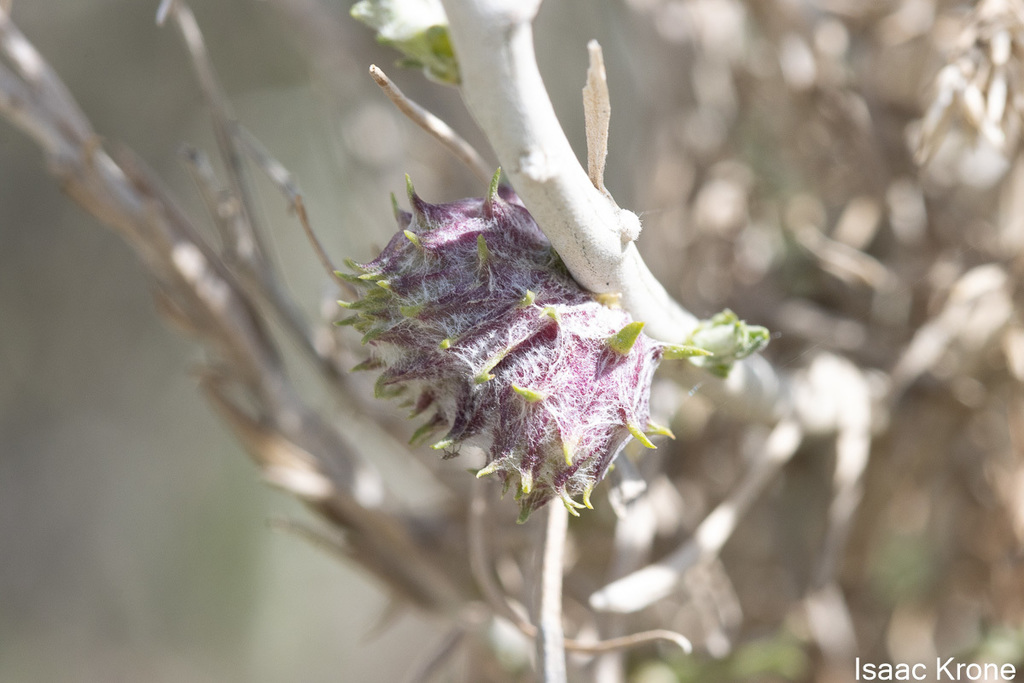
(c) Isaac Krone, some rights reserved (CC BY) · licence
Family: Cecidomyiidae · Class: Insecta · Order: Diptera
Rhopalomyia utahensis (Cotton-gall Midge) is a California animal in the Cecidomyiidae family.
Rhopalomyia utahensis, commonly known as the cotton-gall midge, is a small dipteran insect in the family Cecidomyiidae, a group of flies known for their gall-inducing behavior. Adult midges are typically small, measuring 2-4 mm in length, with delicate bodies and long, beaded antennae characteristic of the family. Like other cecidomyiids, they have reduced wing venation and weak flying ability. The larvae are small, legless maggots that develop within plant galls. The cotton-gall midge occurs in western North America, with documented populations in Utah, Nevada, and California. The species name "utahensis" reflects its original description from Utah specimens. In California, this species has been recorded from various locations, though specific distributional data remains limited in the scientific literature. This gall midge is associated with plants in the family Asteraceae, particularly those in arid and semi-arid environments typical of the Great Basin and Mojave Desert regions. The species creates characteristic galls on its host plants, though specific host plant relationships have not been comprehensively documented in available literature. Habitat preferences appear to include shrubland and desert communities where suitable Asteraceae hosts occur, typically at elevations ranging from desert floors to lower montane zones. Like other cecidomyiids, R. utahensis exhibits a specialized life cycle tied to gall formation. Adult females deposit eggs in plant tissues, and the developing larvae induce gall formation in their host plants. The galls provide both nutrition and protection for the developing larvae. The species likely has one or more generations per year, synchronized with host plant growth cycles, though specific phenology has not been well-documented. Adults are typically short-lived, focusing primarily on reproduction during their brief lifespan. The conservation status of Rhopalomyia utahensis has not been formally assessed by state or federal agencies. The species lacks federal or state listing status and does not appear on conservation priority lists. Population trends are unknown due to limited systematic surveys of cecidomyiid diversity in western North America. As with many specialized gall-inducing insects, the species may be vulnerable to habitat modification and loss of host plants, particularly in desert environments facing increasing development pressure and climate change impacts. The specialized nature of its host plant relationships could make it sensitive to ecological changes affecting its host species. However, without comprehensive population data or threat assessments, the conservation needs of this species remain poorly understood. Further research is needed to document its distribution, host plant specificity, and population status to inform potential conservation priorities.
Classification
Class: Insecta · Order: Diptera · Family: Cecidomyiidae
Frequently asked questions
How is Rhopalomyia utahensis classified?
Rhopalomyia utahensis belongs to class Insecta, order Diptera, family Cecidomyiidae.
What family does Rhopalomyia utahensis belong to?
Rhopalomyia utahensis is in the Cecidomyiidae family.
What is Rhopalomyia utahensis?
Rhopalomyia utahensis, commonly known as the cotton-gall midge, is a small dipteran insect in the family Cecidomyiidae, a group of flies known for their gall-inducing behavior.
Is Rhopalomyia utahensis found in California?
Yes. Rhopalomyia utahensis is recorded in California in The California Species Project's catalogue.
Related species
Other California species in the same genus, family, or bioregion.
Data from The California Species Project — 14,000+ California species with verified data from CNPS, CDFW, USFWS, and more.