Rhyacionia zozana
Ponderosa Pine Tip Moth
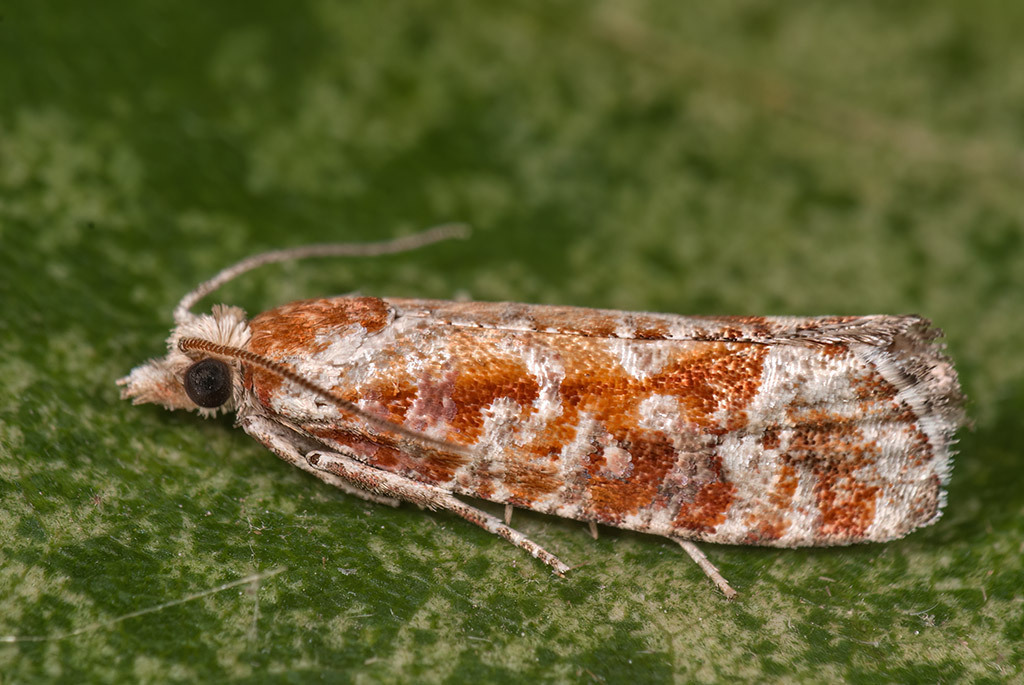
no rights reserved · CC0
Family: Tortricidae · Class: Insecta · Order: Lepidoptera
Rhyacionia zozana (Ponderosa Pine Tip Moth) is a California animal in the Tortricidae family.
The Ponderosa Pine Tip Moth (Rhyacionia zozana) is a small tortricid moth in the family Tortricidae, subfamily Olethreutinae. Adults are small moths with forewings measuring approximately 4-6 mm in length. The species belongs to the genus Rhyacionia, which comprises the pine tip moths, a group specialized for feeding on coniferous hosts. Rhyacionia zozana occurs across western North America, with documented populations in California, Nevada, and other western states. In California, the species has been recorded from multiple counties including Los Angeles, Ventura, San Luis Obispo, Mariposa, Solano, Fresno, and Inyo counties (Powell 1978, News of the Lepidopterists' Society records). Specific collection localities include Angeles Oaks in the San Bernardino Mountains at 6,000 feet elevation, Lockwood Valley Road in Ventura County, and various Sierra Nevada locations including Yosemite West and Huntington Lake. The species inhabits coniferous forest ecosystems, particularly those dominated by ponderosa pine (Pinus ponderosa) and associated conifer species. Elevational records range from lower montane zones to approximately 6,000 feet, though the species may occur at higher elevations. The moth is associated with pine forests throughout its range, following the distribution of suitable host trees. California populations occur in both the Sierra Nevada and southern California mountain ranges. Like other members of the genus Rhyacionia, R. zozana larvae are likely specialized feeders on pine species, particularly ponderosa pine based on habitat associations. The genus is known for larvae that bore into pine shoots, buds, or needles, though specific life history details for R. zozana have not been well documented in the literature. Adult flight periods appear to extend from spring through summer months, with California records spanning April through September. Collection records indicate both diurnal and nocturnal activity, with some specimens collected during daylight hours after being flushed from vegetation. The larvae likely develop within pine tissues, following the typical tortricid pattern of boring into plant material. Development time and voltinism (number of generations per year) have not been specifically documented for this species. Adults may be attracted to lights and pheromone traps, based on collection methods noted in lepidopterist survey records. No specific conservation status has been assigned to Rhyacionia zozana at federal or state levels. The species appears to have a stable distribution across western coniferous forests, though detailed population monitoring has not been conducted. As a forest specialist, the species may be sensitive to large-scale habitat alterations including deforestation, fire regime changes, and climate-driven shifts in coniferous forest distribution. However, the widespread nature of ponderosa pine forests across the western United States likely provides substantial habitat security for this species. Current threats, if any, would primarily involve broad-scale forest management practices and climate change impacts on montane coniferous ecosystems.
Classification
Class: Insecta · Order: Lepidoptera · Family: Tortricidae
Frequently asked questions
How is Rhyacionia zozana classified?
Rhyacionia zozana belongs to class Insecta, order Lepidoptera, family Tortricidae.
What family does Rhyacionia zozana belong to?
Rhyacionia zozana is in the Tortricidae family.
What is Rhyacionia zozana?
The Ponderosa Pine Tip Moth (Rhyacionia zozana) is a small tortricid moth in the family Tortricidae, subfamily Olethreutinae.
Is Rhyacionia zozana found in California?
Yes. Rhyacionia zozana is recorded in California in The California Species Project's catalogue.
Related species
Other California species in the same genus, family, or bioregion.
Data from The California Species Project — 14,000+ California species with verified data from CNPS, CDFW, USFWS, and more.