Rhyacophila lineata
Castle Crags Rhyacophilan Caddisfly
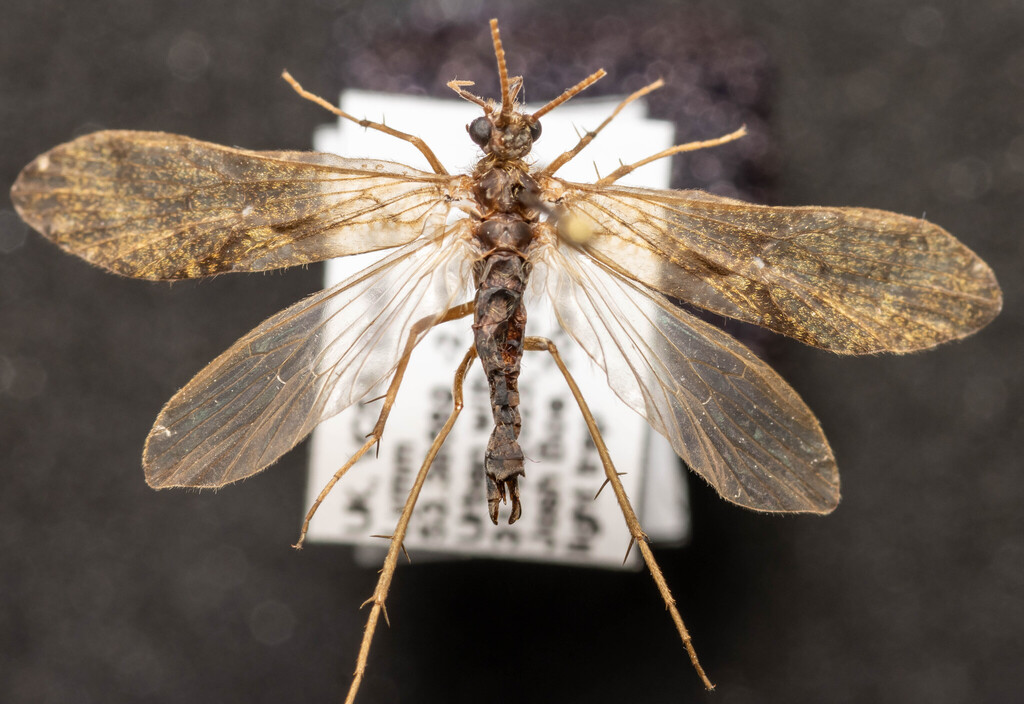
(c) Josh Boe, some rights reserved (CC BY) · licence
Family: Rhyacophilidae · Class: Insecta · Order: Trichoptera
Conservation status: G1 S1
Rhyacophila lineata (Castle Crags Rhyacophilan Caddisfly) is a California animal in the Rhyacophilidae family.
The Castle Crags rhyacophilan caddisfly is a small aquatic insect endemic to northern California. Adults are characterized by the typical caddisfly body plan with elongated antennae, tent-like wing positioning at rest, and reduced mouthparts. Like other members of the genus Rhyacophila, larvae are free-living predators without constructed cases, distinguishing them from case-building caddisfly families. Specific morphological details for this species remain poorly documented in available literature. This species is known only from Castle Creek in the Castle Crags area of Siskiyou County, California. The extremely restricted range makes it one of the most geographically limited caddisfly species in North America. According to the U.S. Fish and Wildlife Service, the species was listed as endangered on February 27, 1995, reflecting its precarious conservation status (USFWS ECOS 2025). The Global and State rank of G1 S1 indicates this species is critically imperiled both globally and within California. The Castle Crags rhyacophilan caddisfly inhabits cold, fast-flowing mountain streams within the Castle Crags region. This area is characterized by volcanic and metamorphic geology, creating unique aquatic microhabitats. The species likely requires specific water quality parameters including low temperatures, high dissolved oxygen levels, and particular substrate compositions typical of high-gradient mountain streams. Castle Creek flows through mixed conifer forest dominated by Douglas fir, ponderosa pine, and associated understory vegetation. As with other Rhyacophila species, larvae are predaceous, feeding on smaller aquatic invertebrates including chironomid larvae, mayfly nymphs, and other soft-bodied prey. The free-living larvae construct temporary retreats under rocks but do not build portable cases like many other caddisfly families. Adults typically emerge during late spring to early summer, with timing likely synchronized to optimal stream flow and temperature conditions. Adult lifespan is generally brief, focused on mating and oviposition near natal streams. Females deposit eggs directly into the water or on emergent substrates. The species faces significant conservation challenges due to its extremely limited distribution. Primary threats likely include habitat modification, water diversion, sedimentation from erosion, and climate change impacts on stream hydrology and temperature. The small population size makes the species particularly vulnerable to stochastic events such as drought, flood, or pollution incidents. Recovery efforts would necessarily focus on protecting the integrity of Castle Creek and its immediate watershed. Detailed ecological studies of this species are lacking, limiting comprehensive understanding of its life history requirements and population dynamics. The Castle Crags rhyacophilan caddisfly represents one of California's most range-restricted endemic insects, highlighting the importance of protecting unique aquatic habitats in the state's mountainous regions. Continued monitoring and habitat protection are essential for preventing extinction of this critically imperiled species.
Classification
Class: Insecta · Order: Trichoptera · Family: Rhyacophilidae
Conservation status
G1 S1
Frequently asked questions
How is Rhyacophila lineata classified?
Rhyacophila lineata belongs to class Insecta, order Trichoptera, family Rhyacophilidae.
What family does Rhyacophila lineata belong to?
Rhyacophila lineata is in the Rhyacophilidae family.
Is Rhyacophila lineata protected or of conservation concern?
Rhyacophila lineata carries the following status: G1 S1.
What is Rhyacophila lineata?
The Castle Crags rhyacophilan caddisfly is a small aquatic insect endemic to northern California.
Is Rhyacophila lineata found in California?
Yes. Rhyacophila lineata is recorded in California in The California Species Project's catalogue.
Related species
Other California species in the same genus, family, or bioregion.
Data from The California Species Project — 14,000+ California species with verified data from CNPS, CDFW, USFWS, and more.