Rhyacophila mosana
Bilobed Rhyacophilan Caddisfly
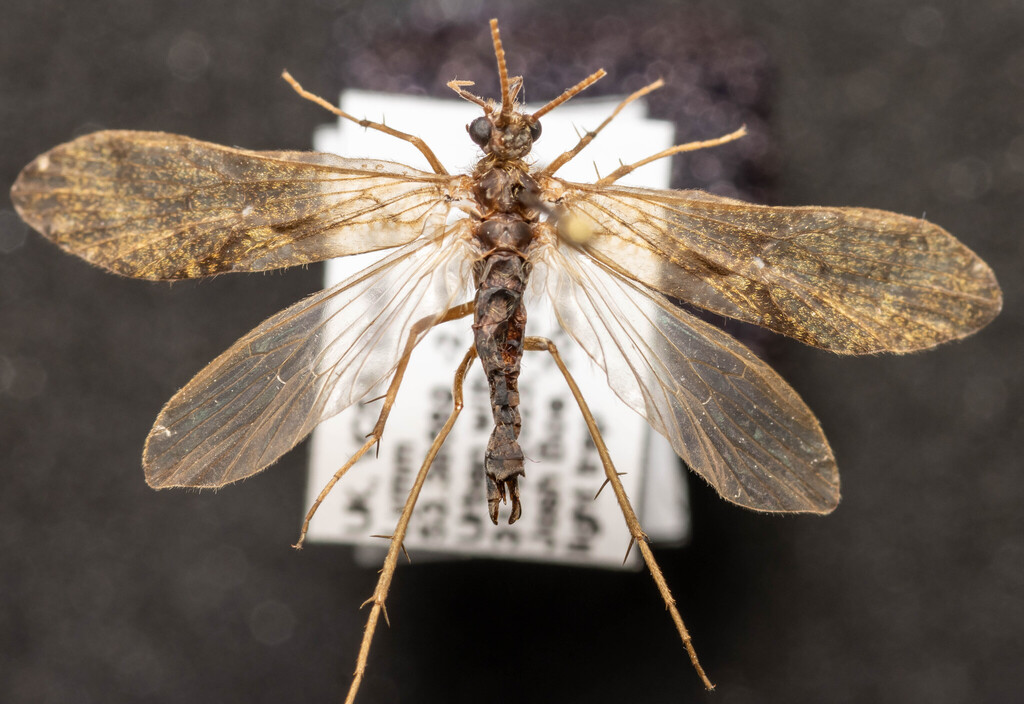
(c) Josh Boe, some rights reserved (CC BY) · licence
Family: Rhyacophilidae · Class: Insecta · Order: Trichoptera
Conservation status: G1Q S1
Rhyacophila mosana (Bilobed Rhyacophilan Caddisfly) is a California animal in the Rhyacophilidae family.
The bilobed rhyacophilan caddisfly is a rare aquatic insect belonging to the family Rhyacophilidae, a group of free-living caddisflies whose larvae construct portable cases from small stones and sand grains. Adult caddisflies typically measure 6 to 12 millimeters (0.24 to 0.47 inches) in body length, with wingspan reaching 15 to 25 millimeters. The species exhibits the characteristic features of the genus Rhyacophila, including well-developed wings held tent-like over the body when at rest and prominent antennae that are often longer than the forewings. Rhyacophila mosana has an extremely limited distribution, known only from a few locations in California. The species' range appears to be restricted to specific watersheds in the state, though detailed distribution data remains scarce. This narrow geographic range contributes to its conservation concern status and Global rank of G1Q, indicating it is critically imperiled globally with some taxonomic uncertainty. The species inhabits cold, clean, fast-flowing streams and rivers typical of rhyacophilan caddisfly habitat requirements. These aquatic environments are characterized by well-oxygenated water, rocky or gravelly substrates, and minimal pollution. Adult caddisflies are typically found near their larval habitats, often resting on vegetation along stream banks or on rocks near the water's edge. The larvae require specific water quality conditions, including stable temperatures and high dissolved oxygen levels. Like other Rhyacophila species, R. mosana undergoes complete metamorphosis with aquatic larval and pupal stages. The predaceous larvae inhabit spaces between rocks and gravel in stream beds, feeding on small invertebrates including chironomid midge larvae, mayfly nymphs, and other aquatic insects. Larvae construct portable cases from mineral particles, which they carry as they move through the substrate hunting for prey. Adults emerge from pupae that develop in sealed pupal chambers constructed by mature larvae. The timing of emergence likely coincides with warmer months when stream conditions are optimal, though specific seasonal patterns for this species have not been well documented. The U.S. Fish and Wildlife Service currently lists Rhyacophila mosana as a Species of Concern, and it has been proposed for Threatened status under the Endangered Species Act as of December 2025. The species' G1Q ranking reflects both its critical conservation status and some uncertainty regarding its taxonomic distinctiveness. Primary threats to the species likely include habitat degradation from water diversions, pollution, sedimentation from logging or development activities, and climate change impacts on stream flow and temperature regimes. The narrow range and specialized habitat requirements make the species particularly vulnerable to environmental changes. Conservation efforts focus on protecting stream habitat quality and maintaining natural hydrological processes in watersheds where the species occurs.
Classification
Class: Insecta · Order: Trichoptera · Family: Rhyacophilidae
Conservation status
G1Q S1
Frequently asked questions
How is Rhyacophila mosana classified?
Rhyacophila mosana belongs to class Insecta, order Trichoptera, family Rhyacophilidae.
What family does Rhyacophila mosana belong to?
Rhyacophila mosana is in the Rhyacophilidae family.
Is Rhyacophila mosana protected or of conservation concern?
Rhyacophila mosana carries the following status: G1Q S1.
What is Rhyacophila mosana?
The bilobed rhyacophilan caddisfly is a rare aquatic insect belonging to the family Rhyacophilidae, a group of free-living caddisflies whose larvae construct portable cases from small stones and sand grains.
Is Rhyacophila mosana found in California?
Yes. Rhyacophila mosana is recorded in California in The California Species Project's catalogue.
Related species
Other California species in the same genus, family, or bioregion.
Data from The California Species Project — 14,000+ California species with verified data from CNPS, CDFW, USFWS, and more.