Rhyacophila spinata
Spiny Rhyacophilan Caddisfly
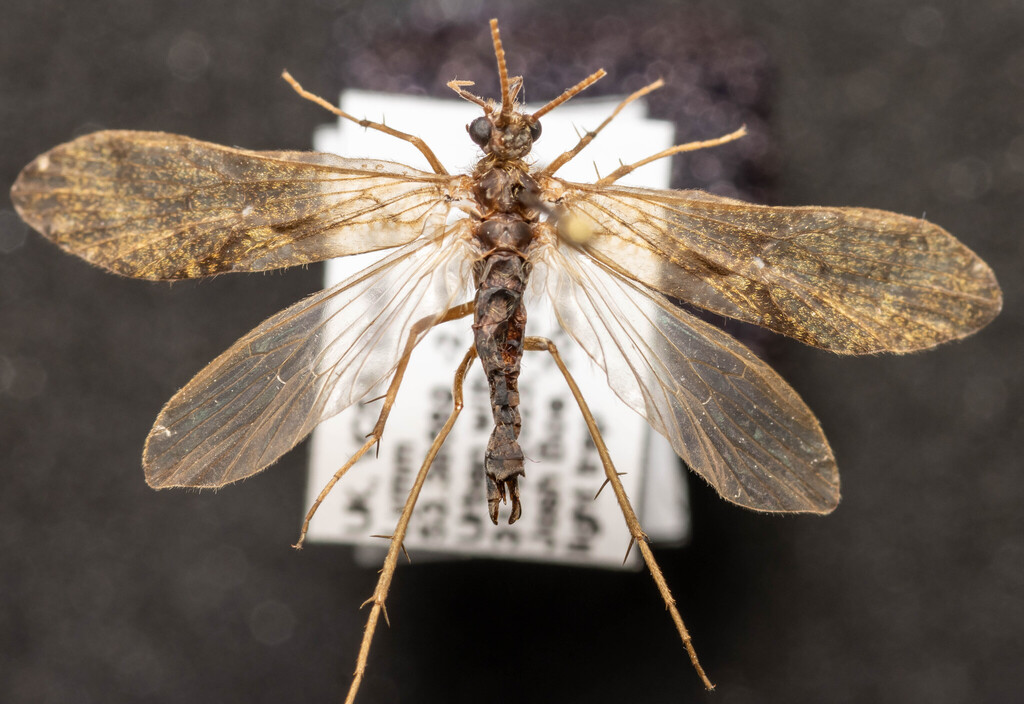
(c) Josh Boe, some rights reserved (CC BY) · licence
Family: Rhyacophilidae · Class: Insecta · Order: Trichoptera
Conservation status: G1G2 S3
Rhyacophila spinata (Spiny Rhyacophilan Caddisfly) is a California animal in the Rhyacophilidae family.
The Spiny Rhyacophilan Caddisfly is an aquatic insect in the family Rhyacophilidae, commonly known as primitive caddisflies. Like other members of this family, adult caddisflies are small, moth-like insects with four membranous wings held tent-like over the body when at rest. The wings are typically brown or gray with fine hairs giving them a fuzzy appearance. Adults measure approximately 6 to 12 millimeters (0.24 to 0.47 inches) in body length, with wingspans reaching 15 to 20 millimeters (0.59 to 0.79 inches). The species name "spinata" refers to spine-like structures, though specific morphological details distinguishing this species from closely related Rhyacophila species have not been comprehensively documented. This species occurs in California, where it has been assigned a state rank of S3, indicating it is vulnerable to extirpation from the state. The global rank of G1G2 suggests the species is critically imperiled to imperiled throughout its range, with very few populations or occurrences documented worldwide. Specific distribution data within California remains limited, though members of the genus Rhyacophila typically inhabit mountainous regions with suitable stream habitat. Rhyacophila species are associated with cold, clean, fast-flowing streams and rivers, typically in forested watersheds. The larvae are aquatic and require well-oxygenated water with rocky or gravelly substrates. They are commonly found in riffle areas where water flows rapidly over stones and boulders. Adults emerge from aquatic habitats and remain in riparian vegetation near their natal streams for mating and egg-laying activities. The species likely occurs at moderate to high elevations where water temperatures remain cool year-round. Larval Rhyacophila are unique among caddisflies as they are free-living predators rather than case-builders. The larvae actively hunt other aquatic invertebrates, including mayfly nymphs, midge larvae, and other small stream insects. This predatory behavior distinguishes them from most other caddisfly families whose larvae construct protective cases and feed primarily on detritus or algae. Adults are short-lived and focus primarily on reproduction, with females depositing eggs in or near stream water. The life cycle is typically univoltine, meaning one generation per year, with larvae overwintering in the stream before pupating and emerging as adults during warmer months. The G1G2 global ranking and S3 state ranking indicate significant conservation concern for this species. Primary threats to Rhyacophila species include habitat degradation from logging, mining, and agricultural activities in watersheds, water pollution from various sources, stream channelization, and climate change impacts on stream temperature and flow regimes. The species' apparent rarity and specific habitat requirements make it particularly vulnerable to environmental changes. Limited scientific documentation hampers conservation planning efforts. Research priorities include comprehensive surveys to determine current distribution and population status, detailed ecological studies, and identification of critical habitat areas requiring protection. No federal listing status has been assigned as of December 2025.
Classification
Class: Insecta · Order: Trichoptera · Family: Rhyacophilidae
Conservation status
G1G2 S3
Frequently asked questions
How is Rhyacophila spinata classified?
Rhyacophila spinata belongs to class Insecta, order Trichoptera, family Rhyacophilidae.
What family does Rhyacophila spinata belong to?
Rhyacophila spinata is in the Rhyacophilidae family.
Is Rhyacophila spinata protected or of conservation concern?
Rhyacophila spinata carries the following status: G1G2 S3.
What is Rhyacophila spinata?
The Spiny Rhyacophilan Caddisfly is an aquatic insect in the family Rhyacophilidae, commonly known as primitive caddisflies.
Is Rhyacophila spinata found in California?
Yes. Rhyacophila spinata is recorded in California in The California Species Project's catalogue.
Related species
Other California species in the same genus, family, or bioregion.
Data from The California Species Project — 14,000+ California species with verified data from CNPS, CDFW, USFWS, and more.